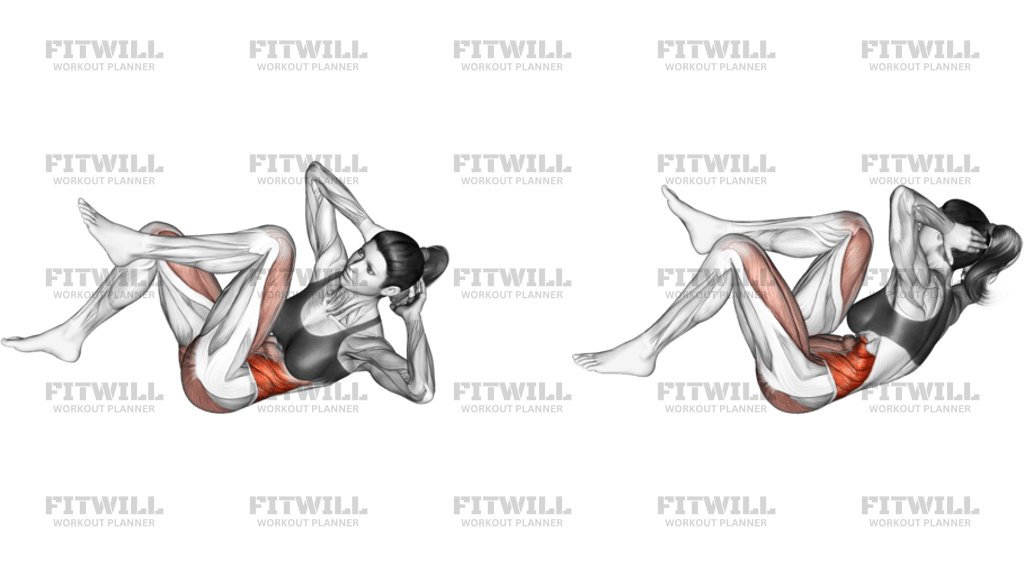
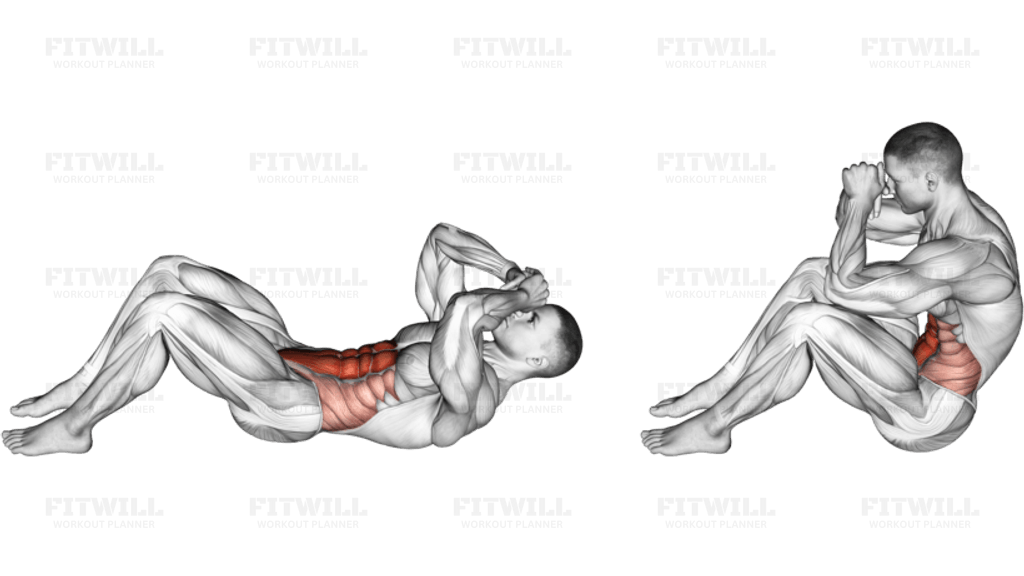
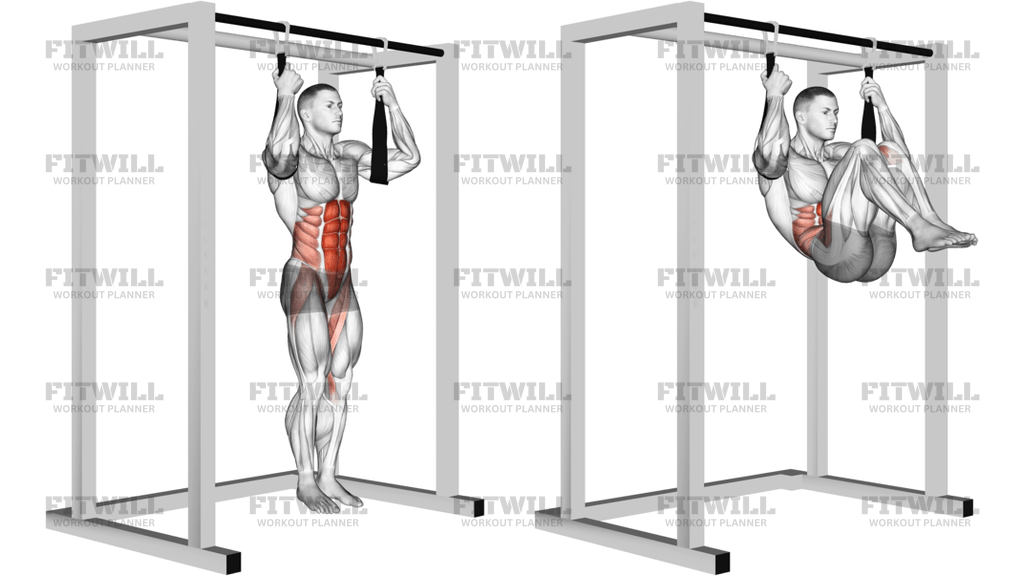
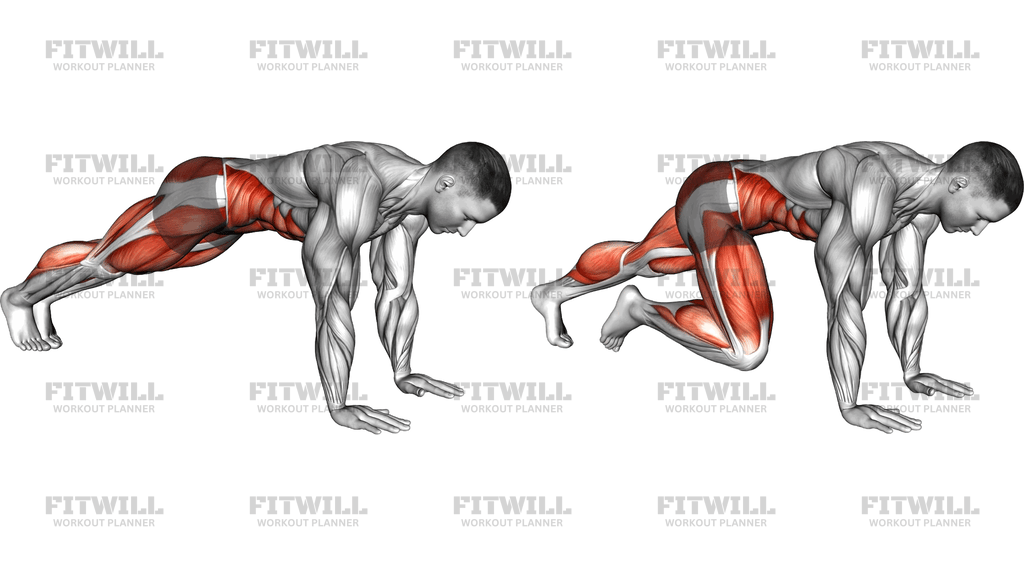
Hip Raise Bent Knee
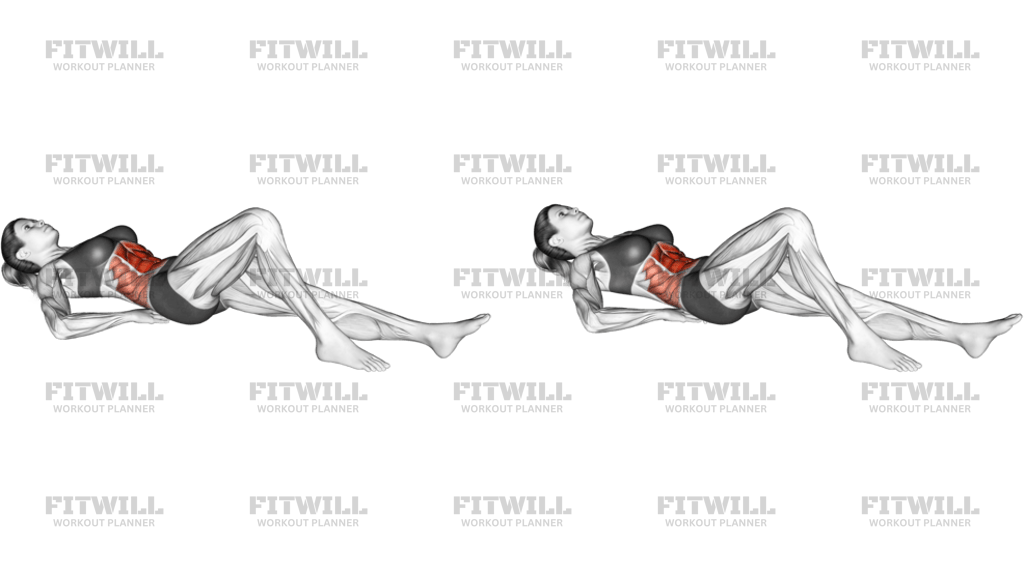
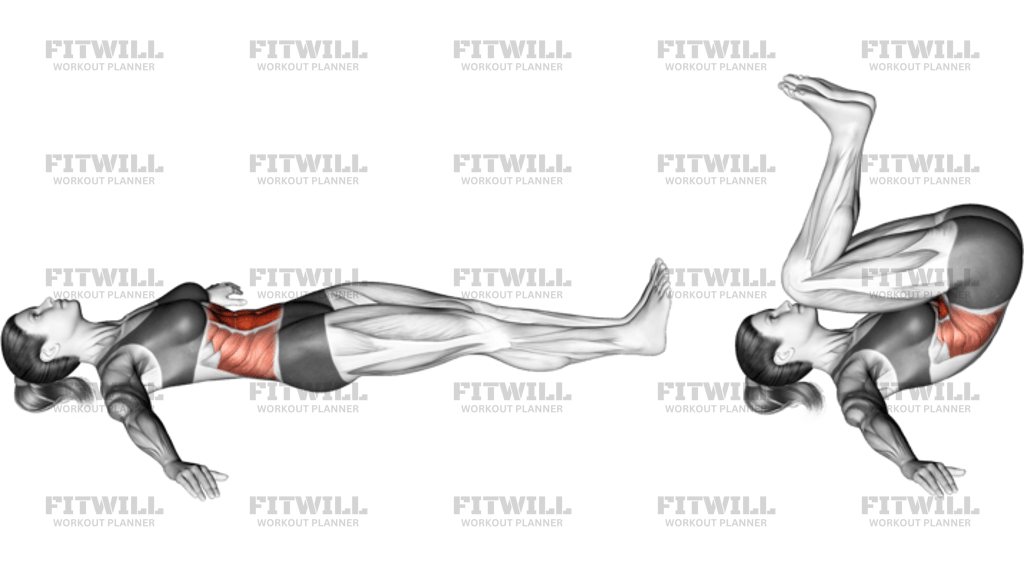
Hip Raise Bent Knee is a floor-based abdominal exercise where you lie on your back with the hips and knees flexed, then lift the pelvis by curling the tailbone off the floor. It is commonly used as a bodyweight core movement to train the lower portion of the rectus abdominis, with help from the obliques and deep abdominal muscles that keep the pelvis controlled through the lift.
The bent-knee position matters because it shortens the lever compared with a straight-leg raise. That makes the movement more accessible while still demanding a strong posterior pelvic tilt at the top. If you let the knees drift away from the torso or swing the legs, the work shifts toward momentum and hip flexors instead of the abs doing the lifting.
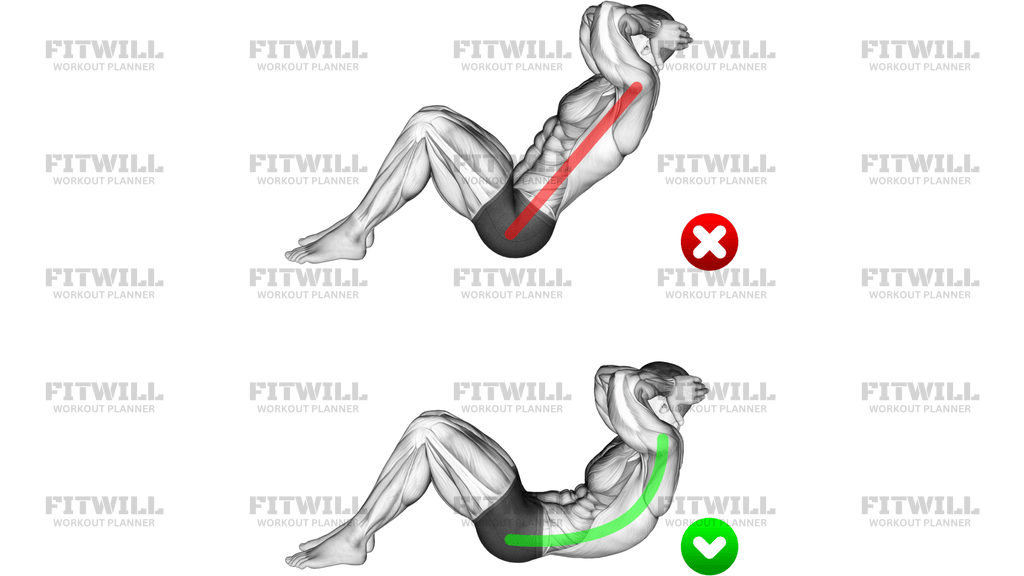
The goal is not to throw the knees toward the chest. Start from a flat, controlled position, then exhale as you tuck the pelvis and raise the hips a few inches. The shoulders stay on the floor, the neck stays relaxed, and the ribs stay down so the trunk does not arch to fake more range. At the top, the low back should feel rounded rather than compressed.
A good repetition feels small, precise, and repeatable. The hips should travel just enough to peel the tailbone away from the floor and finish in a strong curl, then lower back down without slamming. If your range changes from rep to rep, or if the movement turns into a fast knee swing, the set is no longer giving the abs the kind of tension this pattern is meant to create.
This exercise fits well in core-focused sessions, warmups, accessory blocks, or conditioning circuits when you want strict trunk control without equipment. It is also useful for people who need a simpler regression from leg raises or hanging knee raises, because the floor gives more feedback and reduces the chance of swinging. People often program it for higher-rep control work, short isometric holds, or as a finishing drill after heavier lower-body training.
Quality matters more than height. A smooth rep with a small, controlled pelvic lift is better than a bigger rep that relies on kicking the legs or jerking the hips. Keep the range pain-free and stop the set when you can no longer reverse the movement slowly.
Fitwill
Log Workouts, Track Progress & Build Strength.
Achieve more with Fitwill: explore over 9600 exercises with images and videos, access built-in and custom workouts, perfect for both gym and home sessions, and see real results.
Start your journey. Download today!




Instructions
- Lie on your back on the floor with your arms out for balance and your knees bent, hips and knees both flexed so your thighs are roughly above your pelvis.
- Press your low back gently toward the floor and set your ribs down before the first rep.
- Keep your knees together and the lower legs relaxed as you prepare to move.
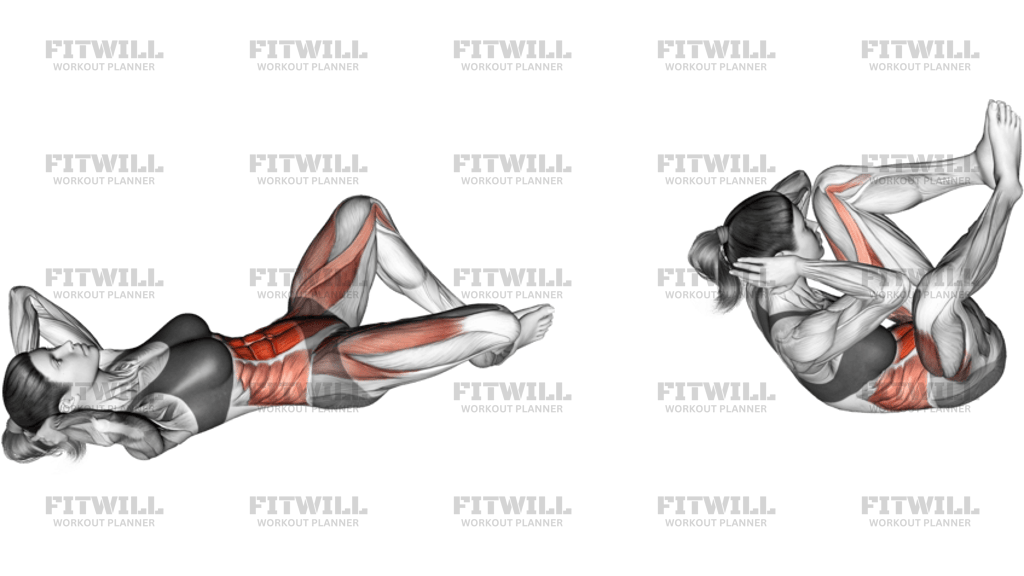
- Exhale and curl your pelvis upward, lifting the tailbone and hips off the floor instead of swinging the legs.
- Bring the knees slightly toward your chest as the pelvis rolls up, but keep the motion driven by the abs.
- Pause for a moment at the top with the low back rounded and the shoulders still anchored to the floor.
- Lower the hips slowly until the sacrum touches down again, keeping tension through the midsection.
- Reset your breathing at the bottom and repeat for the planned number of reps without losing control.
Tips & Tricks
- Think about curling your tailbone up, not just lifting your knees higher.
- If your hips barely move, you are probably flexing at the hips instead of rolling the pelvis.
- Keep the knees bent through the full rep; straightening the legs makes the lever longer and the exercise much harder.
- Do not let the lower back arch away from the floor at the bottom, or you will lose abdominal tension before the lift starts.
- A slow lowering phase usually makes the set more effective than trying to chase height on the way up.
- Exhale during the lift to help the ribs stay down and the pelvis stay tucked.
- If you feel the movement mostly in the front of the hips, shorten the range and focus on the curl at the top.
- The shoulders should stay quiet; if they rock, you are turning the rep into a crunch instead of a hip raise.
- Stop when you can no longer control the descent, because swinging the legs usually means the set is over.
Frequently Asked Questions
What does Hip Raise Bent Knee train most?
It mainly trains the rectus abdominis and the lower abdominal control needed to posteriorly tilt the pelvis.
Why are the knees bent in this version?
Bent knees shorten the lever, making the exercise easier to control while still challenging the abs.
Should my shoulders come off the floor?
No. Keep the shoulders and upper back anchored so the movement stays focused on the pelvis and lower trunk.
How high should the hips lift?
Only high enough for the tailbone and hips to peel off the floor with a clear abdominal curl; bigger is not better if you lose control.
What is the most common mistake with this exercise?
The biggest mistake is swinging the knees upward and arching the back instead of curling the pelvis.
Do I need equipment for this movement?
No. It is a bodyweight floor exercise, so a mat or comfortable surface is usually enough.
Is this a good beginner ab exercise?
Yes. The bent-knee position makes it a useful regression for people who are not ready for straighter-leg raises.
How can I make the exercise harder?
Slow the lowering phase, pause at the top, or progress to a straighter-leg variation once the bent-knee version is strict.