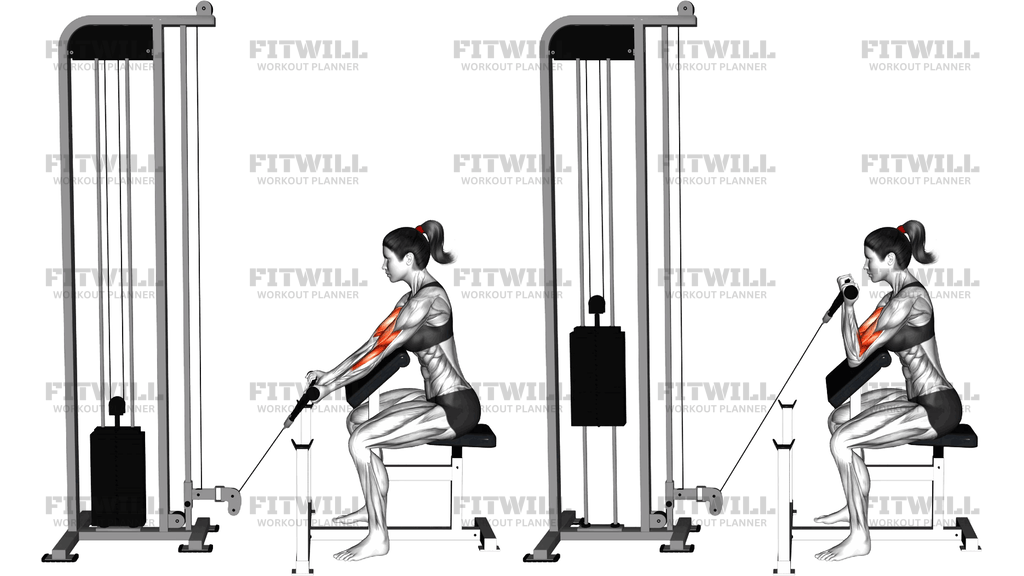
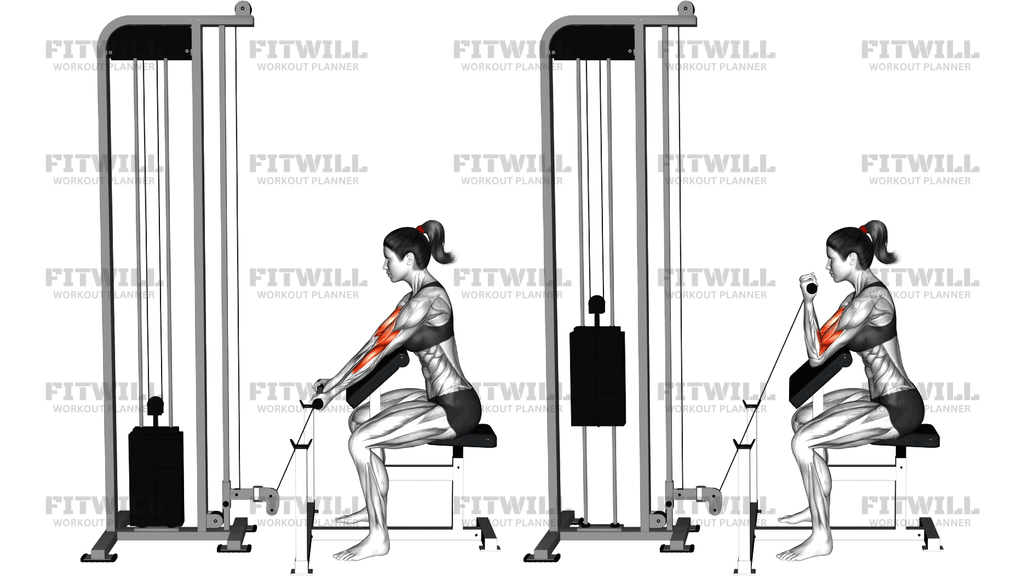
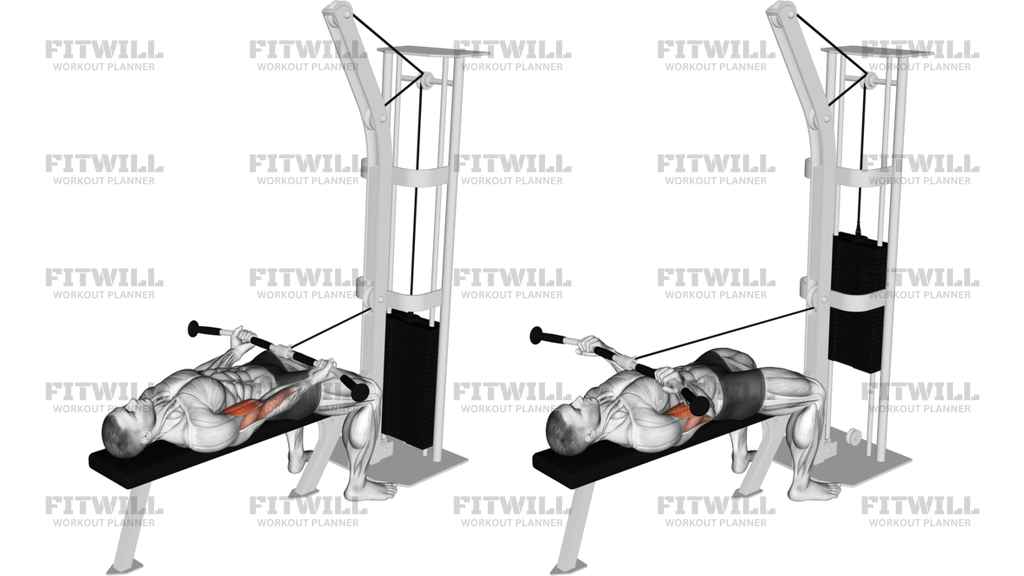
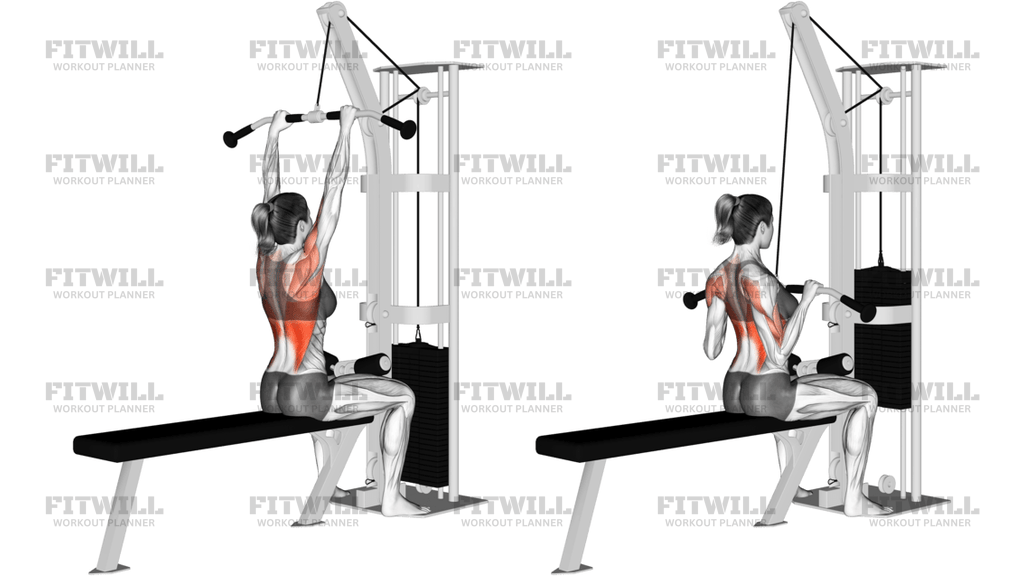
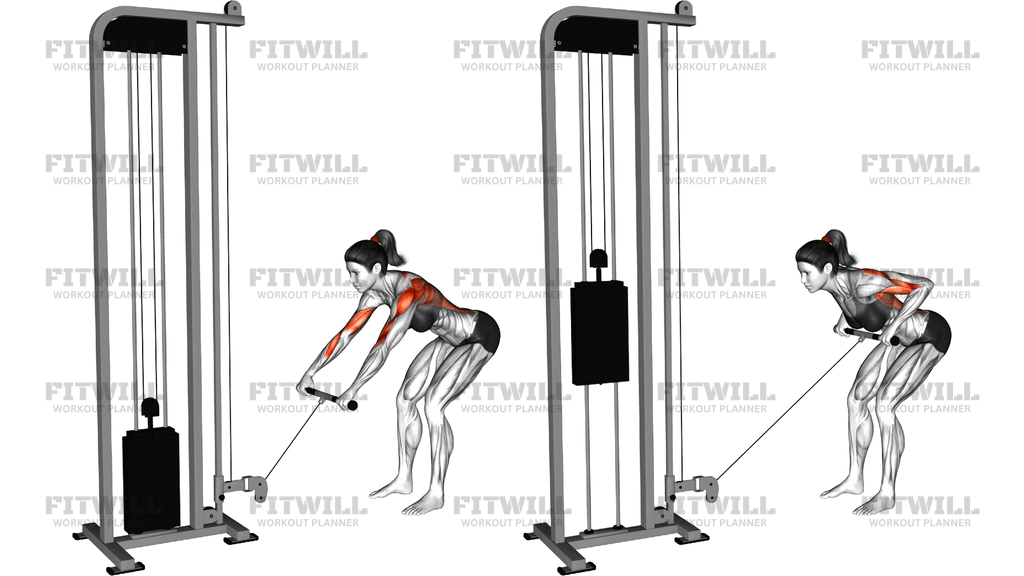
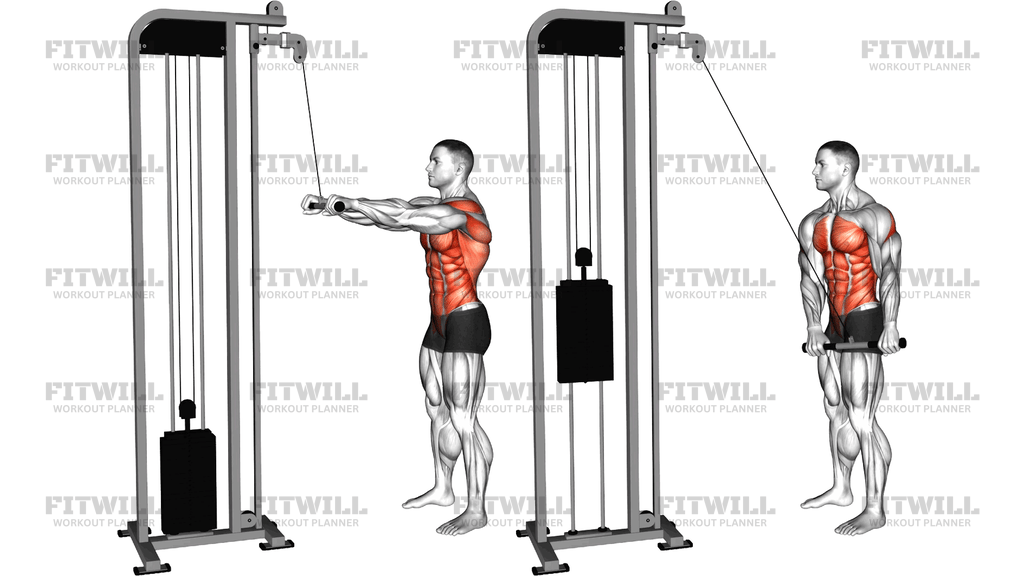
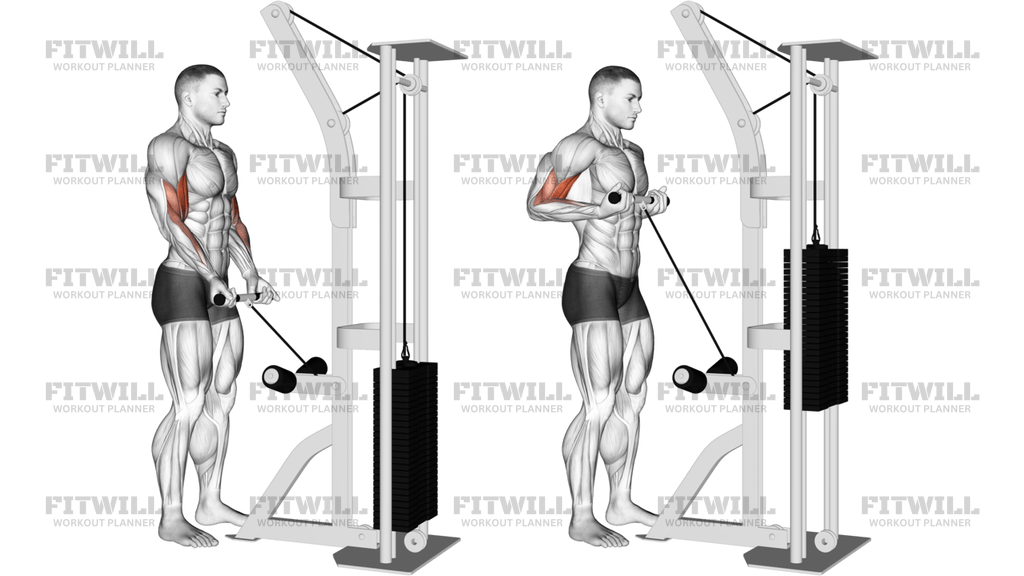
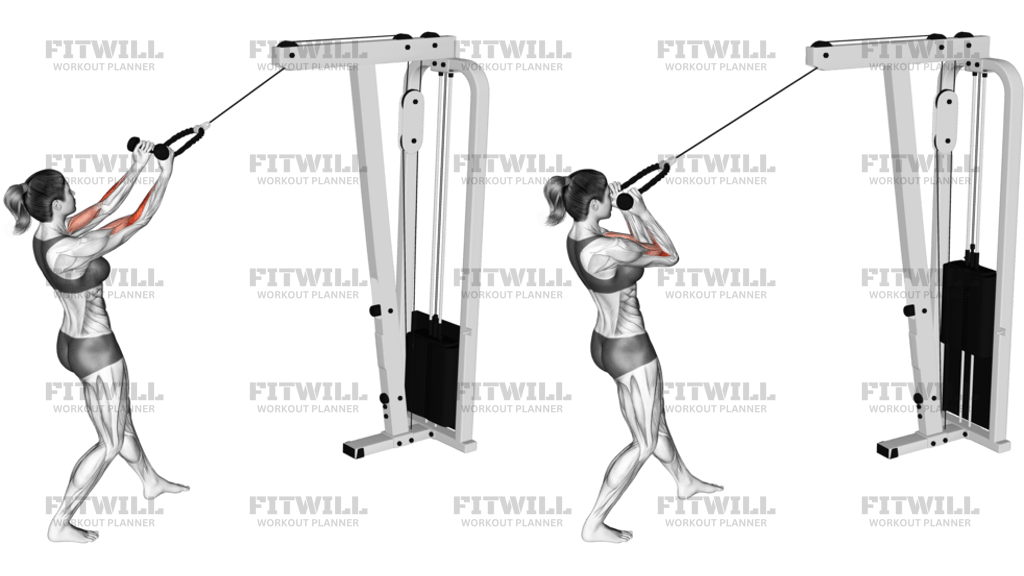
Cable One-Arm Biceps Curl Version 2
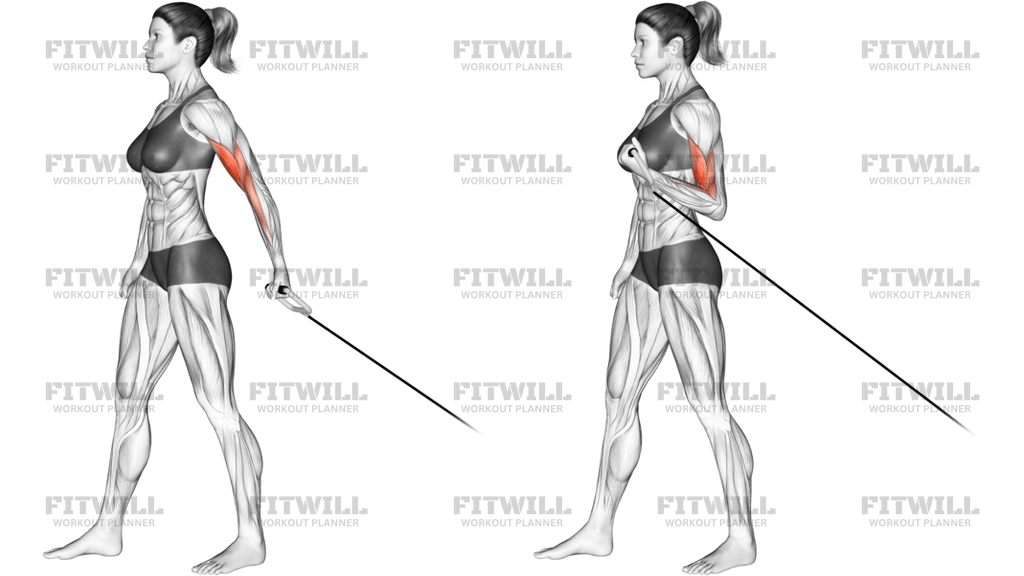
Cable One-Arm Biceps Curl Version 2 is a standing unilateral cable curl performed with a single handle on a low pulley. The cable runs behind the working side so the arm starts under continuous tension, which makes the first part of the curl more honest than a free-weight curl and keeps the rep focused on elbow flexion rather than body swing.
The main target is the biceps brachii, with brachialis and brachioradialis helping as the elbow bends and the forearm stays stable. Because you work one side at a time, this version is useful for spotting left-right strength gaps, cleaning up elbow tracking, and building a strong peak contraction without needing heavy load.
The setup matters a lot here. Stand tall, hold the handle beside the thigh, and keep the upper arm close to the ribs while the cable stays angled back and down. That starting position places the biceps under stretch before the first inch of motion, so the shoulder should stay quiet and the torso should stay stacked instead of leaning forward to help the curl.
Each rep should travel from the hanging start into a smooth curl toward the front of the shoulder, then back down under control until the elbow is nearly straight again. The wrist should stay neutral or slightly supinated, and the elbow should not drift forward to turn the movement into a front-shoulder exercise. Breathing should stay calm enough that the rib cage does not flare during the pull.
This is a good accessory movement for arm days, upper-body split routines, or any session where you want biceps volume with constant tension and a clear end position. Keep the load moderate enough that the last few reps still look clean, because the value of this exercise comes from strict repetition quality, not from cheating the handle upward with momentum.
Fitwill
Log Workouts, Track Progress & Build Strength.
Achieve more with Fitwill: explore over 9600 exercises with images and videos, access built-in and custom workouts, perfect for both gym and home sessions, and see real results.
Start your journey. Download today!




Instructions
- Attach a single handle to a low cable pulley and stand on the working side with the cable running behind you.
- Grip the handle with the working hand, let the arm hang beside the thigh, and set your feet about hip-width apart.
- Square your shoulders, keep the chest tall, and hold the upper arm close to the ribs before you start the first rep.
- Begin with the elbow almost straight and the wrist neutral, feeling tension pull backward through the arm.
- Curl the handle up in a smooth arc toward the front of the shoulder without letting the elbow drift forward.
- Squeeze the biceps briefly near the top, keeping the upper arm still and the shoulder relaxed.
- Lower the handle slowly until the arm is nearly straight again and the cable keeps light tension on the muscle.
- Breathe out as you curl and inhale on the way down, then reset your stance before the next rep.
Tips & Tricks
- Stand far enough from the stack that the cable stays taut at the bottom instead of going slack.
- Keep the working elbow pinned near the torso; letting it travel forward turns the rep into a shoulder-assisted curl.
- Use a slightly lighter load than you would for a barbell curl, because the cable keeps tension through more of the range.
- Do not lean back to finish the rep; the torso should stay stacked over the hips.
- If the wrist bends backward, shorten the handle path and keep the knuckles lined up with the forearm.
- Pause for a brief squeeze at the top so the arm does not just swing through the strongest point.
- Control the lowering phase for at least as long as the lifting phase to keep the biceps working under tension.
- Stop the set when the shoulder starts rolling forward or the upper arm cannot stay quiet.
Frequently Asked Questions
What does Cable One-Arm Biceps Curl Version 2 work most?
It mainly trains the biceps brachii, with brachialis and brachioradialis assisting the curl.
Why use the low cable behind the body instead of a dumbbell?
The cable keeps tension on the arm from the bottom of the rep, which makes the start position more challenging and consistent.
Should my elbow stay next to my side during the curl?
Yes. Keeping the elbow close to the ribs helps isolate elbow flexion and reduces shoulder cheating.
How far should I stand from the cable stack?
Far enough that the handle is already pulling backward at the bottom, but not so far that you have to lean or twist to start.
Can I do this one arm at a time for balanced development?
Yes. That is one of the main advantages of this version, especially if one arm is weaker or less coordinated.
What is the most common mistake on this exercise?
The most common mistake is letting the shoulder drift forward or the torso swing to help the handle up.
Is this a good beginner cable curl?
Yes, as long as the load is light and the lifter can keep the elbow still and lower the handle under control.
How should I choose the right weight?
Pick a load that lets you curl smoothly without twisting the trunk, losing wrist position, or shortening the lowering phase.