Diamond Push-Up
Diamond Push-Up is a close-hand bodyweight press that shifts more of the work to the triceps while still training the chest, front shoulders, forearms, and trunk. The narrow hand position makes the exercise feel very different from a standard push-up: the elbows stay tucked, the torso has to stay rigid, and the press becomes more demanding on the upper arms as fatigue builds. It is a practical strength choice when you want a triceps-focused push without adding external load.
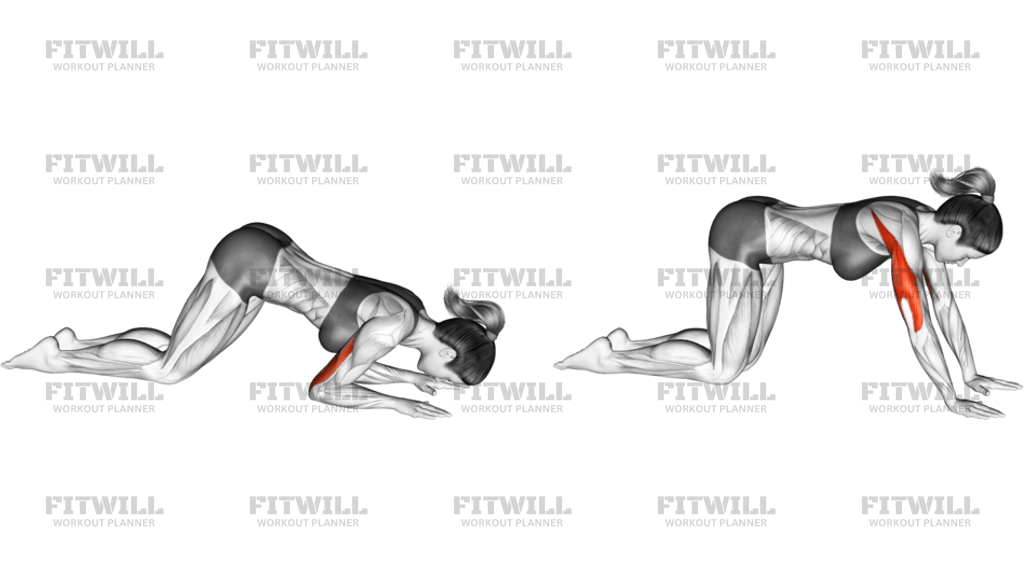
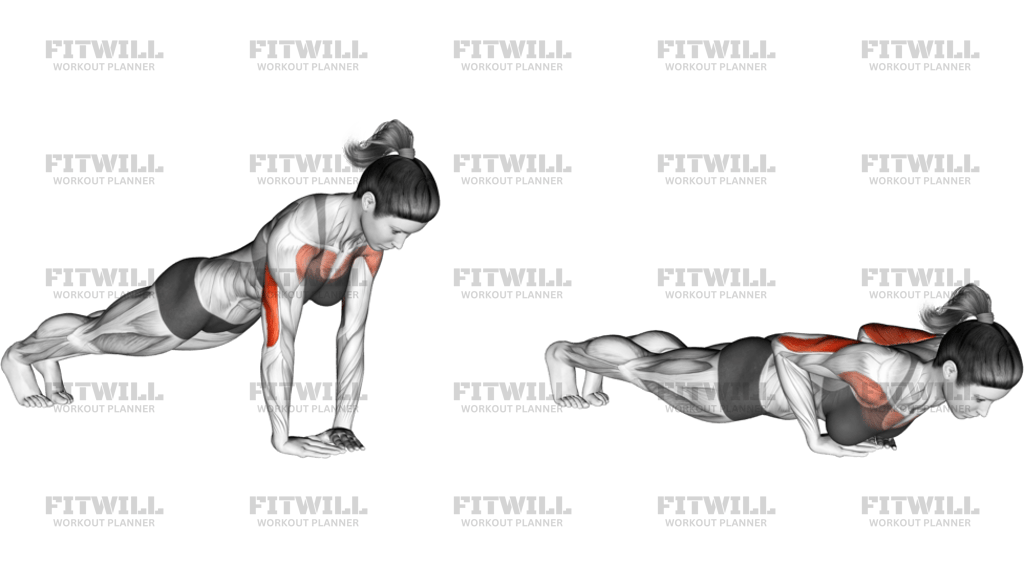
The image shows the classic setup clearly: the hands are placed close together under the center of the chest, the fingers form a diamond or triangle shape, and the body stays in a straight line from head to heels. That hand position matters. If the hands drift too far forward, the shoulders take over; if the hips sag, the lower back absorbs the stress; and if the elbows flare, the movement stops feeling like a true diamond push-up.
A good repetition starts in a strong plank and stays organized all the way down. Lower the chest toward the hands with the elbows tracking back near the ribs, then press the floor away and return to full elbow extension without losing the plank. The rep should look controlled rather than explosive. A small pause near the bottom can help you keep tension where you want it instead of bouncing out of the deepest position.
This exercise fits well in upper-body strength work, triceps accessory blocks, bodyweight circuits, and home workouts where equipment is limited. It can also be a useful regression or progression tool depending on how it is scaled: elevate the hands to make it easier, or slow the lowering phase to make it harder without changing the movement pattern. The goal is not just to survive the rep but to keep the same hand position, torso angle, and elbow path on every repetition.
Wrist comfort and shoulder position are the main things to watch. Keep the hands flat and spread the fingers so the wrists do not collapse inward, and stop the set if the shoulders shrug forward or the lower back starts to arch. If the full floor version is too aggressive, use an incline or a reduced range until you can keep the body line and the elbow tuck clean from start to finish.
[ Workout Log & Planner ]
Put your next workout in Fitwill
Keep your plan and training log ready when you are.


Instructions
- Place your hands on the floor under the center of your chest so the thumbs and index fingers form a diamond or triangle, then extend your legs behind you into a straight high plank.
- Set your feet hip-width or slightly narrower for balance, press through the palms, and stack your shoulders directly over or just slightly in front of the hands.
- Brace your midsection, squeeze your glutes, and keep your head in line with your spine before you start the first rep.
- Bend your elbows and lower your chest toward the top of your hands, keeping the elbows tucked close to your ribs instead of flaring outward.
- Keep the torso rigid as you descend so the body moves as one piece instead of letting the hips sag or pike.
- Lower until the chest comes close to the hands or you reach the deepest pain-free range you can control without losing shoulder position.
- Press the floor away through the palms, straighten the elbows, and return to the top plank without bouncing out of the bottom.
- Exhale through the press, inhale on the way down, and reset your plank before the next repetition.
Tips & Tricks
- Keep the diamond directly under the sternum; if the hands slide too far forward, the shoulders take over and the triceps do less of the work.
- Think about bending the elbows straight back rather than out to the sides, because the tucked elbow path is what makes this version triceps-heavy.
- Press the floor away hard at the top so the shoulder blades do not sink and the chest does not collapse between reps.
- If the wrists feel crowded in the diamond position, open the hands a little wider or use an incline instead of forcing an uncomfortable angle.
- Use a shorter range only if you can keep the trunk rigid; dropping deeper is not useful if the hips break position on the way down.
- Slow the lowering phase to about two or three seconds when you want more control and less momentum.
- Keep the feet planted and the glutes tight so the body does not swing when fatigue starts to build.
- Stop the set when the shoulders shrug toward the ears or the lower back starts to arch, because those are the first signs the press is no longer clean.
Frequently Asked Questions
What muscle does Diamond Push-Up target most?
The triceps are the primary target, with the chest, front delts, forearms, and core helping stabilize and press.
How is a diamond push-up different from a regular push-up?
The close hand position shifts more of the load toward the triceps and increases the demand on wrist stability and elbow control.
Where should my hands be placed?
Place the hands under the center of the chest so the thumbs and index fingers make a diamond or triangle, not forward near the shoulders.
How low should I go on each rep?
Lower until the chest comes close to the hands or until you reach the deepest range you can control without losing the plank position.
Should my elbows flare out?
No. Keep the elbows tucked close to the ribs so the press stays triceps-focused and the shoulders do not dominate the rep.
Can beginners do this exercise?
Yes, but many people need an incline version first so they can keep the narrow hand position without collapsing at the shoulders or wrists.
What if my wrists hurt in the diamond position?
Use a small hand adjustment, elevate the hands, or switch to push-up handles so you can keep the close-grip pattern without forcing painful wrist extension.
Where does this fit in a workout?
It works well in triceps accessory work, upper-body circuits, or bodyweight sessions where you want a pressing movement without external load.