Strongman Yoke Walk
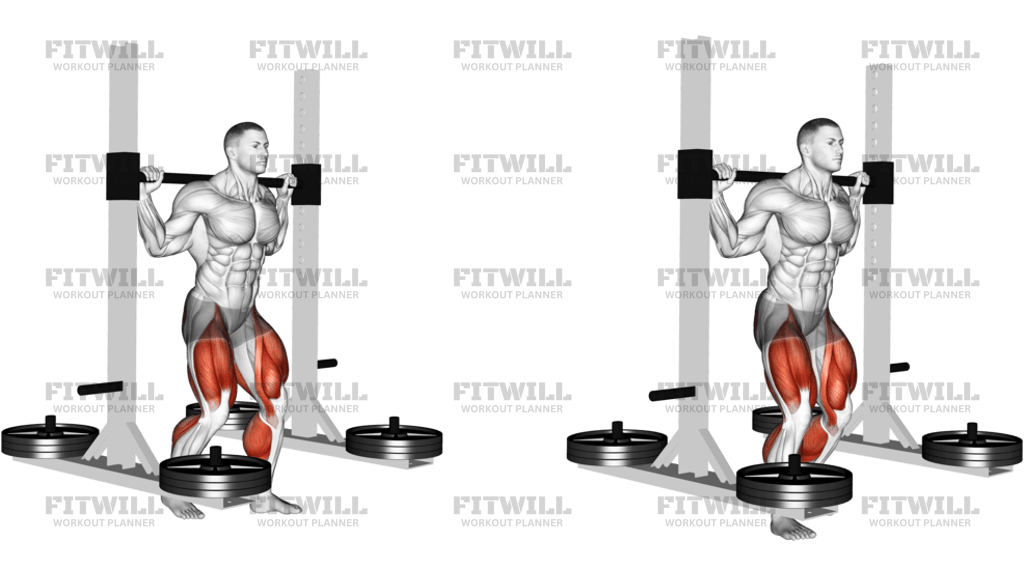
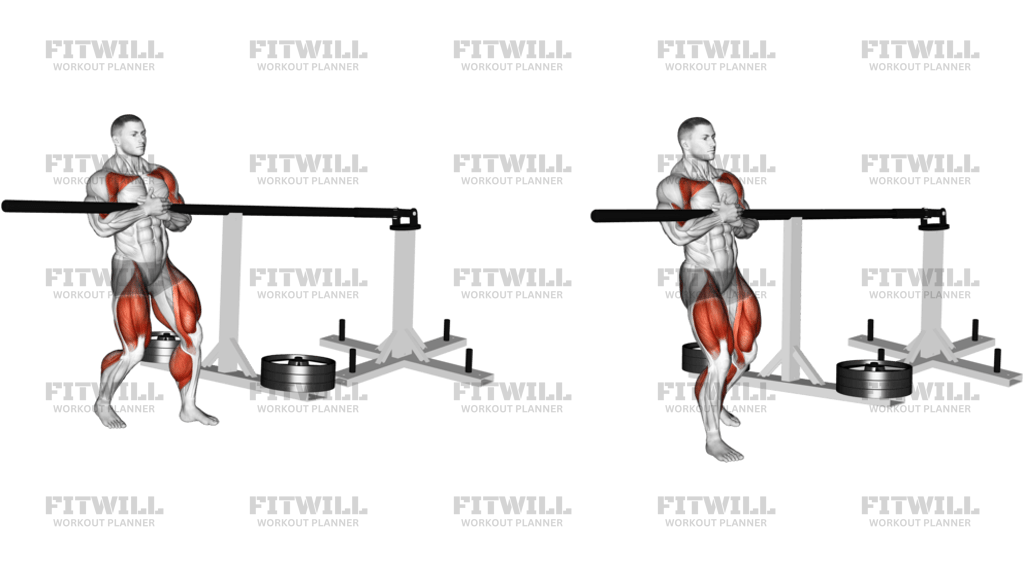
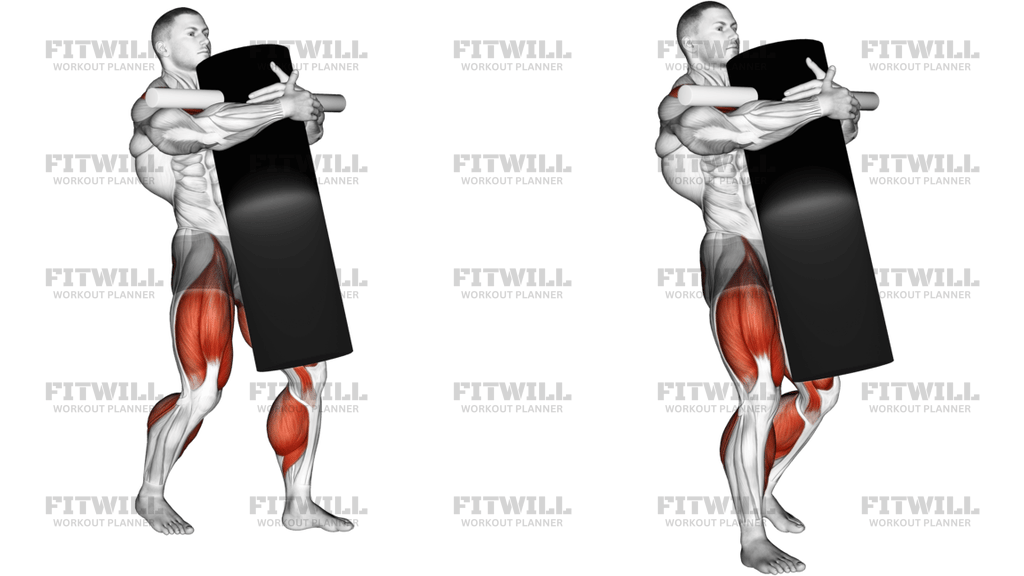
Strongman Yoke Walk is a loaded carry where a padded yoke sits across the upper back while you walk under it for distance or time. It trains whole-body bracing, leg drive, postural strength, and the ability to stay organized while a heavy implement tries to collapse the torso or pull the steps off line. In strongman training, it is one of the clearest tests of how well you can keep moving when the load is awkward and the center of mass sits high above the feet.
The setup matters because the yoke only feels controllable when the pads are centered across the traps and the feet are already placed for a stable start. From the rack, duck under the crossbar, wedge the upper back into the pads, and stand up by driving the floor away rather than jerking the load. The torso should stay tall, ribs stacked over the pelvis, and the eyes fixed forward so the yoke does not tip or twist as you take the first steps.
Each step should be short, deliberate, and planted. Keep the chest lifted without over-arching the low back, squeeze the handles or uprights to help organize the upper body, and walk with enough speed to keep momentum steady without bouncing. The goal is controlled forward travel, not a sprint. When you turn or finish the lane, slow the steps before setting the yoke back into the rack so the load settles cleanly and the shoulders stay protected.
This movement is commonly used to build event strength, trunk stiffness, leg durability, and work capacity for strongman, football, contact sports, and general power training. It also exposes weak links quickly: loose upper-back position, poor foot pressure, and overreaching steps will all make the carry feel unstable. Use a load you can walk with for the planned distance without losing posture, and treat every set as a test of organized movement under heavy compression.
[ Workout Log & Planner ]
Put your next workout in Fitwill
Keep your plan and training log ready when you are.


Instructions
- Set the yoke on the rack so the crossbar sits at about upper-chest height and step under it with the pads resting across the top of your traps.
- Grip the handles or uprights, set your feet hip-width apart, and brace your torso before lifting the yoke clear of the supports.
- Stand up by driving through the floor until the yoke is fully supported on your body and the spine stays tall.
- Lock in a neutral head position, keep your ribs stacked over your pelvis, and take a small first step to stabilize the load.
- Walk forward with short, quick steps while keeping the weight centered over midfoot.
- Keep your shoulders packed and your torso quiet so the yoke does not sway from side to side.
- Breathe in enough to brace between steps, then reset the trunk pressure as you continue down the lane.
- When the set is finished, slow your steps, guide the yoke back into the rack, and let it settle before releasing your grip.
Tips & Tricks
- Set the yoke low enough that you can get under it without tiptoeing or rounding your upper back.
- If the first step feels unstable, reduce the load or shorten the walk before trying to push the distance.
- Keep the steps small; reaching too far in front makes the yoke swing and drags the torso forward.
- Think about pushing the floor straight down instead of shuffling side to side.
- Hold the chest proud but avoid leaning back, which can dump pressure into the low back.
- Brace hard before you stand up, then keep that pressure alive between breaths during the carry.
- Use the handles only to organize the upper body; do not yank with the arms or shrug aggressively.
- If the yoke starts bouncing, slow the pace slightly rather than trying to outrun the wobble.
Frequently Asked Questions
What does the Strongman Yoke Walk train?
It trains the legs, glutes, traps, core, and grip while forcing the whole body to stay braced under an awkward load.
Where should the yoke sit on my back?
The pads should rest across the upper traps, not down on the neck or so low that the bar slides around on the shoulder blades.
How should I start the walk from the rack?
Stand up by driving through the floor, let the yoke settle on your body, and take a short first step to stop any sway before you build speed.
Should I take long strides or short strides?
Short strides are usually better. Long steps pull the yoke out of position and make the torso lean or twist.
Can beginners do the yoke walk?
Yes, but only with a light load and a short distance until the lifter can keep the torso tall and the steps clean.
What should I avoid during the carry?
Avoid leaning back, overstriding, and letting the yoke bounce from side to side. Those errors usually mean the load is too heavy or the pace is too fast.
How far should I walk?
Use the distance programmed for your session, but stop the set if posture breaks before you reach the end of the lane.
What is a good way to progress it?
Add load, distance, or speed one at a time while keeping the same upright torso and controlled footwork.