Dumbbell Lying Supination
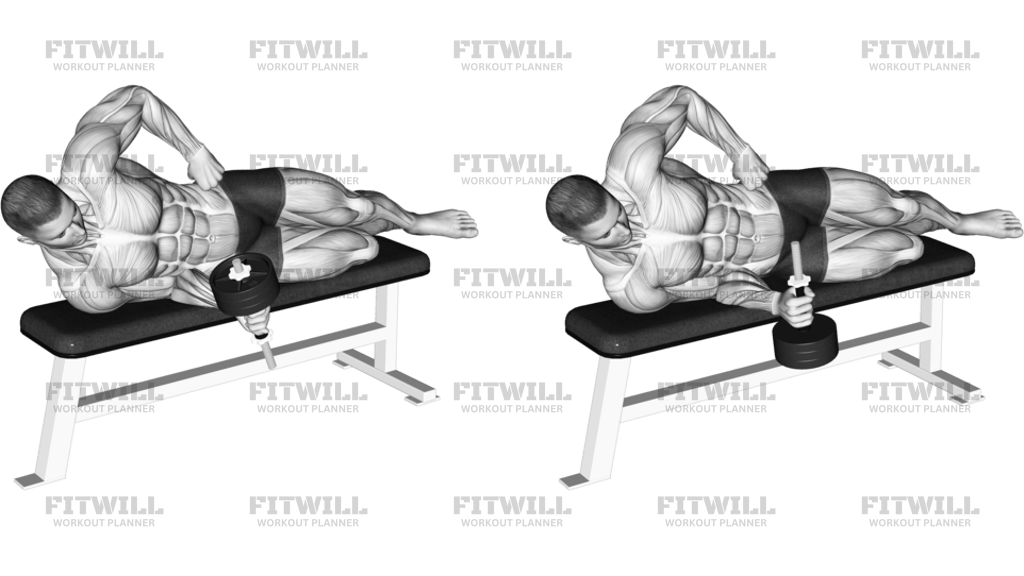
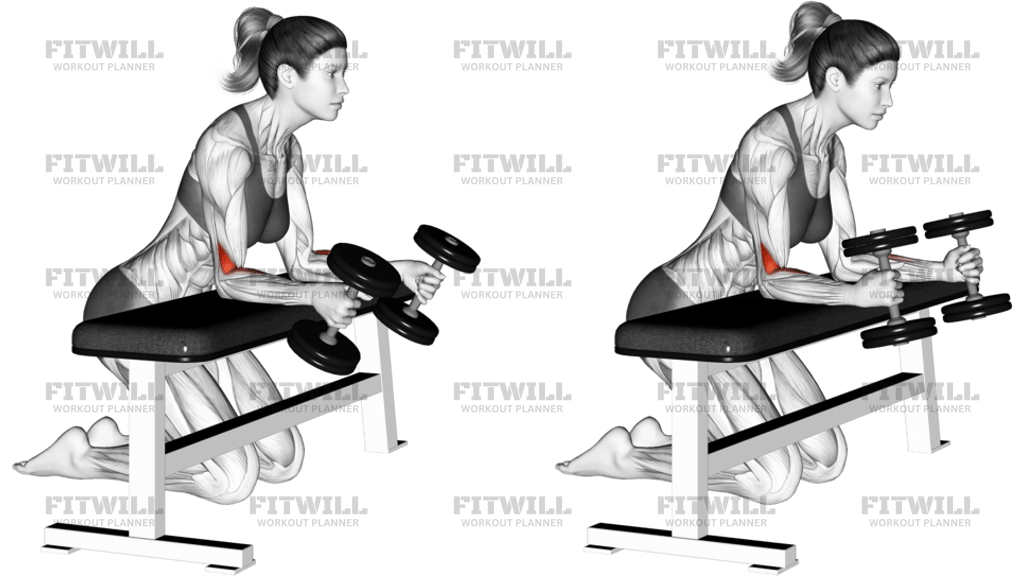
Dumbbell Lying Supination is a side-lying forearm rotation exercise that trains the motion of turning the palm upward against a light dumbbell. In the pictured setup, the upper arm is supported on a bench and the forearm hangs off the edge so the wrist can rotate freely while the shoulder and torso stay quiet. It is a small-range accessory drill, but the exact bench position matters because it isolates the rotation instead of turning it into a shoulder or trunk movement.
The main work comes from the forearm supinators, with the biceps helping when the elbow stays bent. That makes the exercise useful for athletes and lifters who need better forearm control, elbow balance, or grip coordination. Because the lever is long and the target muscles are relatively small, the load should stay very light. If the dumbbell is heavy enough to make you brace, swing, or shorten the path, the set is already too aggressive.
Set the body before the first rep. Lie on your side on a flat bench, support the head if needed, and place the working upper arm so the elbow stays near the torso and the forearm can hang over the edge. Start with the forearm turned down or neutral, then rotate the hand toward palm-up without letting the shoulder roll forward. The dumbbell should travel in a smooth arc around the forearm rather than being lifted by the whole arm.
At the top, the palm should be fully turned upward without forcing the wrist into a bent-back position. Lower under control until the forearm returns to the start, then repeat with the same speed on every rep. A short pause near both ends helps expose cheating and keeps the movement honest. If the elbow slides, the torso twists, or the wrist collapses, reduce the range or weight immediately.
This exercise fits well as a warm-up, rehabilitation-style accessory, or forearm finisher after heavier pulling work. It is most valuable when you want the rotation itself, not just a general arm pump. Treat it like a precision movement: stable setup, slow rotation, light load, and clean end positions. That is what makes Dumbbell Lying Supination useful instead of just awkward.
[ Workout Log & Planner ]
Put your next workout in Fitwill
Keep your plan and training log ready when you are.


Instructions
- Lie on your side on a flat bench and place the working upper arm on the pad so the elbow is bent and the forearm can hang just off the edge.
- Hold a very light dumbbell with the thumb side pointing slightly down or neutral at the start.
- Keep the shoulder stacked and the torso quiet; the upper arm should stay planted on the bench.
- Rotate the forearm slowly until the palm turns up and the dumbbell moves in a controlled arc.
- Stop when you reach a strong palm-up position without bending the wrist back or letting the elbow drift.
- Pause briefly at the top to remove momentum.
- Lower the dumbbell back to the start at the same slow speed, keeping the forearm supported and stable.
- Repeat for the planned reps, then set the dumbbell down carefully before switching sides.
Tips & Tricks
- Start lighter than you think you need; this movement is usually limited by control long before strength.
- Keep the elbow pinned in the same spot on the bench so the rep comes from forearm rotation, not shoulder motion.
- Let the dumbbell hang vertically at the bottom instead of curling it up with the biceps.
- Turn the palm fully upward, but do not chase extra range by bending the wrist backward.
- Move in a smooth, deliberate arc so the weight does not swing past the forearm.
- Use a short pause at both ends if you tend to rush through the rotation.
- If the shoulder rolls forward or the torso twists, shorten the range and slow the tempo.
- Stop the set if you feel pinching at the elbow or a sharp tug in the wrist; that usually means the load is too high or the angle is off.
Frequently Asked Questions
What muscles does Dumbbell Lying Supination work?
It mainly trains the forearm supinators that turn the palm upward, with the biceps helping because the elbow stays bent. The shoulder and trunk should mostly stay quiet.
How should I set up on the bench?
Lie on your side with the upper arm supported on the pad and the forearm hanging over the edge so the dumbbell can rotate freely. The elbow stays in place while the hand turns.
Should I keep my elbow bent the whole time?
Yes. Keep the elbow at roughly the same angle and let only the forearm rotate. If the elbow opens and closes, the rep turns into a curl.
What is the most common mistake on this exercise?
Using too much weight and letting the shoulder roll or the dumbbell swing. The movement should look small, controlled, and very deliberate.
Is this the same as a dumbbell wrist curl?
No. A wrist curl moves the wrist through flexion and extension, while this exercise rotates the forearm so the palm turns up.
How much weight should I use?
Use the lightest dumbbell that lets you rotate smoothly without shrugging, twisting, or shortening the path. This is usually much lighter than a curl weight.
Can I do this with both arms at once?
Usually no. One arm at a time is easier to control and makes side-to-side differences easier to notice.
Where should I feel it?
You should feel the effort deep in the forearm and sometimes some biceps support near the elbow. Sharp pain at the wrist or elbow is a sign to back off.
How can I make the set harder without adding much weight?
Slow the lowering phase, add a brief pause at the top, or use a longer set with perfect control. The load should still stay light.