Hip Medial Rotation Internal Rotation Articulations
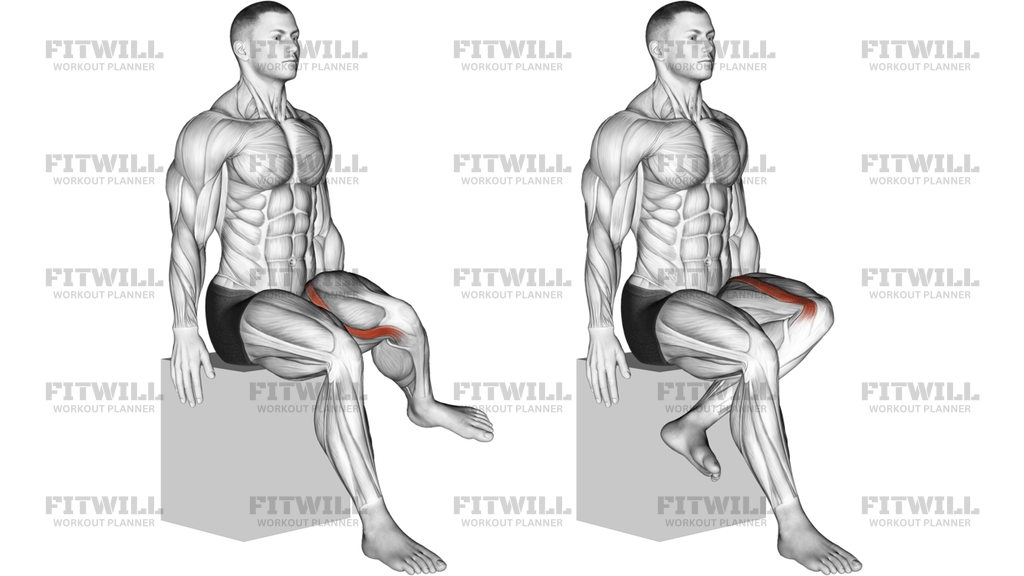
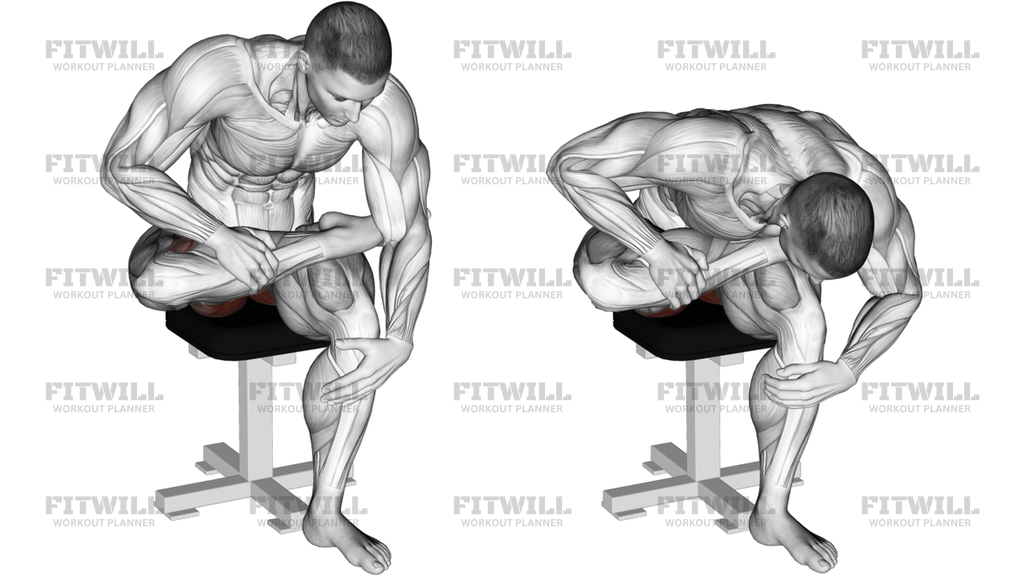
Hip Medial Rotation Internal Rotation Articulations is a bodyweight hip-control drill performed from a seated position on a bench or box. One thigh is supported while the lower leg hangs free, letting you rotate the femur at the hip without turning the whole torso. The exercise is small and precise, but that is the point: it teaches you to find hip internal rotation without borrowing motion from the pelvis, low back, or knees.
The main training effect is better control of the hip rotators and the glutes around the femur, with the core helping keep the pelvis level. That makes this movement useful when your hips feel stiff, one side moves differently than the other, or you want cleaner mechanics before squats, lunges, split squats, running, or other single-leg work. Because the load is just body weight, the quality of the repetition matters far more than the size of the range.
Set up with your sit bones supported on the edge of the bench, torso tall, and hands lightly braced beside you. Keep the working knee bent and let the lower leg hang so the hip can rotate freely. From there, slowly turn the thigh inward and then back out to neutral while the pelvis stays square. The movement should look smooth and controlled, not forced or thrown.
This drill is best used as a warm-up, mobility primer, or accessory reset when you want more hip freedom and better joint awareness. It is also a good checkpoint exercise: if one side pinches, cramps, or twists the torso, the range is too aggressive or the setup is off. Stay in a pain-free arc, breathe steadily, and keep the motion centered at the hip rather than the low back.
Fitwill
Log Workouts, Track Progress & Build Strength.
Achieve more with Fitwill: explore over 9600 exercises with images and videos, access built-in and custom workouts, perfect for both gym and home sessions, and see real results.
Start your journey. Download today!




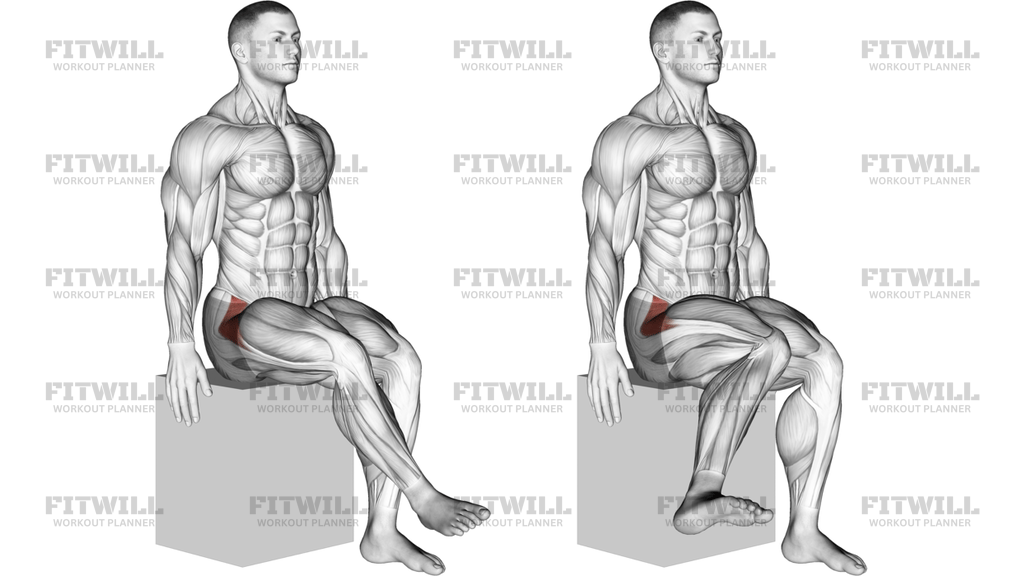
Instructions
- Sit on the edge of a bench or box with the working thigh supported and the lower leg hanging free.
- Keep your torso upright, ribs stacked over your pelvis, and place your hands beside your hips for light support.
- Let the working knee stay bent while the foot hangs or lightly touches the floor, depending on the setup.
- Brace gently and keep both hip bones facing forward before you start the rotation.
- Slowly rotate the working thigh inward at the hip without leaning, twisting, or shifting your weight.
- Pause for a moment at the end of the inward turn, then guide the leg back to neutral.
- Repeat the same controlled arc for the planned reps, keeping the pelvis quiet the whole time.
- Switch sides and match the range, speed, and control on the other hip.
Tips & Tricks
- Keep the movement small if the hip starts to pinch; forcing more range usually comes from the pelvis, not the joint.
- Think about turning the femur inside the socket instead of swinging the whole leg.
- If your low back arches or your ribs flare, reset the setup before doing another rep.
- Light fingertip pressure on the bench can help you stay tall without pushing the torso into the motion.
- Move slowly enough that you can feel the hip rotate through the full arc instead of bouncing through it.
- The working knee should stay soft and bent; straightening it changes the drill into something else.
- Exhale as you rotate inward to keep the pelvis from bracing too hard and stealing the motion.
- Stop the set if you feel sharp pain in the groin, knee, or front of the hip.
Frequently Asked Questions
What does Hip Medial Rotation Internal Rotation Articulations train most?
It mainly trains hip internal rotation control and the glutes around the femur, with the core helping keep the pelvis still.
Do I need weights or a machine for this drill?
No. This version is bodyweight only, so the focus stays on hip position, control, and smooth rotation.
Where should I feel the movement?
You should feel the hip working around the back and side of the pelvis, not a twist in the low back.
Should my pelvis move while I rotate?
No. The pelvis should stay square on the bench while the thigh rotates at the hip.
Is this more of a stretch or a strength exercise?
It is mainly a mobility and control drill, although it also helps the smaller hip stabilizers learn to work cleanly.
Can beginners do it safely?
Yes, beginners usually do well with a small range and a slow tempo as long as the hip and knee stay pain-free.
What if my knee wants to turn instead of my hip?
Shorten the range and keep the shin relaxed so the motion comes from the thigh rotating in the socket.
When is this exercise useful in a workout?
It fits well in a warm-up, mobility block, or accessory circuit before lower-body training or running.