Shoulder Transverse Adduction Articulations
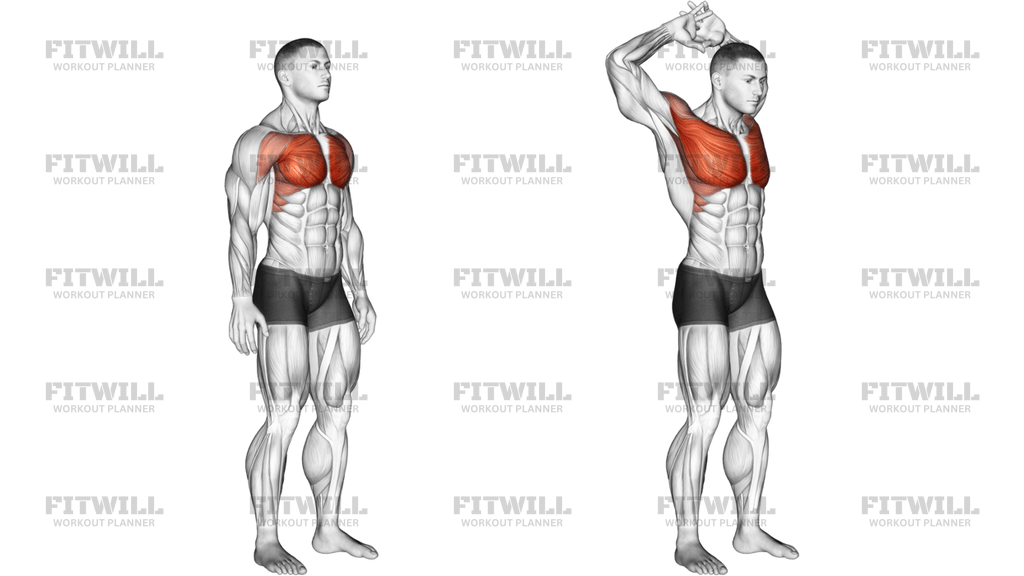
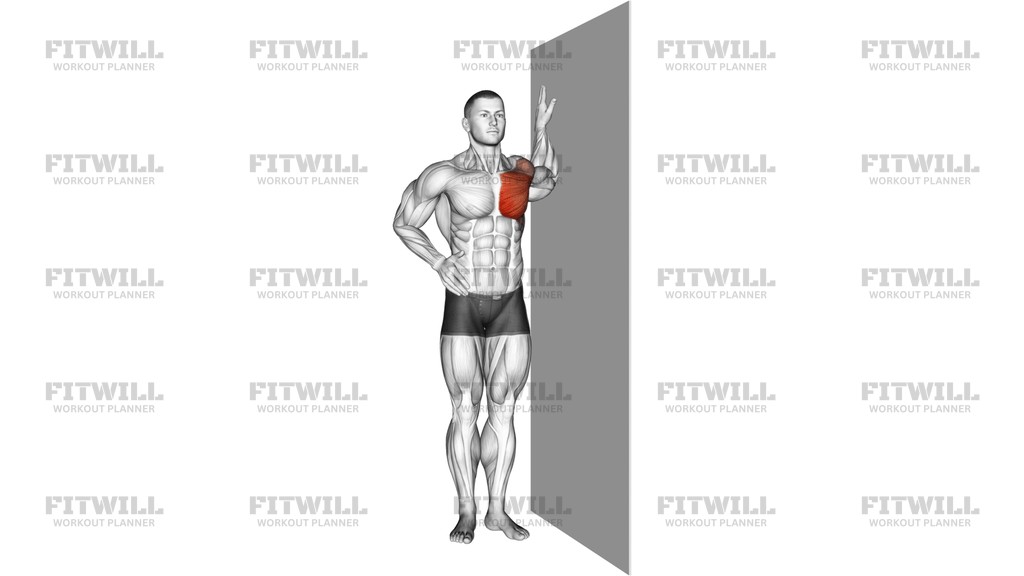
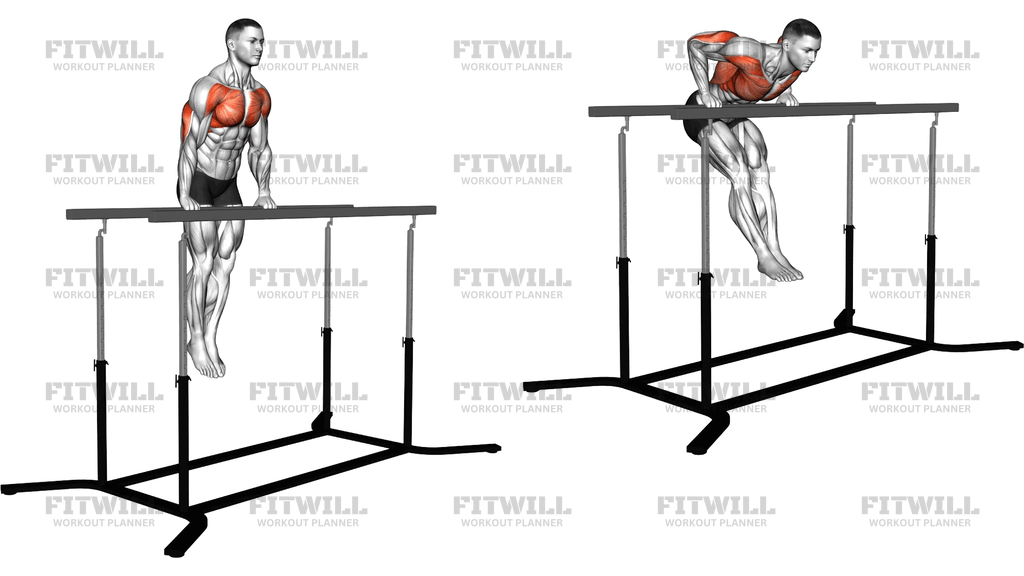
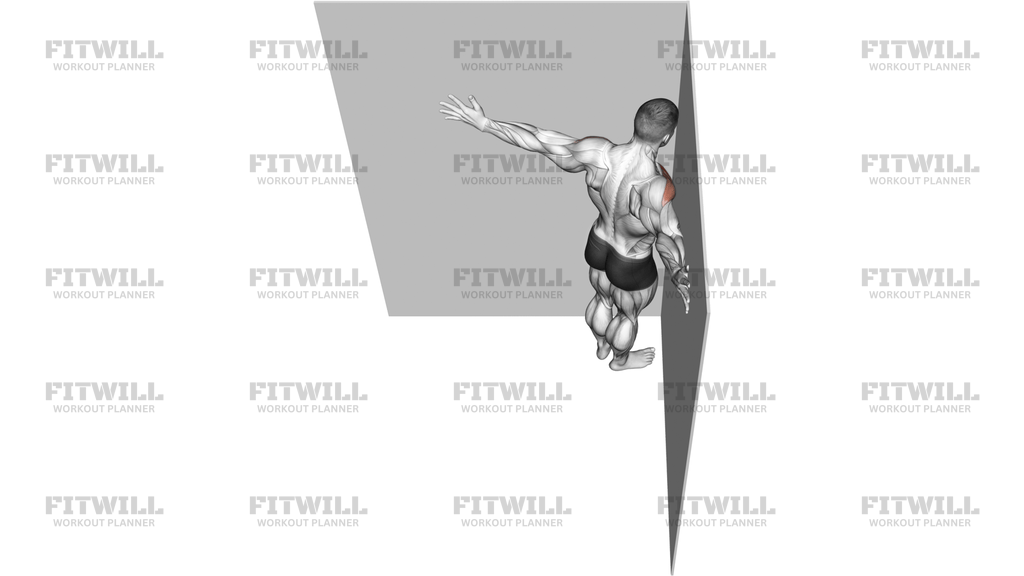
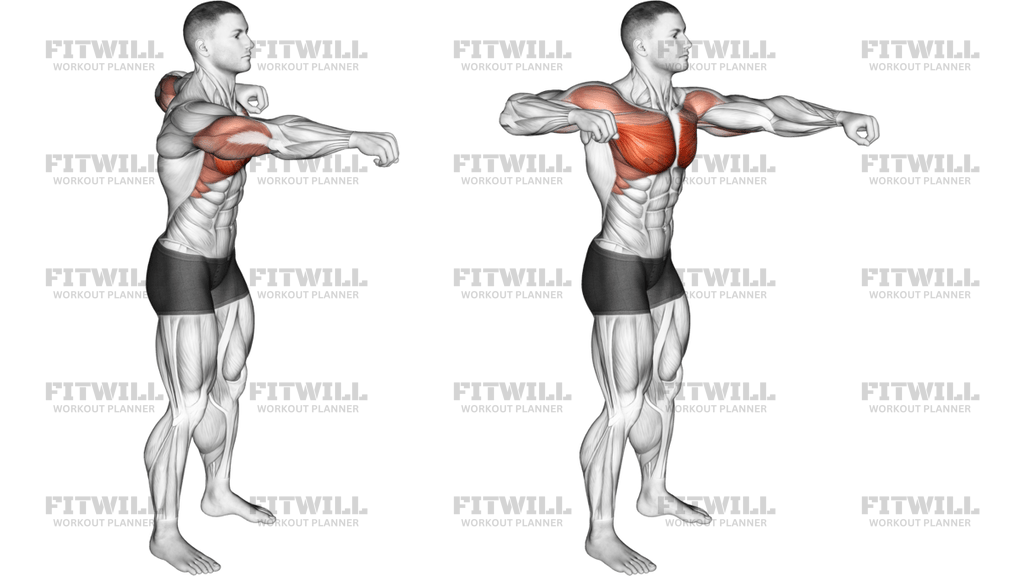
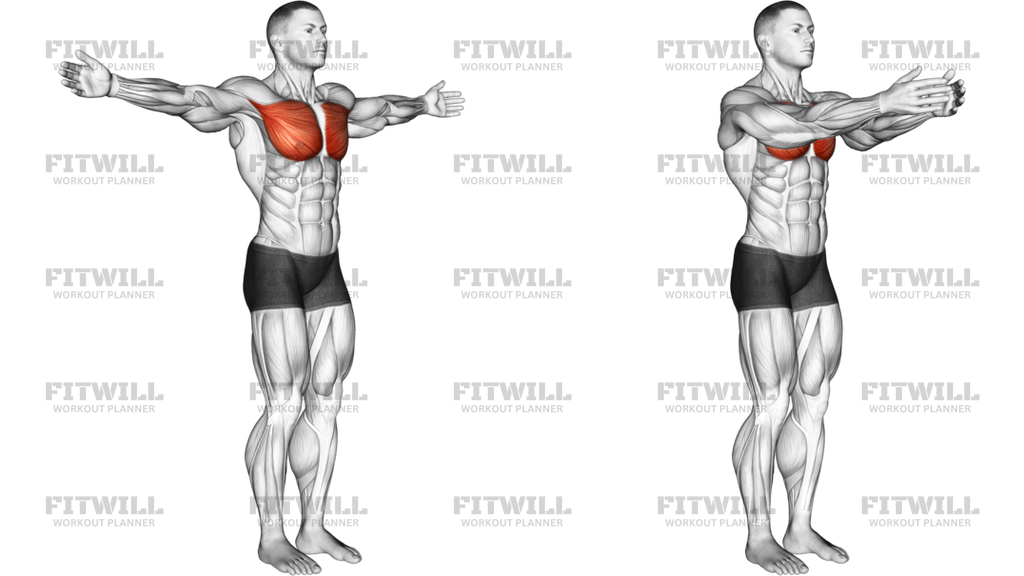
Shoulder Transverse Adduction Articulations is a standing bodyweight drill that takes the arms from an open position out to the sides into a controlled close across the front of the chest. The image shows the same movement pattern in two positions: arms spread wide at shoulder height, then brought together in front with the chest staying tall and the shoulders staying organized. It is a clean way to teach the shoulder joint how to move through transverse adduction without rushing or collapsing posture.
The exercise mainly emphasizes the pectorals, especially the way the chest assists when the arms travel forward and inward. The front of the shoulders helps guide the motion, while the triceps, upper back, and core stabilize the torso so the arms can move smoothly. Because the movement is unweighted, the quality of the repetition comes from control, not force. That makes it useful as a warm-up, a low-fatigue activation drill, or a mobility-focused accessory when you want the chest and shoulders to work together without heavy loading.
The setup matters because this pattern is easy to cheat with rib flare, shrugged shoulders, or a loose lower back. Stand tall with your feet planted, keep the ribs stacked over the pelvis, and hold the arms at about shoulder height before you start each rep. A small bend in the elbows is fine, but the motion should still feel like the upper arms are sweeping in a smooth arc rather than the hands swinging around with momentum. If the torso twists or leans, the drill stops being a shoulder articulation and turns into a body swing.
Each repetition should feel deliberate: open under control, close through the front of the chest, and return to the start with the same tempo. The shoulders should stay down and wide instead of creeping toward the ears, and the neck should remain relaxed. You should feel a stretch across the chest when the arms open and a stronger contraction across the pecs when the arms come together, but neither end of the range should create pinching at the front of the shoulder.
Use this movement when you want to rehearse clean shoulder mechanics, wake up the pecs before pressing work, or add controlled chest engagement to a mobility circuit. It is also a useful regression for people who need a simpler way to learn arm path and scapular control before moving to banded or cable variations. The key is to keep the repetition smooth, symmetrical, and pain-free so the shoulders learn a predictable path from open to closed.
[ Workout Log & Planner ]
Put your next workout in Fitwill
Keep your plan and training log ready when you are.


Instructions
- Stand tall with your feet about hip-width apart and your core lightly braced.
- Raise both arms to shoulder height with a small bend in the elbows and palms facing forward or slightly inward.
- Set your shoulders down away from your ears and keep your ribs stacked over your pelvis.
- Begin with the arms open wide, forming a straight line across the chest and upper back.
- Exhale as you sweep both arms forward in a wide arc until the hands meet or nearly meet in front of your chest.
- Keep the movement smooth and symmetrical instead of letting the hands swing or the torso lean forward.
- Pause briefly at the front and squeeze the chest without shrugging the shoulders.
- Inhale as you slowly return the arms to the open starting position under control.
- Stop the rep if you feel pinching in the front of the shoulder, then reset the range and continue.
Tips & Tricks
- Keep the hands at shoulder height; dropping the arms low shifts the drill away from the chest and toward a sloppy swing.
- A soft elbow bend is fine, but do not change the elbow angle rep to rep or the movement path will get messy.
- Think about the upper arms tracing a wide arc, not the wrists leading the motion.
- If your shoulders creep toward your ears, reset and start the rep with the shoulder blades gently down.
- Use a smaller range if the front of the shoulders feel pinchy or if the chest opening becomes too aggressive.
- The return phase should be slower than the closing phase so the pecs and front delts stay under control.
- Keep the ribs from flaring forward; once the chest lifts too much, the lower back usually starts helping.
- This works well as a warm-up before pressing because it teaches the arms to travel together without loading the joints heavily.
Frequently Asked Questions
What muscles do Shoulder Transverse Adduction Articulations target most?
The main target is the pectorals, with the front delts and triceps helping guide and stabilize the motion.
Is this a stretching drill or a strength exercise?
It is mostly a controlled mobility and activation drill. The bodyweight setup keeps the focus on clean shoulder mechanics rather than heavy resistance.
Do I need any equipment for this movement?
No. The version shown is performed standing with bodyweight only, using the arm path itself as the resistance and control challenge.
How high should my arms be at the start?
Keep them around shoulder height. If they drift much lower, the chest line changes and the movement starts to lose its intended transverse-adduction path.
Should my hands touch in front of the chest?
They can meet or nearly meet, but the exact finish position matters less than keeping the arc smooth and the shoulders relaxed.
What is the most common mistake with this exercise?
Shrugging the shoulders, arching the lower back, or swinging the arms forward all reduce the quality of the repetition.
Can beginners do Shoulder Transverse Adduction Articulations?
Yes. Beginners usually do well with a short range and slow tempo so they can learn the arm path without tension in the neck or shoulders.
When is this exercise most useful in a workout?
It fits well in a warm-up, a shoulder-prep sequence, or as a light accessory drill before pressing or chest-focused work.