Twisted Leg Raise
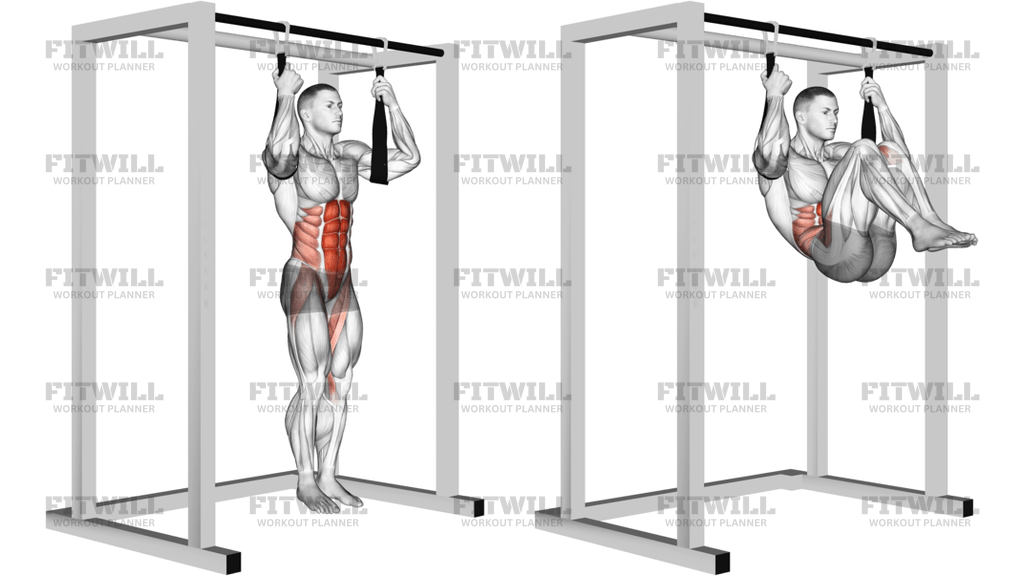
Twisted Leg Raise is a supported core exercise usually performed on a captain's chair or vertical knee raise station. Your forearms rest on the pads, your back stays against the support, and your legs lift in front of you while the pelvis rotates slightly so the obliques have to control the top of the rep. The movement is bodyweight-based, but it is still demanding because you are holding your torso quiet while the hips and abs move through a controlled arc.
The main training effect is on the abs, with extra demand on the obliques and hip flexors as the legs rise and the pelvis tips. In anatomy terms, the primary work comes from the Rectus abdominis, with help from the External obliques, Iliopsoas, and Transversus abdominis. Because the station removes most swinging, Twisted Leg Raise is useful for teaching clean trunk control instead of letting momentum do the work.
The setup matters more than people expect. If the forearms are not planted firmly, the shoulders drift forward and the torso starts to swing. If the pelvis is not tucked slightly, the lower back takes over and the lift turns into a hip-flexor toss. Set the elbows on the pads, grip the handles lightly, press the upper back into the pad, and begin with the legs hanging still before the first raise.
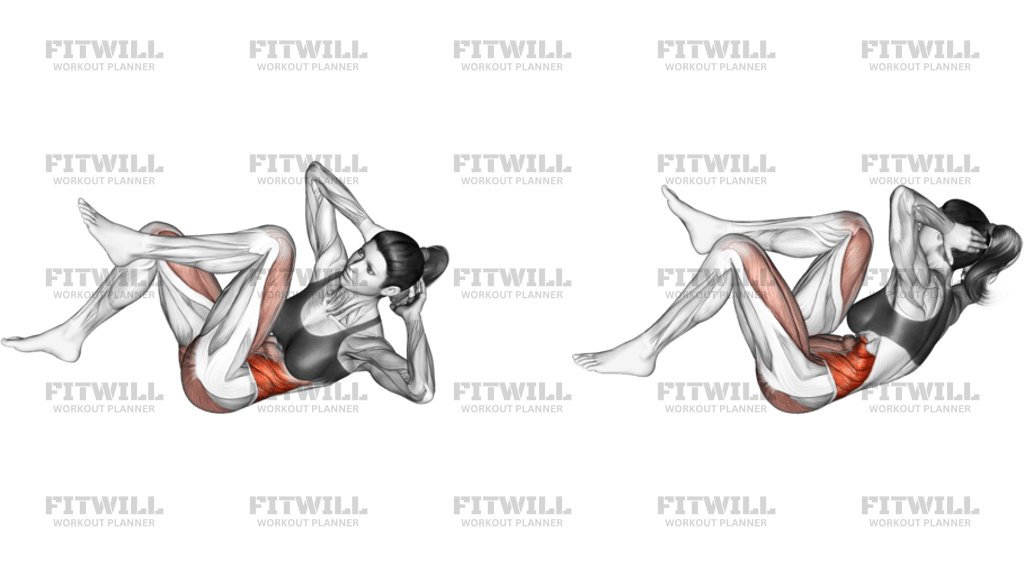
During each repetition, lift the knees or straight legs in front of you, then add the twist at the top rather than whipping the legs side to side from the start. Keep the ascent smooth, pause briefly when the abs are most shortened, and lower the legs under control until the pelvis is back in a quiet hanging position. A small, repeatable twist is better than forcing a large rotation that swings the frame.
Twisted Leg Raise fits well in accessory core work, athletic conditioning, or a short ab-focused block after compound lifts. It works best when you want a bodyweight movement that trains trunk control, pelvic position, and oblique contribution without needing external load. Beginners can use bent knees and a smaller range; advanced lifters can straighten the legs or slow the lowering phase, but the station should stay stable and the rep should still look clean from start to finish.
[ Workout Log & Planner ]
Put your next workout in Fitwill
Keep your plan and training log ready when you are.


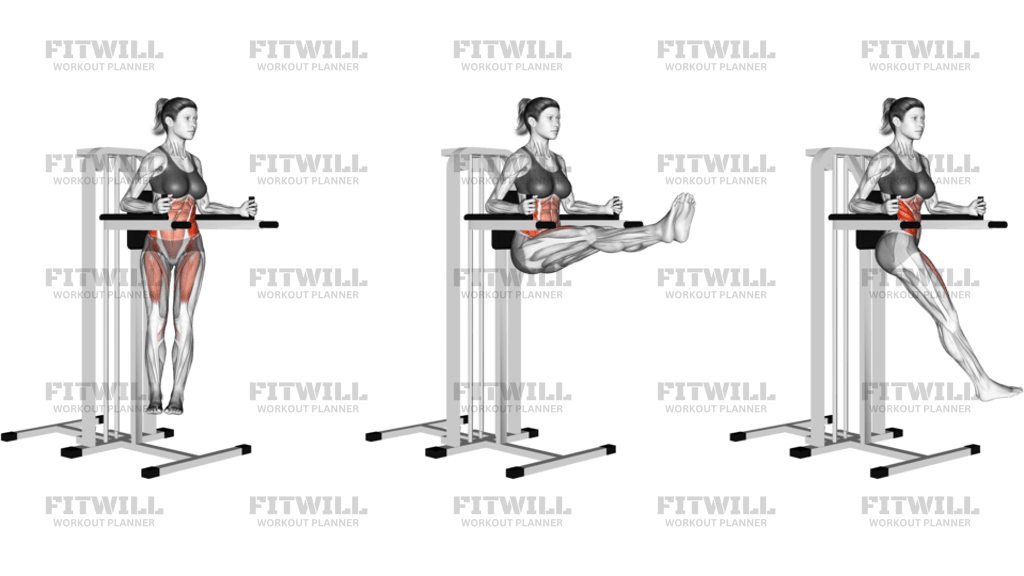
Instructions
- Set your forearms on the captain's chair pads, grip the handles lightly, and press your upper back into the pad.
- Let your legs hang straight down with your pelvis neutral and your shoulders relaxed away from your ears.
- Tighten your midsection before the first rep so the torso stays still when the legs start to move.
- Lift both knees or straight legs upward in front of you until your hips are flexed and your abs are fully working.
- At the top, rotate the pelvis slightly to one side to create the twist without swinging your torso off the pads.
- Lower the legs back down slowly, keeping tension through the abs and avoiding a drop or kick at the bottom.
- Reset to a quiet hanging position before the next rep, then repeat the same side or alternate sides as programmed.
- Breathe out as you raise and twist, then inhale as you lower under control.
Tips & Tricks
- Keep the twist small and controlled; if your shoulders start turning, the rep has become a swing.
- Use bent knees first if straight legs pull your lower back out of position.
- Press your upper arms into the pads so the captain's chair does not feel like a dip station takeover.
- Stop the descent before your hips dump backward and your legs start swinging from momentum.
- A slight posterior pelvic tilt at the top helps the lower abs work harder than the hip flexors.
- If your grip is failing before your core, lighten the effort and keep your hands relaxed on the handles.
- Raise the legs only as high as you can without arching the low back away from the pad.
- Slow the lowering phase to make the obliques and lower abs do more of the work.
- Alternate sides only if you can keep the same range and speed on both directions.
Frequently Asked Questions
What muscles does Twisted Leg Raise work most?
It mainly trains the abs and obliques, with the hip flexors helping to lift the legs. The captain's chair support also makes trunk stability part of the challenge.
Is Twisted Leg Raise the same as a captain's chair knee raise?
It is a close variation, but the twist adds more oblique involvement. The basic setup is the same: forearms on the pads, torso supported, legs lifting in front of you.
Should I bend my knees or keep my legs straight?
Bent knees are the easier version and are usually better for beginners. Straight legs increase the lever arm and make the abs work harder, but only use them if your back stays controlled.
How much should I twist at the top?
Only rotate the pelvis a small amount. If the whole torso swings or the station moves, the twist is too large for a clean rep.
Why do I feel this more in my hip flexors than my abs?
Usually the legs are lifting faster than the pelvis is tucking. Shorten the range a little, slow the lowering phase, and finish each rep by curling the pelvis upward instead of just raising the thighs.
Can beginners do Twisted Leg Raise safely?
Yes, as long as they start with bent knees and a small twist. The key is keeping the back supported and avoiding any swinging from the bottom.
What is the most common mistake on this machine?
People swing their legs and let the shoulders roll forward off the pads. That turns the movement into momentum work and takes tension away from the abs.
How should I breathe during Twisted Leg Raise?
Exhale as you lift and twist, then inhale as you lower. That breathing pattern helps keep the ribs down and the torso stable against the pads.