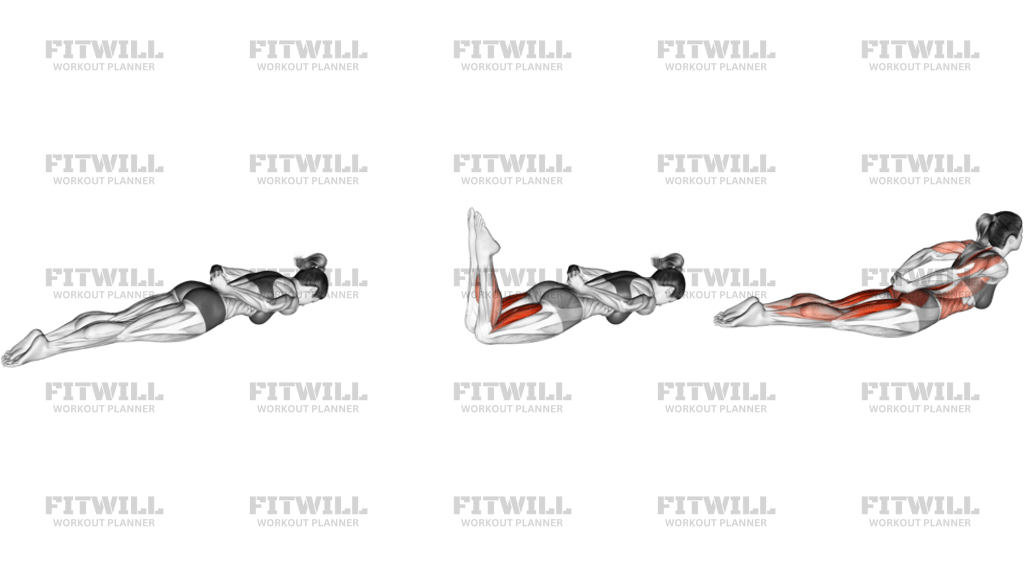
Swan Dive
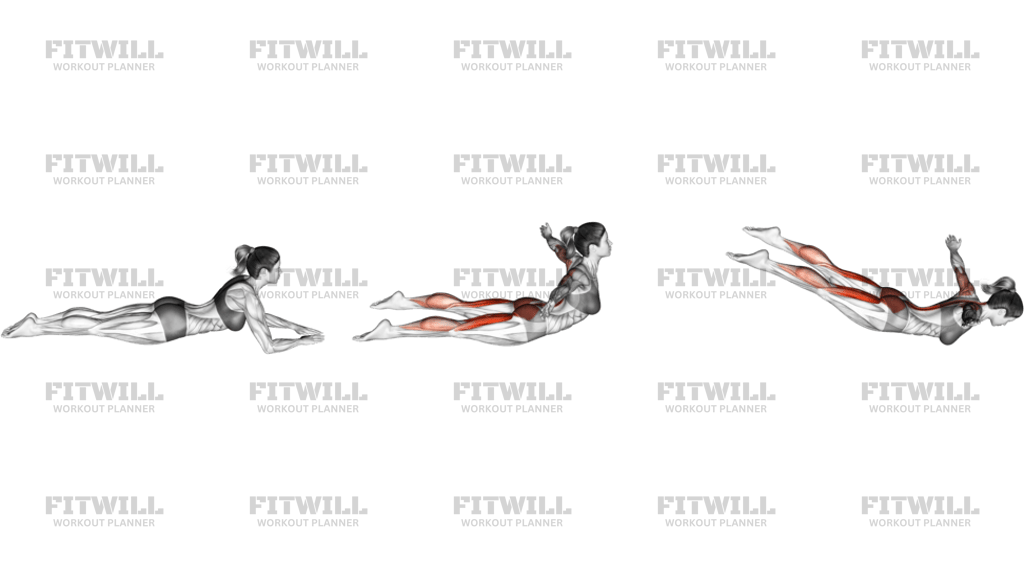
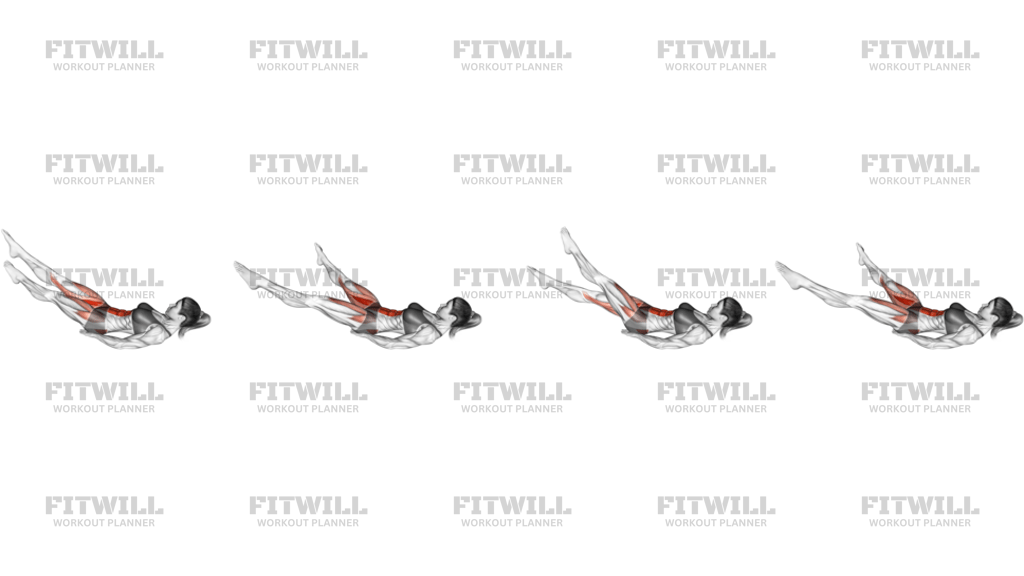
Swan Dive is a classic Pilates mat exercise built around prone spinal extension and controlled rocking. It trains the back of the body, especially the spinal extensors, glutes, hamstrings, and upper back, while asking the core to keep the pelvis and ribs organized as the chest and legs lift away from the floor. The movement is more than a simple back bend: the lift, reach, and rock all have to stay smooth so the body moves as one long line instead of collapsing through the low back.
The setup matters because Swan Dive starts from a very specific body shape. You lie face down, lengthen the legs, and reach the arms forward while keeping the shoulders relaxed away from the ears. The pubic bone and front of the hips stay heavy enough to anchor the pelvis, and the neck stays long so the head does not lead the motion. From there, you build a tall swan position by lifting the chest and thighs without crunching the lower back.
Once you are in position, the goal is to rock forward and back with control, not to throw the body into a big swing. The chest stays open, the legs stay active, and the movement should feel like a coordinated arch through the front of the body and a controlled recoil back to the start. Breathing should stay even and deliberate so each rep keeps the same shape and rhythm instead of getting faster as fatigue builds.
Use Swan Dive when you want a demanding Pilates back-extension pattern that challenges extension strength, trunk control, and body awareness at the same time. It can be scaled with a smaller lift, a shorter rock, or a Swan Dive prep variation if the full version is too aggressive. Keep the motion pain-free, avoid jamming the neck upward, and do not force extra height by pinching the low back. The best repetitions look long, calm, and balanced rather than dramatic.
Fitwill
Log Workouts, Track Progress & Build Strength.
Achieve more with Fitwill: explore over 9600 exercises with images and videos, access built-in and custom workouts, perfect for both gym and home sessions, and see real results.
Start your journey. Download today!




Instructions
- Lie face down on the mat with both legs long, feet pointed, and your arms reaching straight forward.
- Keep the shoulders soft, the neck long, and the front of the hips grounded as you lightly brace your abdomen.
- Lift your chest into a swan position by lengthening the spine forward and up instead of crunching the low back.
- Engage the glutes and back-of-leg line enough to float the thighs without squeezing the knees together.
- Reach the arms long as the chest stays open and the gaze remains slightly ahead of the mat.
- Rock the body forward and back in one smooth line, keeping the torso lifted and the pelvis organized.
- Use a controlled inhale and exhale so the rocking stays calm and even through each rep.
- Lower with control to the prone starting position and reset before the next repetition.
Tips & Tricks
- Think of reaching the chest forward more than arching the lower back up.
- Keep the pubic bone and lower ribs connected to the mat long enough to prevent a hinge at the lumbar spine.
- If your neck feels pinched, lower the gaze and keep the back of the neck long instead of looking straight ahead.
- The thighs should lift from the glutes and hamstrings, not from a wild kick of the legs.
- Use a smaller rock if the body starts slamming into the mat or losing the long-line shape.
- Keep the shoulders broad so the arms do not creep toward the ears during the lift.
- Exhale as you organize the lift and inhale as you maintain the arc or transition through the rock.
- Stop the set if the low back takes over and the movement no longer feels evenly distributed through the torso.
Frequently Asked Questions
What muscles does Swan Dive work?
It emphasizes the spinal extensors, glutes, hamstrings, and upper back while the core keeps the ribs and pelvis organized.
Is Swan Dive the same as Swan?
No. Swan is the setup and extension pattern; Swan Dive adds the rocking action and requires more control.
Where should I feel the lift in the Swan Dive position?
You should feel the work spread through the upper back, back of the shoulders, glutes, and hamstrings, not just in the low back.
Why is my neck uncomfortable during this exercise?
Usually the head is being lifted too high or the neck is collapsing. Keep the gaze slightly forward and the back of the neck long.
Can beginners do Swan Dive safely?
Many beginners need Swan prep or a smaller rock first, because the full dive version is demanding on spinal control.
What is the biggest mistake with the rocking phase?
Throwing the body forward and backward with momentum instead of keeping the torso long and controlled through the whole arc.
How should my arms move during Swan Dive?
Reach them long and keep the shoulders down so the arms extend the line of the body instead of shrugging the lift.
How do I regress the exercise if the full version is too hard?
Reduce the height of the chest lift, shorten the rock, or stay with a simpler Swan variation until you can keep the pelvis steady.