Prone Press-Swan
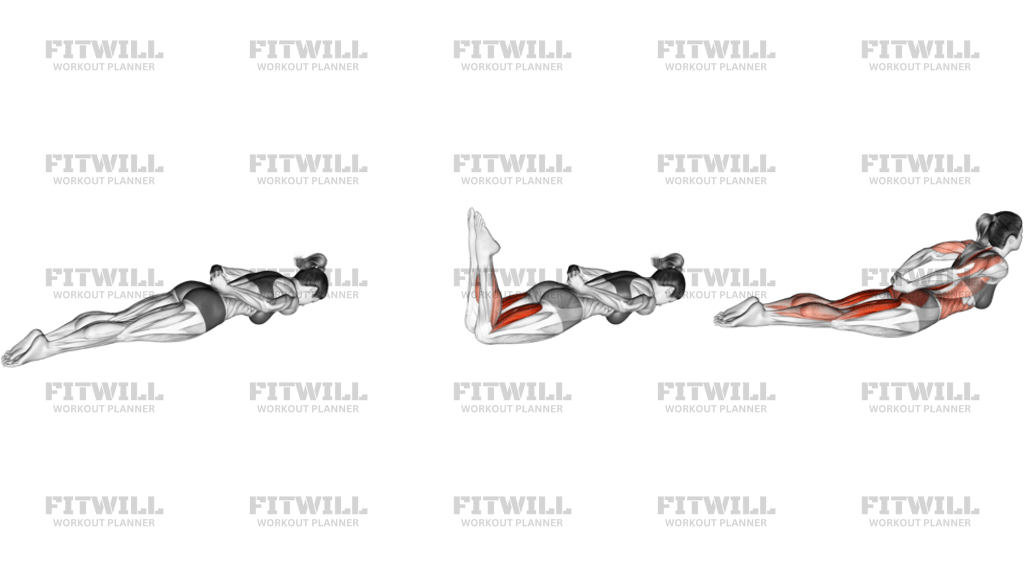
Prone Press-Swan is a floor-based spinal extension exercise that combines a prone press with a gentle swan-like lift through the chest and upper back. It uses body weight and controlled leverage rather than external load, so the quality of the setup matters more than how high you can rise. The goal is to create a smooth lift from the sternum and upper spine while keeping the pelvis grounded and the neck long.
This movement is useful for opening the front of the body, strengthening the back side of the trunk, and teaching the ribs and shoulders to stay organized while the chest lifts. It asks the spinal extensors, glutes, shoulders, and upper back to work together instead of letting the lower back do all the work. When done well, Prone Press-Swan feels like a clean extension through the whole line of the body, not a hard crunch in one spot.
The setup is simple but specific. Lie face down with your legs long, the tops of your feet on the floor, and your hands placed near the rib cage so you can press the floor away without shrugging. From there, lengthen the crown of your head forward, keep the back of the neck long, and let the shoulders stay away from the ears. That starting shape creates space for the chest to rise without collapsing into the lumbar spine.
During each rep, press through the palms to lift the chest first, then straighten the arms only as far as you can do it without losing the pelvis contact or flaring the ribs. The lift should feel like an even wave through the spine, with the sternum leading and the head following naturally. Lower with the same control, keeping tension through the back of the body instead of dropping straight to the mat.
Prone Press-Swan fits well in Pilates work, mobility sessions, warm-ups, or accessory circuits where you want posture, control, and thoracic extension rather than brute force. It is also a useful counterbalance to pressing, desk work, and long periods of sitting because it restores some length and lift through the front of the torso. If the low back starts to dominate, shorten the range and make the movement smaller and cleaner before adding height.
[ Workout Log & Planner ]
Put your next workout in Fitwill
Keep your plan and training log ready when you are.


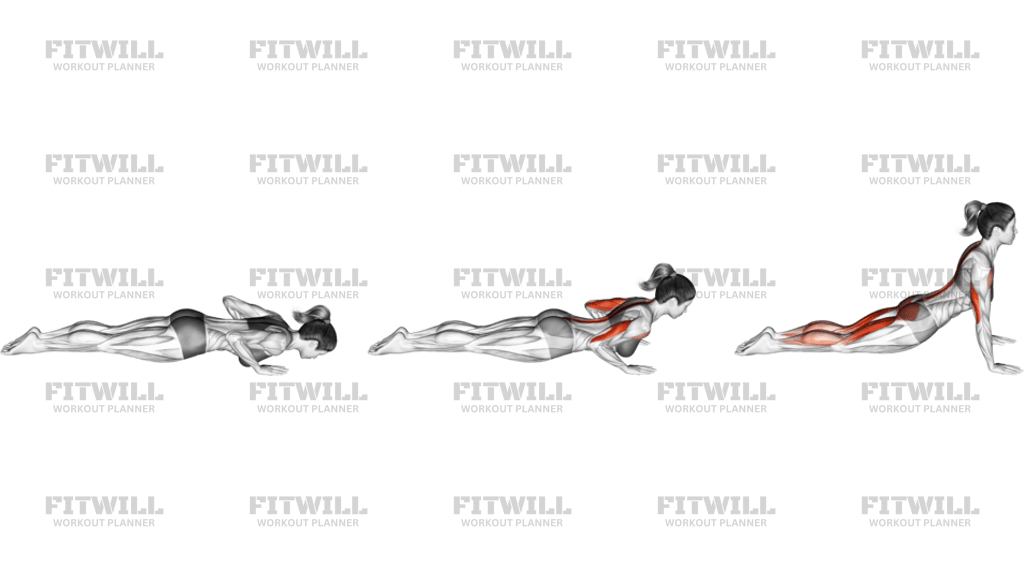
Instructions
- Lie face down on the floor or mat with your legs straight, the tops of your feet resting down, and your hands beside the rib cage with your elbows tucked close to your sides.
- Lengthen your neck so the forehead or chin hovers just above the mat, then draw your shoulders away from your ears and lightly switch on your glutes and thighs.
- Press the pelvis and front of the hips into the floor before you move so the lift comes from the upper body instead of a big swing in the low back.
- Inhale to grow long from the crown of your head through your tailbone, keeping the ribs from spilling forward as you prepare to press.
- Exhale and press the floor away with both palms, lifting your chest and sternum first and then straightening the arms as much as your shoulders allow.
- Keep the elbows tracking back and the chest reaching forward and up, while the lower belly stays lightly connected and the hips remain down.
- Pause briefly at the top with a long neck and an open chest, then breathe into the side ribs without shrugging the shoulders.
- Lower your chest back toward the mat under control by bending the elbows and easing the spine down one segment at a time.
- Reset with the forehead or chin lightly down, re-stack the shoulders away from the ears, and repeat for the planned reps.
Tips & Tricks
- Think of the sternum reaching forward before it rises; if the chin lifts first, the neck is taking over the rep.
- Keep the pubic bone and thighs heavy on the mat so the press stays anchored instead of turning into a low-back hinge.
- A small lift done cleanly is better than chasing a huge backbend that makes the ribs flare and the shoulders shrug.
- If your wrists feel jammed, move the hands slightly farther forward and keep the palms under the shoulders instead of too close to the chest.
- Let the elbows track slightly back along the sides; flaring them wide usually shifts work away from the back and into the shoulders.
- The top position should feel open across the chest, not compressed in the lumbar spine. Reduce the range if you feel pinching in the low back.
- On the way down, keep tension through the arms and upper back so you do not drop out of the lift between reps.
- Use a slower lowering phase than lifting phase to build control through the swan portion of the movement.
Frequently Asked Questions
What muscles does Prone Press-Swan work?
It mainly trains the spinal extensors and upper back, with help from the glutes, shoulders, and triceps as you press up from the floor.
How is Prone Press-Swan different from a regular cobra?
Prone Press-Swan usually asks for a more controlled press from the hands and a smoother lift through the chest, rather than simply hanging out in a passive backbend.
Where should I feel Prone Press-Swan most?
You should feel it mostly across the upper back, back of the shoulders, and along the spine, not as a sharp pinch in the low back.
Can beginners do Prone Press-Swan?
Yes, if they keep the lift small and let the chest rise only as far as the pelvis can stay grounded. Beginners should prioritize control over height.
What is the biggest mistake in Prone Press-Swan?
The most common error is yanking the head back and over-arching the low back instead of lifting the sternum and upper spine first.
Do my hips need to stay on the floor during Prone Press-Swan?
Yes. Keeping the pelvis and front of the hips down is what makes the movement a true prone press and keeps it from becoming a sloppy backbend.
Can I make Prone Press-Swan easier?
Yes. Keep your elbows bent, lift only the chest, and reduce the range until you can keep the shoulders relaxed and the neck long.
Is Prone Press-Swan good after sitting all day?
It can be a useful reset because it opens the front of the torso and encourages more extension through the upper back after long periods of sitting.