Side Plank Beginner
Side Plank Beginner is a body-weight anti-lateral-flexion exercise that builds the side of the trunk, the deep abdominal wall, and the hip stabilizers at the same time. The bent-knee version shortens the lever arm, which makes it a useful starting point for anyone learning how to hold the pelvis level without twisting or sagging. It is simple on paper, but the quality of the hold depends on how well you organize the forearm, shoulder, ribs, and hips before you lift.
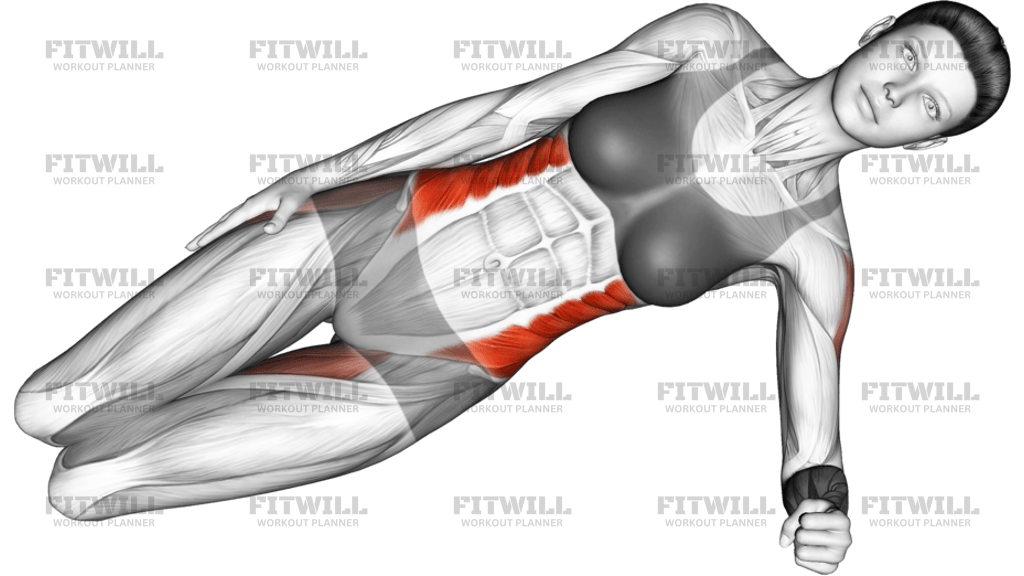
The main emphasis is on the obliques, with the abs, deep core, and lower back helping you keep the torso stacked. In technical terms, the external obliques do most of the work, while the rectus abdominis, transversus abdominis, and erector spinae help keep the trunk from bending or rotating. The hips also stay active, especially on the side closest to the floor, because they have to keep the pelvis from dropping as you hold the position.
The setup matters more than most beginners expect. Place the bottom forearm on the floor with the elbow directly under the shoulder, bend both knees, and stack the legs so the lower hip can support the body without strain. A stable shoulder, a long spine, and a slight brace through the ribs make it much easier to keep the position clean from the first second of the hold to the last.
When you lift, think about driving the floor away with the forearm and raising the hips until the body forms a straight line from shoulder to knees. Keep the chest open, the neck relaxed, and the top hand on the hip or thigh so you can feel whether the pelvis starts to drift. The best reps are quiet and controlled: no rocking forward, no dumping weight into the shoulder, and no rushing through the lowering phase.
Side Plank Beginner is useful as a core accessory, a warm-up drill, or a control exercise before harder plank variations, running, or heavy lifting sessions. It teaches you how to hold tension through the side body without overusing momentum, and that carries over well to many sports and strength movements. If the lower back or shoulder feels irritated, shorten the hold, keep the knees bent, and focus on a clean stack rather than a longer duration.
[ Workout Log & Planner ]
Put your next workout in Fitwill
Keep your plan and training log ready when you are.


Instructions
- Lie on your side with the bottom forearm on the floor, the elbow under the shoulder, and both knees bent and stacked behind you.
- Place the top hand on your hip or resting lightly on the top thigh so you can monitor pelvic position.
- Keep the chest open, the neck long, and the lower ribs pulled in before you lift.
- Press the forearm and bottom knee into the floor, then raise the hips until your shoulder, hip, and knees line up.
- Squeeze the legs together and keep the torso from rolling forward or backward as you hold the top position.
- Breathe in through the nose, then exhale slowly while keeping the hips lifted and the ribs from flaring.
- Hold the side plank for the planned time or breathing cycle without letting the lower shoulder collapse.
- Lower the hips with control until the side of the thigh and hip approach the floor, then reset before the next rep or switch sides.
Tips & Tricks
- Keep the elbow directly under the shoulder; if it drifts forward, the shoulder has to work harder to hold you up.
- Press the floor away through the forearm so the supporting shoulder stays active instead of sinking toward the ear.
- A slight tuck of the pelvis helps keep the low back from arching when the hips rise.
- If the hips keep sliding backward, think about stacking the top rib cage over the pelvis before you lift.
- Use the top hand on the hip when you are learning; it makes hip drop easier to notice immediately.
- Keep both knees bent at roughly 90 degrees if the straight-leg version turns the hold into a struggle for balance instead of a core exercise.
- Short holds with perfect alignment beat long holds with a sagging waist or a twisted chest.
- Stop the set if the supporting shoulder pinches or the lower back takes over the work.
Frequently Asked Questions
What muscles does Side Plank Beginner work?
It primarily hits the obliques, with the abs, deep core, and hip stabilizers helping keep the pelvis level.
Why are the knees bent in Side Plank Beginner?
Bent knees shorten the lever arm, which makes it easier to hold the hips up while you learn the shoulder and trunk position.
Where should I feel Side Plank Beginner most?
You should feel it along the side of the waist and through the hip closest to the floor, with the supporting shoulder staying stable.
How high should my hips be in Side Plank Beginner?
Lift until your shoulder, hip, and knees make one straight line. If the hips are lower than that, the waist usually starts to collapse.
Should my top hand stay on my hip or reach overhead?
For the beginner version, keeping the top hand on the hip or top thigh is usually better because it helps you feel whether the pelvis stays stacked.
Can I do Side Plank Beginner if a full side plank is too hard?
Yes. This version is designed for that situation, and it is a good way to build the control needed for a straight-leg side plank later.
What is the biggest form mistake in Side Plank Beginner?
Letting the lower shoulder sink and the hips drift backward are the two most common errors; both reduce the work on the side core.
How long should I hold Side Plank Beginner?
Most people do better with short, high-quality holds of about 10 to 30 seconds per side rather than grinding through a long shaky set.