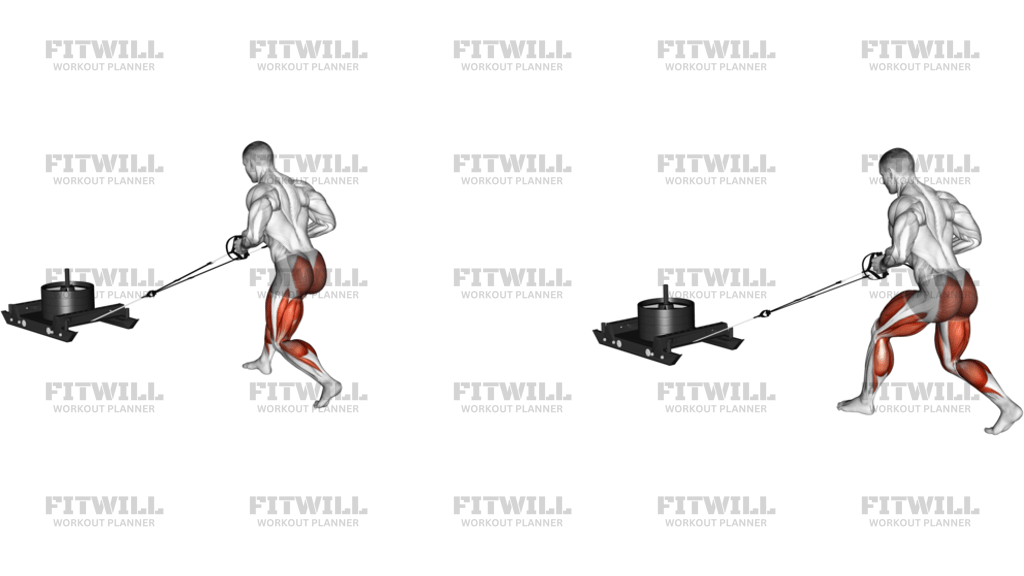
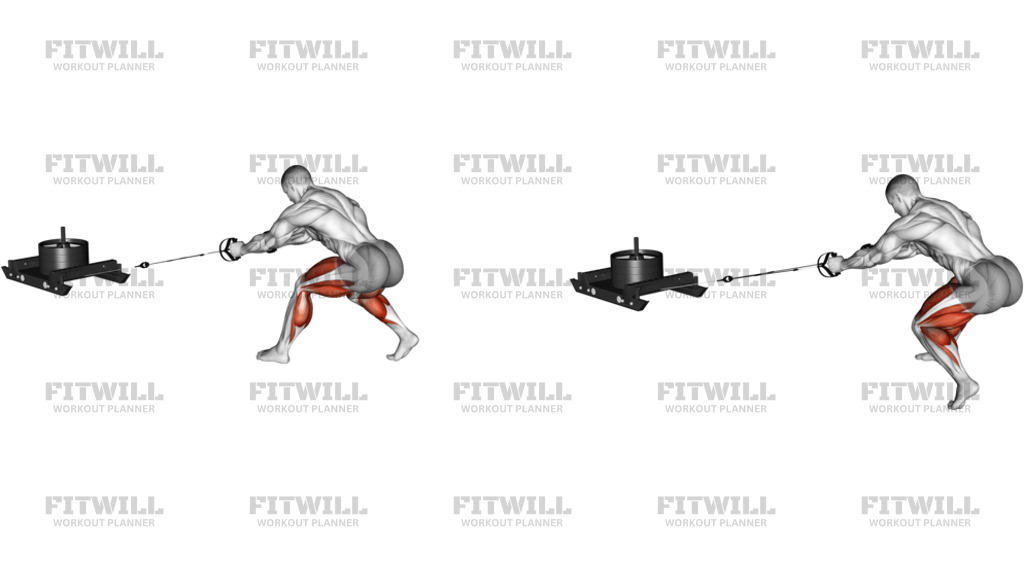
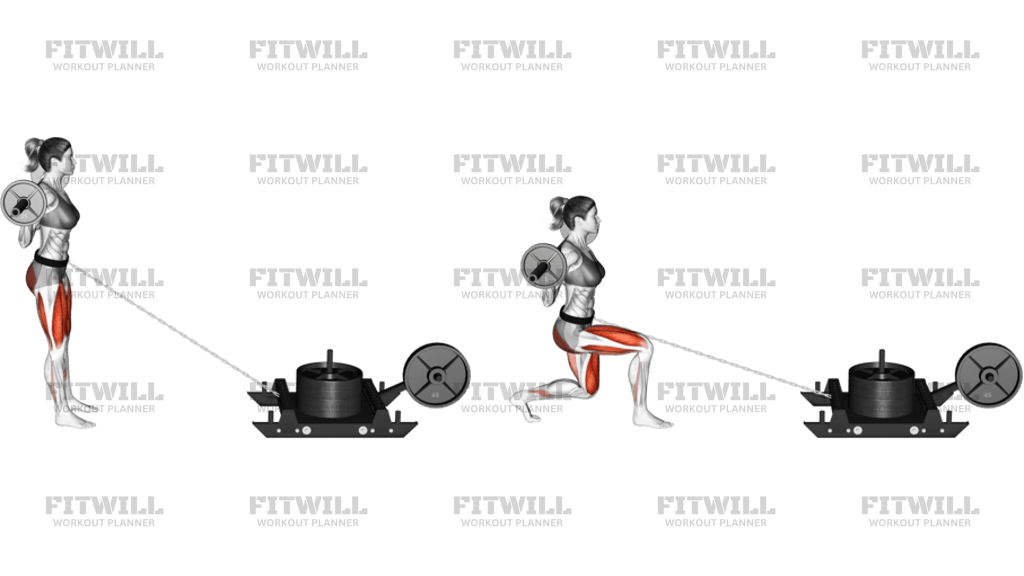
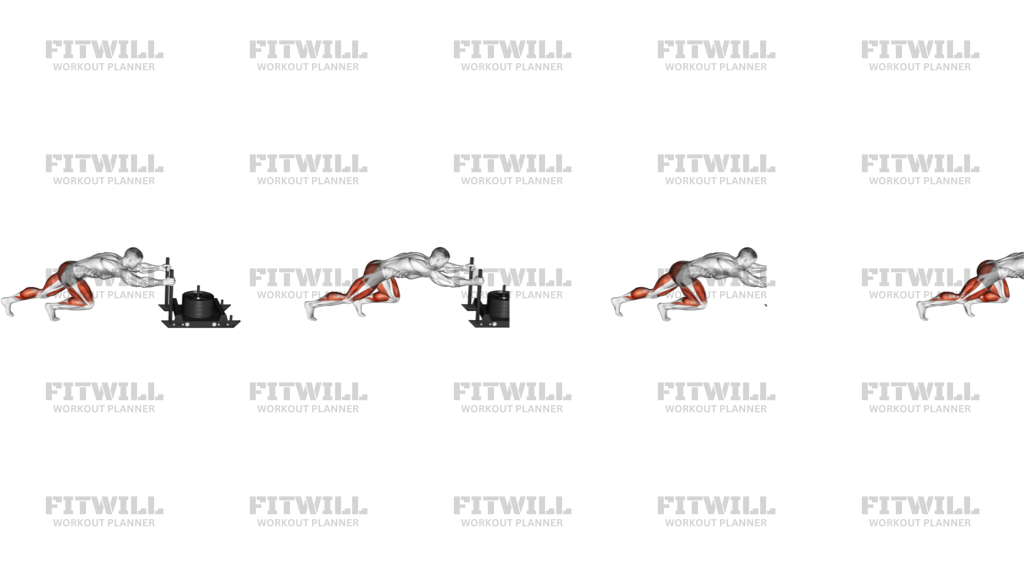
Power Sled Backward Push
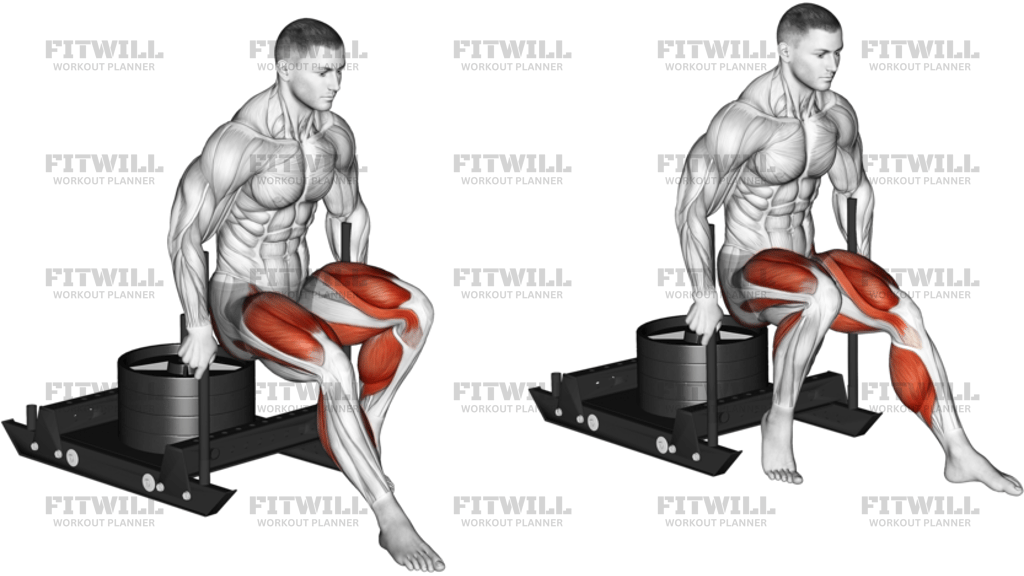
Power Sled Backward Push is a sled-based lower-body drive that emphasizes the thighs, especially the quadriceps, while the hips, trunk, and feet work to keep the sled moving in a straight line. In this version the athlete sits low on the sled, grips the side handles, and pushes the sled backward with the legs instead of standing and leaning into a forward push.
Because the body is supported by the sled, this exercise lets you train leg force with less impact than jumping or running. The setup matters: the torso should stay tall, the pelvis should stay anchored, and the feet should land in a position that lets the knee track cleanly over the toes. If the hips drift or the feet get too far ahead, the load shifts away from the thighs and the rep loses its purpose.
Each rep should begin from a quiet start. Brace before driving, then press through the working foot to send the sled backward in a short, controlled path. The non-working leg follows into the next position while the upper body stays calm. Keep the steps smooth rather than jerky so the quads stay under tension and the sled does not surge.
This movement is useful for conditioning blocks, quad-focused accessory work, and athletes who want lower-body output without heavy spinal loading. Use a resistance that lets you keep the sled moving evenly, finish each distance or repetition with the same posture you started with, and stop before the knees collapse inward or the torso starts rocking.
[ Workout Log & Planner ]
Put your next workout in Fitwill
Keep your plan and training log ready when you are.


Instructions
- Load the power sled on a flat, clear lane and attach the handles if needed.
- Sit low on the sled, keep your chest up, and grip the side handles firmly.
- Place one foot on the floor in front of you and set the other leg close enough to help you reset between pushes.
- Pull your shoulders down, brace your trunk, and keep your hips square before you move.
- Drive through the planted foot to send the sled backward a short distance, keeping the knee lined up with the toes.
- Let the other leg come through under control, then repeat the same push on the next step without bouncing side to side.
- Keep the torso tall and your hands steady on the handles so the legs do the work.
- Breathe out as you drive the sled and inhale as you reset for the next push.
- Continue for the planned distance or repetitions, then slow the sled to a stop and step off carefully.
Tips & Tricks
- Choose a load that lets the sled glide smoothly; if it stalls each step, the resistance is too high.
- Keep the driving foot under the knee instead of reaching far in front, so the thighs produce the force instead of the low back.
- If your hips twist as you alternate legs, shorten the step and press evenly through both handles.
- Drive through the whole foot, not just the toes, to keep pressure on the quads and away from the calves.
- Stay low enough to keep tension on the thighs, but not so low that your pelvis tucks and the stride collapses.
- Use a steady rhythm; rushing the cadence usually turns the movement into a shuffle instead of a controlled push.
- Keep your gaze forward and your neck relaxed so the torso does not start craning as fatigue builds.
- Stop the set when the sled slows dramatically or the knees cave inward, because that is usually the point where clean force drops off.
Frequently Asked Questions
What muscles does Power Sled Backward Push work most?
It mainly trains the quadriceps and other thigh muscles, with the glutes, calves, and trunk helping keep the sled stable.
Is this a good beginner sled exercise?
Yes. The seated, supported position makes it easier to learn than a faster sprint or heavy free-weight leg drill if you keep the load light.
How do I hold the handles?
Grip the side handles firmly enough to stay tall, but do not pull with the arms. The handles are there to steady the torso while the legs move the sled.
Where should my feet land on each push?
Keep the driving foot under your knee or only slightly ahead of it. A long reach usually shifts the work away from the thighs and makes the sled feel jerky.
Why do my knees cave inward during the set?
That usually means the stance is too narrow, the load is too heavy, or the hips are losing position. Widen the foot path a little and reduce the resistance.
Should this feel like cardio or strength work?
It can be either. Shorter, heavier pushes bias strength and power, while longer continuous runs turn it into a conditioning drill.
Do I need a special surface for the sled?
A smooth lane helps the sled move consistently. Sticky flooring or rough turf can break the rhythm and change the feeling of each step.
What is the main mistake to avoid?
The biggest problem is rocking the torso and using body swing to move the sled. Keep the trunk stacked and let the legs create the drive.