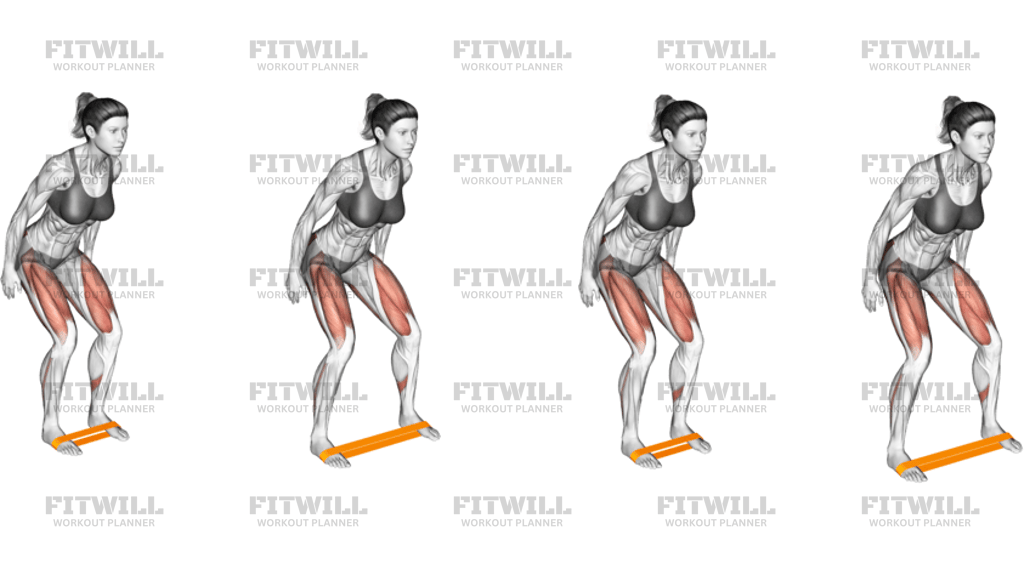
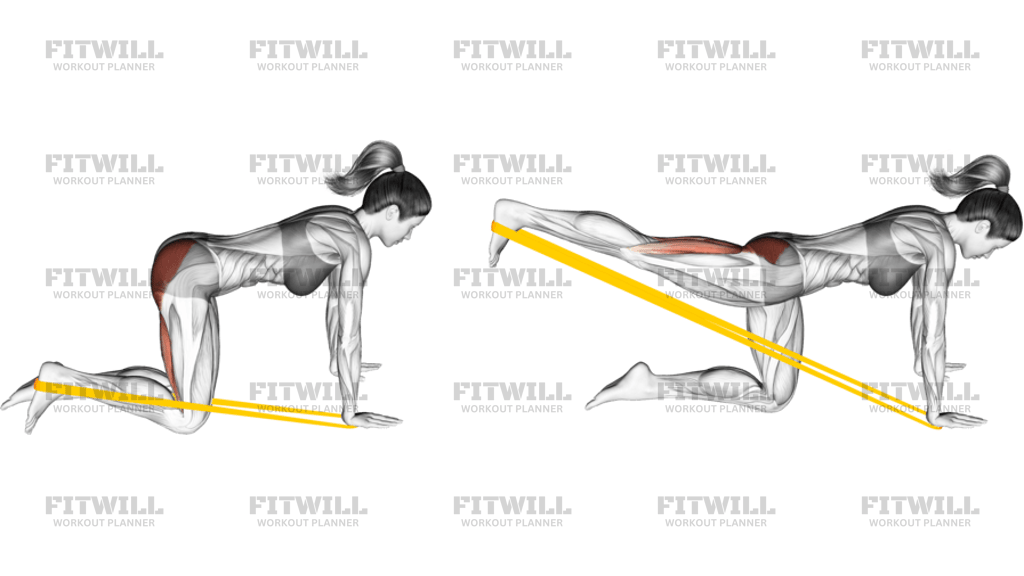
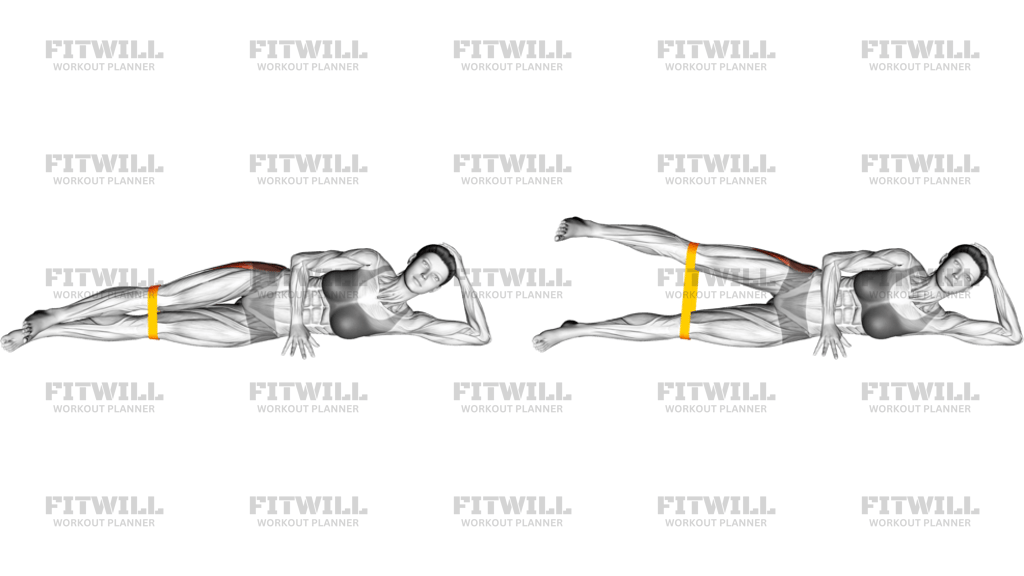
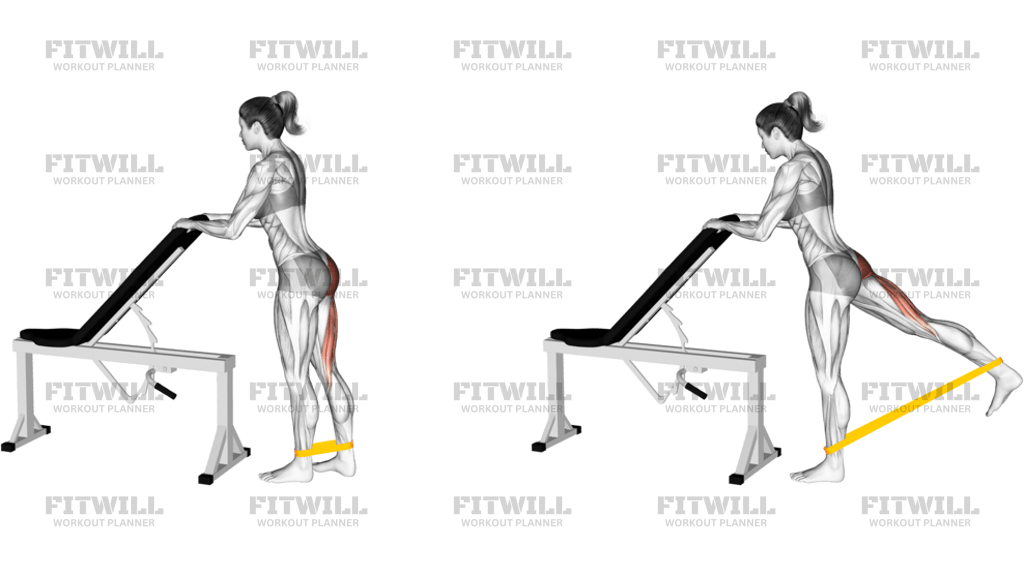
Resistance Band Seated Hip Abduction
Resistance Band Seated Hip Abduction is a seated glute exercise that uses a loop band around the thighs to train hip abduction with constant sideways tension. The version shown here is performed on a flat bench with the torso upright, hands braced on the bench, and the band positioned just above the knees so the hips can open without the pelvis rolling backward.
The main goal is to build stronger, more controlled hip separation through the glute medius and glute minimus, with the larger glute max helping stabilize the movement. That makes this exercise useful for athletes, lifters, and anyone who wants better knee tracking, hip control, or warm-up activation before squats, lunges, running, or lower-body work.
Setup matters because the band will only challenge the hips correctly if the knees start at a manageable width and the torso stays still. Sit tall on the bench, plant your feet, lightly hinge forward if needed for balance, and keep your hands ready on the bench so the hips do the work instead of the upper body. Once you are set, press the knees out against the band, pause, and avoid letting the knees snap back inward between reps.
A good repetition feels like the outer hips are creating the movement while the rest of the body stays quiet. Open the knees only as far as you can without twisting the hips, shrugging the shoulders, or bouncing off the band. Return under control, keep breathing steady, and stop the set when the knees start drifting inward or the torso starts rocking.
This exercise is especially useful as a low-risk accessory movement or warm-up drill because it creates direct tension on the lateral hip without loading the spine. Use it for higher-rep activation work, glute-focused accessories, or controlled rehab-style training when you need clean hip motion more than heavy resistance. Light to moderate band tension is usually enough if the reps stay strict and the pelvis remains level.
[ Workout Log & Planner ]
Put your next workout in Fitwill
Keep your plan and training log ready when you are.


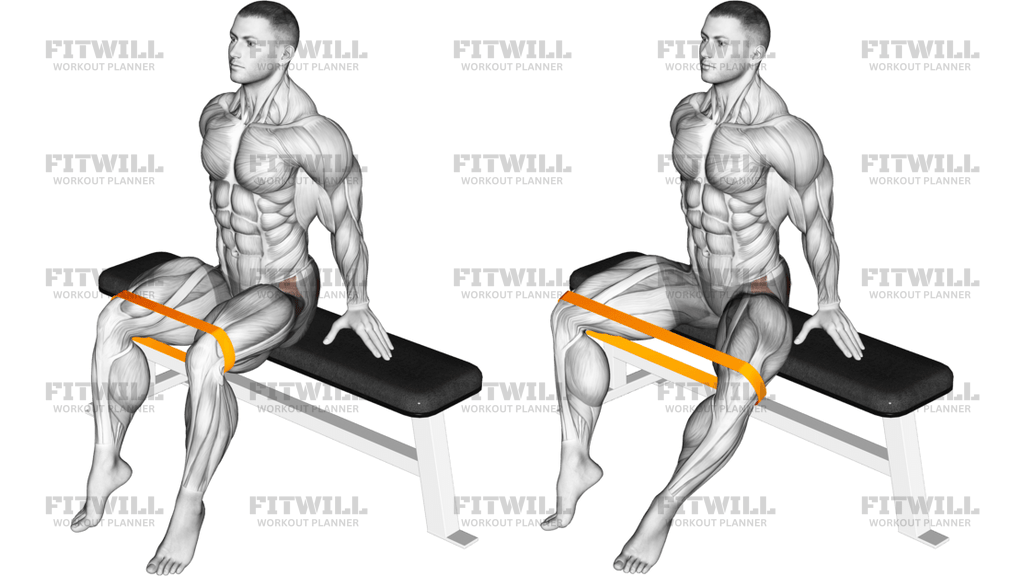
Instructions
- Sit on a flat bench with a loop resistance band just above your knees, feet planted, and your hands resting on the bench for support.
- Keep your chest tall, ribs down, and hips square so both thighs start in the same position.
- Set your feet about hip width apart and let the knees begin under light band tension.
- Brace lightly through your midsection before you move so the torso stays still.
- Press both knees outward against the band until you feel the outer hips turn on.
- Pause for a brief squeeze at the widest pain-free point without leaning back or twisting.
- Bring the knees back together slowly until the band tension returns to the start position.
- Keep breathing steady throughout the set and repeat for the planned reps.
Tips & Tricks
- Place the band high enough on the thighs that it stays above the knees and does not slide toward the shins.
- If the band is too light, the knees will fly open and the set turns into momentum; choose a band that forces a controlled opening.
- Keep the feet planted and the toes relaxed so the motion comes from the hips instead of pushing off the floor.
- Do not let the pelvis tuck under as the knees open; that usually means the range is too large or the band is too strong.
- A small forward lean is fine if it helps you keep balance, but the chest should not collapse over the thighs.
- Pause briefly at the widest point to make the outer-hip contraction obvious instead of chasing extra speed.
- Return slowly enough that the band stays under tension the whole way back.
- Stop the set when the knees start caving inward faster than you can control.
Frequently Asked Questions
What does Resistance Band Seated Hip Abduction train most?
It primarily trains the outer glutes, especially the glute medius and glute minimus, which help control hip and knee position.
Where should the band sit on my legs?
Place the loop band just above the knees so the thighs have room to open without the band slipping down during the set.
Do my feet need to move during the rep?
No. Keep the feet planted and let the knees move outward and inward while the torso stays quiet on the bench.
Why is this exercise usually done seated on a bench?
The bench gives you a stable base so the hips can work against the band without turning the movement into a standing sway or a squat.
Can I do this as a warm-up before lower-body training?
Yes. It is a good warm-up or activation drill before squats, deadlifts, lunges, or running because it wakes up the lateral hip muscles.
What if I feel the movement in my lower back?
That usually means you are leaning back, arching, or opening the knees too far. Shorten the range and keep the ribs stacked over the pelvis.
Is this the same as a standing band abduction?
No. The seated version removes balance demands and makes it easier to isolate the hips with stricter control.
How do I make the set harder without changing the exercise?
Use a stronger band, slow the return phase, or add a short pause at the widest point while keeping the same seated setup.