Low Glute Bridge On Floor
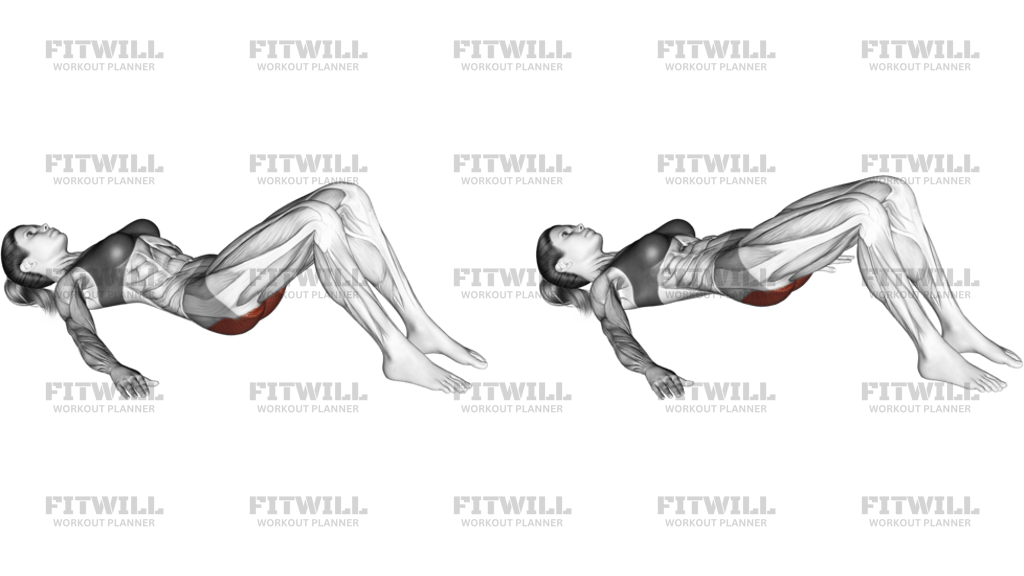
Low Glute Bridge On Floor is a floor-based glute exercise that uses a short, controlled bridge to train hip extension without needing a bench or machine. Because the upper back stays on the floor and the range stays relatively low, it is useful when you want a simple, joint-friendly way to build glute strength, pelvis control, and a cleaner squeeze at the top of the rep.
The glutes do most of the work, with the hamstrings helping to stabilize the knees and keep the feet planted. Your core and lower back should resist movement rather than create it; the lift should come from the hips, not from arching the spine. The low range also makes it easier to keep tension where you want it and avoid turning the rep into an exaggerated back extension.
Setup matters because foot distance changes what the movement feels like. Lie on your back with your knees bent, feet flat, and heels close enough that you can drive through the midfoot and heel without sliding. Let your arms rest out to the sides for balance, and keep the ribs down before you start. If your feet are too far away, the hamstrings can take over; if they are too close, the motion can feel cramped and less stable.
From the start position, brace lightly, exhale as you drive the hips up, and stop when the torso and thighs make a clean line without overreaching through the lower back. Keep pressure even through both feet and think about gently tucking the pelvis at the top so the glutes finish the rep. Lower under control until the hips are just above the floor, then repeat with the same tempo and breathing pattern.
Use Low Glute Bridge On Floor as accessory work, in a warmup, or inside a glute-focused session when you want a low-skill pattern that still teaches clean hip extension. It also works well as a regression before harder glute bridge or hip thrust variations. The best reps are crisp and repeatable, with a short pause at the top and no shifting, swinging, or rushing through the lowering phase.
[ Workout Log & Planner ]
Put your next workout in Fitwill
Keep your plan and training log ready when you are.


Instructions
- Lie on your back with your knees bent and your feet flat on the floor about hip-width apart.
- Plant your heels close enough to your hips that your shins are nearly vertical at the top of the rep.
- Let your arms rest out to the sides with your palms down so you can balance without pushing on them.
- Set your ribs down and lightly brace your core before you start the first rep.
- Press through your heels and midfoot to lift your hips off the floor.
- Keep your knees tracking over your second toes as the hips rise.
- Stop when your torso and thighs make a straight line without arching your lower back.
- Squeeze your glutes at the top for a brief pause, then inhale and lower your hips back down under control.
- Reset your feet and pelvis if you feel your low back taking over, then repeat for the planned reps.
Tips & Tricks
- If you feel the movement mostly in your hamstrings, move your feet a little closer to your hips and keep the pressure through the heels.
- Keep the ribs heavy on the floor; if they flare up, the rep usually turns into lower-back extension.
- The top position should feel like a glute squeeze, not a big arch. Lift only until the pelvis is stacked and the torso is straight.
- A one-second pause at the top makes this much more effective than chasing a higher bridge.
- Keep both feet evenly loaded. If one hip rises faster, check that your stance is symmetrical before the next rep.
- Use a slower lowering phase so the glutes stay under tension all the way back to the floor.
- If your feet slide on the floor, use a grippier surface or lift barefoot so you can push more cleanly through the heel.
- Shorten the range if your lower back starts to pinch; the low bridge should feel controlled, not forced.
Frequently Asked Questions
What does Low Glute Bridge On Floor train most?
It mainly trains the glutes, with the hamstrings and core helping to stabilize the hips and pelvis.
Is Low Glute Bridge On Floor good for beginners?
Yes. It is one of the easier glute exercises to learn because your upper back stays on the floor and the range of motion is short.
How high should my hips go in Low Glute Bridge On Floor?
Lift only until your torso and thighs form a straight line. If you have to arch your lower back to go higher, the bridge is too high.
Why do I feel Low Glute Bridge On Floor in my hamstrings?
Your feet are probably too far from your hips, or you are pushing more through the toes than the heels. Bring the feet in slightly and keep the heel pressure steady.
Should my feet be flat or on my heels?
Keep the feet flat, but drive mostly through the heels and midfoot so the glutes stay in charge of the lift.
What if my lower back feels the bridge more than my glutes?
Lower the hips a little, keep the ribs down, and finish the rep with a glute squeeze instead of a bigger arch.
How is this different from a hip thrust?
Low Glute Bridge On Floor stays on the floor and uses a shorter range of motion, so it is usually easier to control and less demanding than a hip thrust.
How can I make Low Glute Bridge On Floor harder?
Add a longer pause at the top, slow the lowering phase, add a band above the knees, or progress to a weighted bridge once the bodyweight version feels easy.