Kneeling Bent Leg Kickback
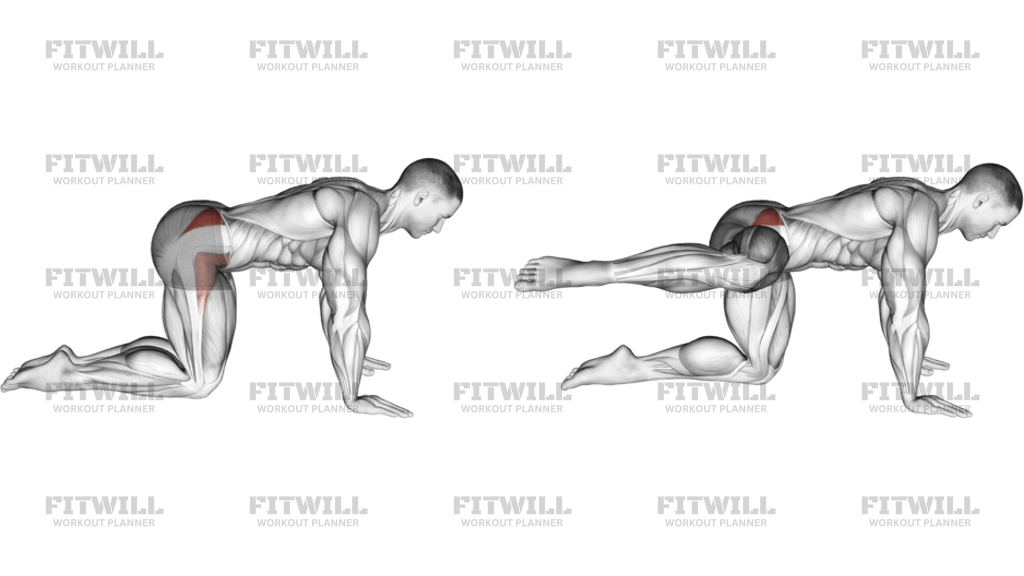
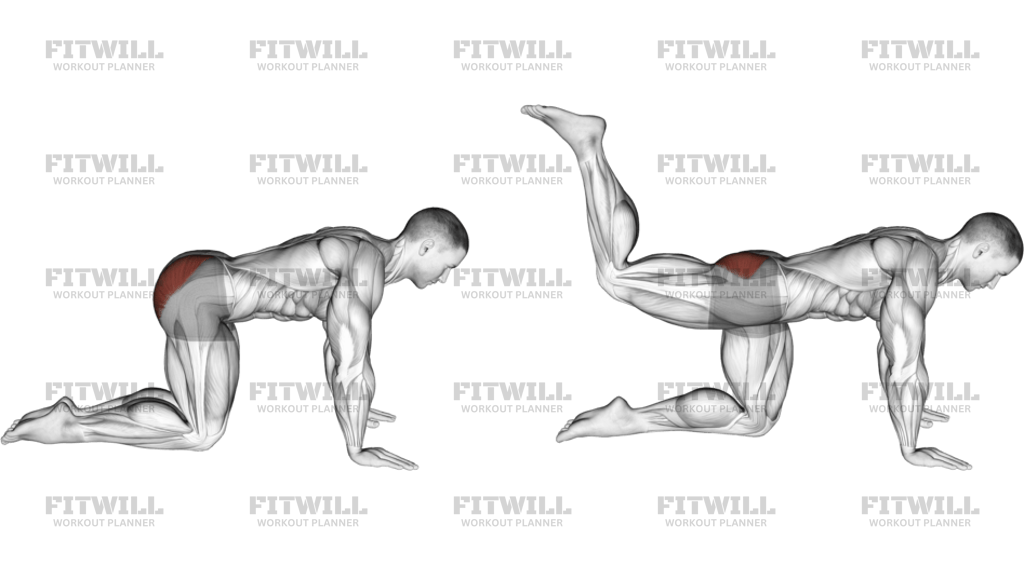
Kneeling Bent Leg Kickback is a bodyweight floor exercise that trains hip extension from a hands-and-knees setup. The bent knee keeps the lever short so the glutes do most of the work while the lower back and trunk stay quiet. It is a simple movement on paper, but it only feels right when the pelvis stays square and the torso does not twist as the leg lifts.
The exercise is usually used to isolate the glute on one side at a time, which makes it valuable when you want cleaner hip control than a standing kickback or fast floor drill can provide. The working leg moves behind the body with the knee still bent, so the goal is not to throw the foot upward. The goal is to drive the thigh back from the hip while keeping the ribs stacked and the spine neutral.
The setup matters because any arching through the low back will steal tension from the glute. Start on a mat with hands under shoulders and knees under hips, then lock in a level pelvis before the first rep. From there, lift the bent leg only as far as you can keep the hips square and the abdomen braced. A smaller, controlled range is better than a high kick that turns into lumbar extension.
When the rep is done well, you should feel a strong contraction high in the glute of the working side, with the hamstrings helping only as stabilizers. The return should be slow and deliberate, not a drop back to the floor. That controlled lowering keeps the muscle under tension and makes the movement useful as accessory work, activation work, or a light glute-focused finisher.
This exercise fits beginners well because the load is just body weight and the technique is easy to scale. It also works for experienced lifters who need a strict glute isolation drill without equipment. Use it when you want to reinforce pelvic control, improve mind-muscle connection, or build extra volume for the glutes without adding stress to the knees or spine.
[ Workout Log & Planner ]
Put your next workout in Fitwill
Keep your plan and training log ready when you are.


Instructions
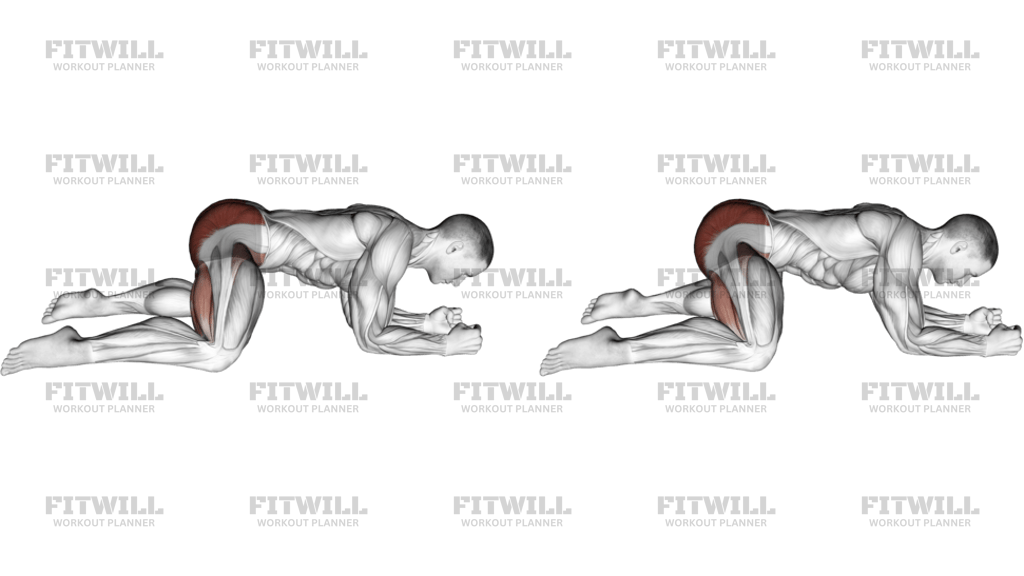
- Start on a mat on your hands and knees, with your hands under your shoulders and your knees under your hips.
- Keep your spine neutral, your neck long, and your weight evenly distributed between both hands and the grounded knee.
- Brace your abdomen and square your hips so the pelvis stays level before you move the working leg.
- Bend one knee to about 90 degrees and lift that foot slightly off the floor without shifting your torso.
- Drive the bent leg up and back from the hip, keeping the knee bent and the thigh moving behind the body.
- Lift only until the glute is fully contracted and your lower back still feels quiet and stable.
- Pause briefly at the top without opening the hip or twisting the pelvis.
- Lower the knee back toward the start under control, keeping tension on the glute and breathing steadily.
- Complete all reps on one side, then reset and repeat on the other side.
Tips & Tricks
- Keep your ribs pulled down so the lift comes from the hip, not from arching your lower back.
- Think about pushing the sole of the foot toward the ceiling while the knee stays bent at the same angle.
- If your hips start to rotate, shorten the range until the pelvis stays square through the whole rep.
- A smaller kick with a hard glute squeeze is better than chasing a bigger height.
- Keep pressure even through both palms so your shoulders do not sway when the leg moves.
- Exhale as the leg lifts and let the inhale happen on the controlled return to the start.
- Pause for a beat at the top if you tend to swing the leg and lose tension.
- Use a padded mat under the kneeling leg if the floor makes you shift or rush the set.
- Stop the set if you feel the movement mostly in your low back or hamstring instead of the working glute.
Frequently Asked Questions
What does Kneeling Bent Leg Kickback train most?
It mainly targets the glutes, especially the gluteus maximus, with the hamstrings and core helping to stabilize the pelvis.
Why keep the knee bent during the kickback?
The bent knee shortens the lever so the hip does the work instead of turning the movement into a bigger, looser leg swing.
How high should the working leg go?
Only as high as you can keep the hips square and the lower back neutral. If the pelvis twists or the spine arches, the lift is too high.
Should my torso move when I kick back?
No. Your shoulders and torso should stay quiet while the leg moves behind you from the hip.
Is this a beginner-friendly glute exercise?
Yes. It is bodyweight-only and easy to scale by using a smaller range and slower tempo.
What is the most common mistake on this exercise?
The usual error is arching the lower back and lifting the leg too high instead of squeezing the glute through a controlled range.
What should I feel if the form is right?
You should feel the working glute contract strongly near the top of the rep, with only light support from the hamstrings and core.
Can I use this as a warm-up or accessory drill?
Yes. It works well in warm-ups, activation blocks, or glute-focused accessory work when you want low-load, high-control reps.