Cable Close-Grip Curl
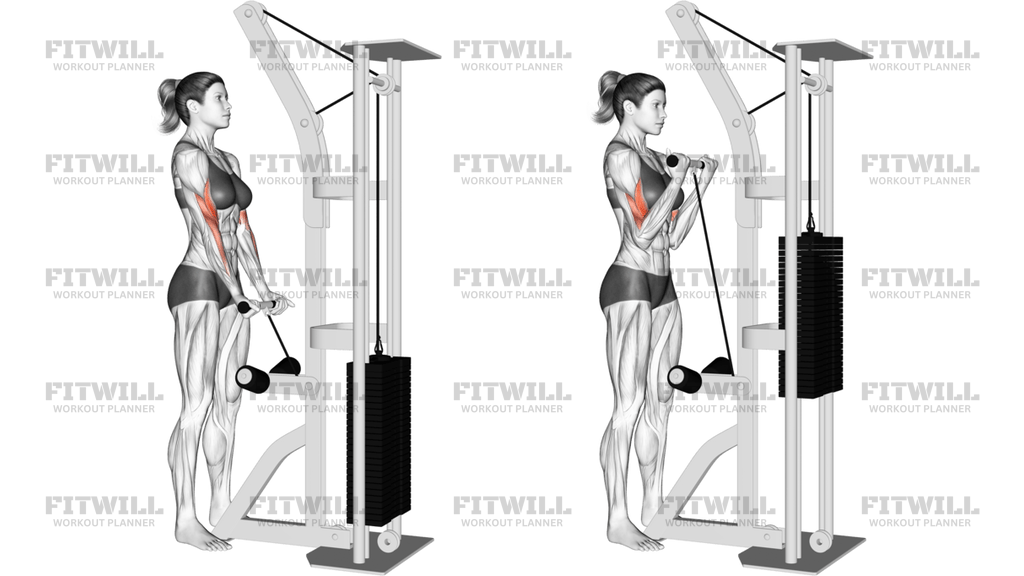
Cable Close-Grip Curl is a standing cable arm exercise that keeps tension on the elbow flexors from the first inch of the rep to the last. With a low pulley and a close palms-up grip on a straight bar, you curl the load toward your upper chest or shoulders while keeping the upper arms quiet and the torso stacked. That constant cable tension makes the movement useful for biceps-focused hypertrophy work, accessory arm training, and controlled volume when you want less cheating than a free-weight curl.
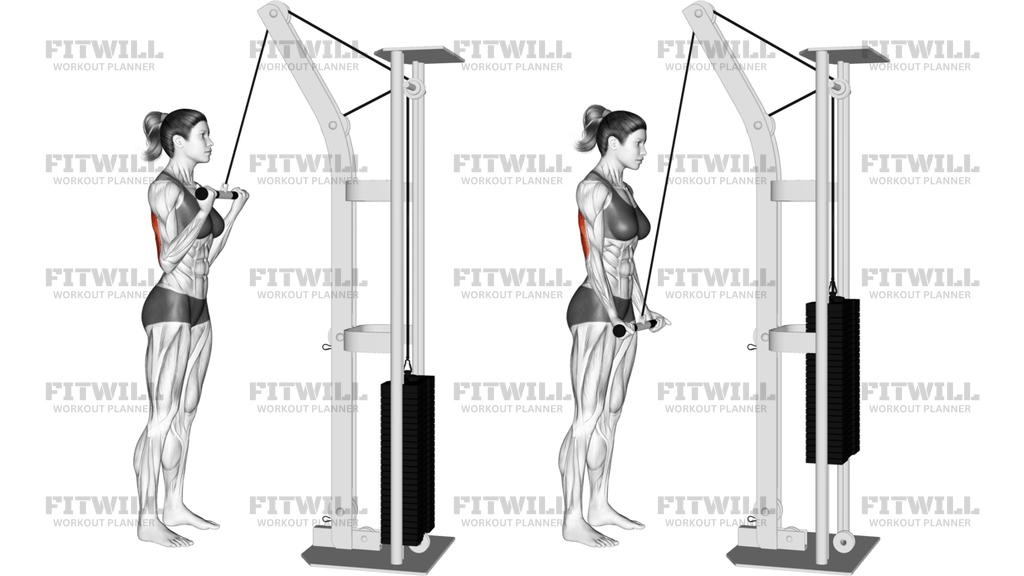
The close grip changes the feel of the rep. Hands set nearer together usually make the curl feel more concentrated through the biceps, while the cable path also asks the forearms to stay organized as the wrists resist bending back. In the image, the lifter stands tall with the cable in front of the body, elbows tucked close, and shoulders set down rather than rolled forward. That setup matters because once the elbows drift back or the torso starts swinging, the curl stops being an arm exercise and turns into a body-weight heave.
Start by choosing a load you can lower slowly without losing shape. The handle should travel from the front of the thighs to the upper chest or shoulder line without banging the stack or forcing the wrists into extension. Keep the ribs down, the knees soft, and the neck relaxed so the arms can do the work. A brief squeeze at the top is useful, but the rep should still look clean and repeatable instead of forced.
This is a practical option for beginners and experienced lifters alike because the cable guides the path and makes it easy to standardize the range of motion. It fits well in arm days, upper-body accessories, or as higher-rep work after heavier pulling sessions. The main coaching goal is simple: keep the upper arms still, curl through the elbow, and return under control so each repetition loads the biceps without momentum taking over.
Use the exercise in a pain-free range and stop short of any shoulder or elbow irritation. If the set starts turning into a lean-back, hip drive, or wrist-crank rep, the weight is too heavy or the stance is too loose. When performed well, Cable Close-Grip Curl gives you a strict, repeatable biceps stimulus with a steady cable feel that is easy to progress over time.
[ Workout Log & Planner ]
Put your next workout in Fitwill
Keep your plan and training log ready when you are.


Instructions
- Attach a straight bar to the low pulley and stand facing the stack with your feet about hip-width apart.
- Grip the bar palms up with your hands close together, then let the cable pull your arms straight in front of your thighs.
- Set your chest tall, ribs down, shoulders relaxed, and elbows tucked close to your sides.
- Keep a soft bend in the knees and brace your torso so your body does not sway as you curl.
- Curl the bar upward by bending only at the elbows, bringing the handle toward your upper chest or shoulders.
- Keep your wrists straight and your upper arms still as the bar travels up.
- Squeeze the biceps briefly at the top without letting your shoulders roll forward.
- Lower the bar slowly until your elbows are almost straight and the cable stays under control.
- Exhale as you curl and inhale as you lower, then reset your stance before the next repetition.
Tips & Tricks
- A narrow grip usually makes the biceps squeeze feel stronger, but do not let the wrists collapse inward to chase it.
- Keep the elbows from drifting behind your torso; that turns the rep into a shoulder-driven swing.
- If the bar hits your thighs, step a little farther from the stack or let the cable start slightly in front of you.
- Use a load that lets you lower the bar for two to three seconds without jerking it down.
- Keep the knuckles stacked over the forearms so the wrists stay neutral through the whole rep.
- A small torso lean is fine, but if the hips start driving the weight up, the set is too heavy.
- Stop the set when the last few inches of the curl turn into a hip thrust or shrug.
- Think about closing the elbow angle instead of pulling with the hands; the bar should move because the elbows flex.
Frequently Asked Questions
What muscle does Cable Close Grip Curl target most?
The main target is the biceps, with help from the brachialis, brachioradialis, and forearm muscles that hold the close grip.
Why use a close grip on the cable bar?
A closer hand position usually makes the curl feel more biceps-focused and keeps the bar path compact and easy to control.
Should my elbows stay pinned to my sides?
Mostly yes. Let them stay close to your ribs and avoid pulling them far back, which shifts tension away from the arms.
Can beginners use Cable Close-Grip Curl?
Yes. The cable path is easy to follow, and light resistance makes it a good way to learn strict curling mechanics.
Why choose a cable instead of dumbbells?
The cable keeps tension on the biceps through more of the range, especially near the bottom where dumbbells can feel easier.
What is the most common form mistake?
Leaning back and using body swing. If the torso is helping to lift the bar, the load is too heavy.
What should my wrists do during the curl?
Keep them neutral and stacked over the forearms. Let the elbows move, not the wrists.
What is a good variation if I want a different feel?
A rope hammer curl or a single-arm cable curl changes the hand position and can shift the emphasis slightly while keeping cable tension.