Cable Seated Curl
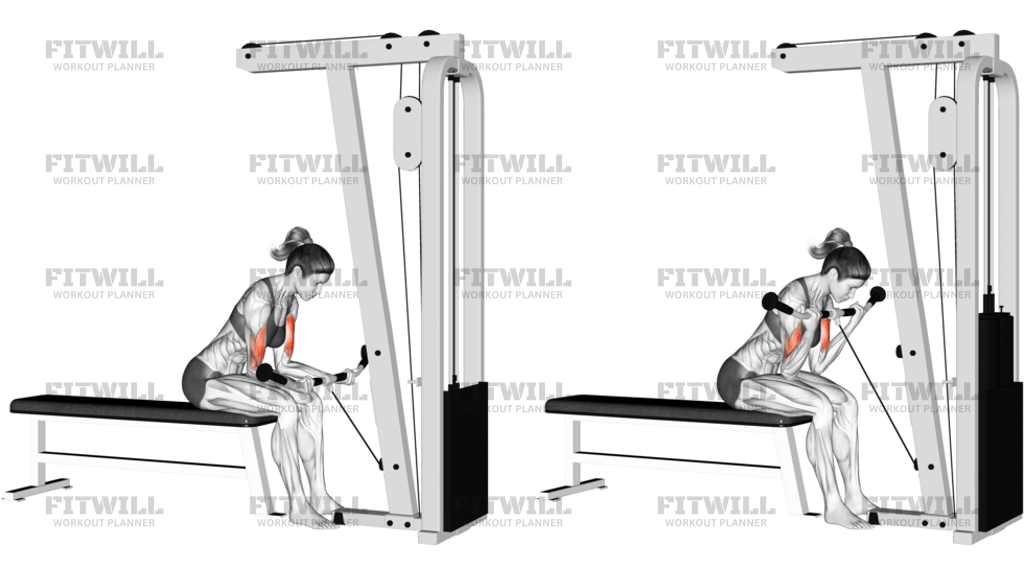
Cable Seated Curl is a seated elbow-flexion exercise performed on a low cable with a handle attachment. Sitting on the bench and curling from a fixed cable line keeps tension on the arms through the whole rep, which makes it useful for focused biceps work without the swing and momentum that often show up in standing cable curls.
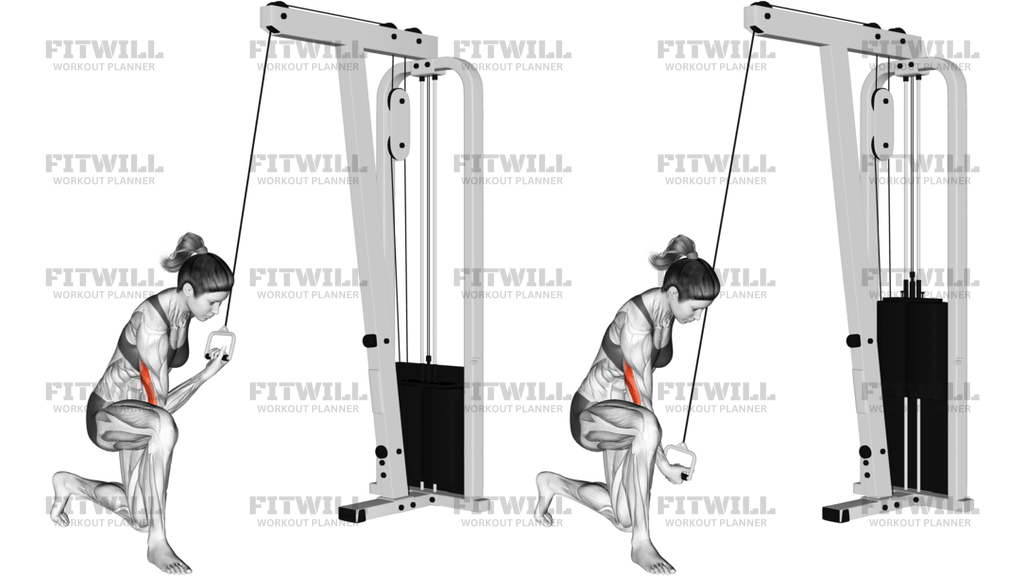
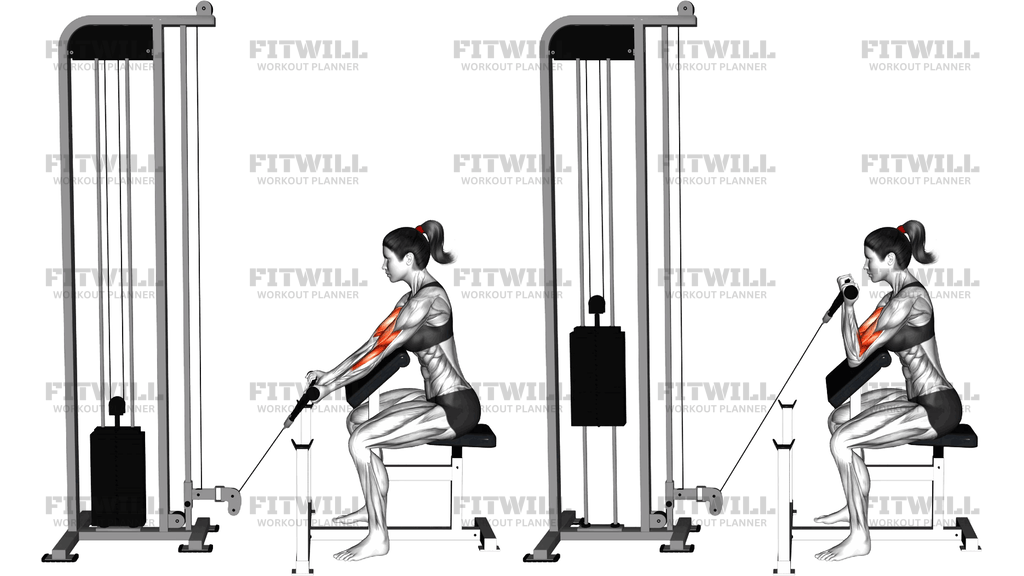
The image shows the lifter facing the machine with the feet planted, torso hinged slightly forward, and the upper arms braced against the inner thighs. That setup matters because it locks the shoulders in place and turns the movement into a strict curl driven mainly by elbow flexion. The biceps do most of the work, with the brachialis, brachioradialis, and forearm muscles helping stabilize the grip and wrist.
A good repetition starts with the cable already taut, the wrists straight, and the chest stacked over the thighs instead of rounded into the pull. From there, curl the handle toward the shoulders by bending only the elbows. Keep the upper arms quiet, avoid shrugging, and let the cable travel in a smooth arc instead of jerking the weight off the stack. The lowering phase should be just as controlled so the biceps stay under tension.
Cable Seated Curl fits well as an accessory exercise for arm growth, technique-focused hypertrophy work, or as a strict finisher after heavier compound pulling. It is especially useful when you want to reduce cheating, clean up curl mechanics, or keep constant tension on the biceps at lighter to moderate loads. Beginners can use it too, as long as the weight is light enough to keep the torso still and the elbows fixed against the thighs.
[ Workout Log & Planner ]
Put your next workout in Fitwill
Keep your plan and training log ready when you are.


Instructions
- Sit on a flat bench facing the low cable pulley and plant both feet firmly on the floor.
- Hold the handle with an underhand grip and start with your arms almost straight, keeping the cable taut.
- Lean forward just enough to brace your upper arms against the inside of your thighs and keep your shoulders down.
- Set your ribs and pelvis before the first rep so your torso stays still when you curl.
- Curl the handle toward your shoulders by bending only at the elbows.
- Keep your upper arms pressed in place and avoid letting your elbows drift forward or outward.
- Squeeze the biceps at the top without shrugging or rolling your wrists back.
- Lower the handle slowly until your elbows are nearly straight and the cable is still under control.
- Exhale as you curl up, inhale as you lower, and reset your brace before the next rep.
Tips & Tricks
- Keep the cable line aligned with your forearms so the resistance stays smooth through the curl.
- If your shoulders start moving, the load is too heavy or the bench position is off.
- Press the backs of your upper arms into your thighs just enough to block momentum, not so hard that you jam the shoulders forward.
- A neutral wrist usually keeps more tension on the biceps and less on the forearms.
- Do not let the handle crash into the bottom; keep tension on the cable between reps.
- Use a slower lowering phase to make the biceps work through the full range.
- Stop the set when you have to lean back or rock the torso to finish a rep.
- A moderate grip width on the handle usually feels more natural than a super-narrow hand position.
Frequently Asked Questions
What muscles does the seated cable curl work most?
It mainly targets the biceps, with the brachialis and brachioradialis helping during the curl.
Why sit on a bench instead of doing this standing?
The seated position makes it harder to swing the torso, so the elbows do more of the work and the cable stays under steady tension.
Should my upper arms stay against my thighs the whole time?
Yes, that contact helps keep the shoulders quiet and turns the movement into a strict curl. If the elbows keep drifting, reset the bench position or reduce the load.
What grip should I use on the handle?
An underhand grip is the standard choice. Keep the wrists straight so the handle does not roll back and turn the rep into a forearm-dominant movement.
How low should the handle go at the bottom?
Lower it until your elbows are nearly straight, but do not dump the weight or let the stack slam. Keep tension on the cable from start to finish.
Is this a good beginner biceps exercise?
Yes. The seated setup makes the curl easier to learn because the bench and thighs help control body position.
What is the most common mistake on Cable Seated Curl?
Using too much weight and leaning back or rocking the torso to finish the rep.
Can I use a rope or different handle attachment?
Yes, as long as the attachment still lets you keep a stable wrist and a clean elbow path. A straight or slightly angled handle usually feels the most direct.
How should I progress this movement?
Add small amounts of load only after you can keep the elbows fixed, the wrists straight, and the lowering phase controlled.