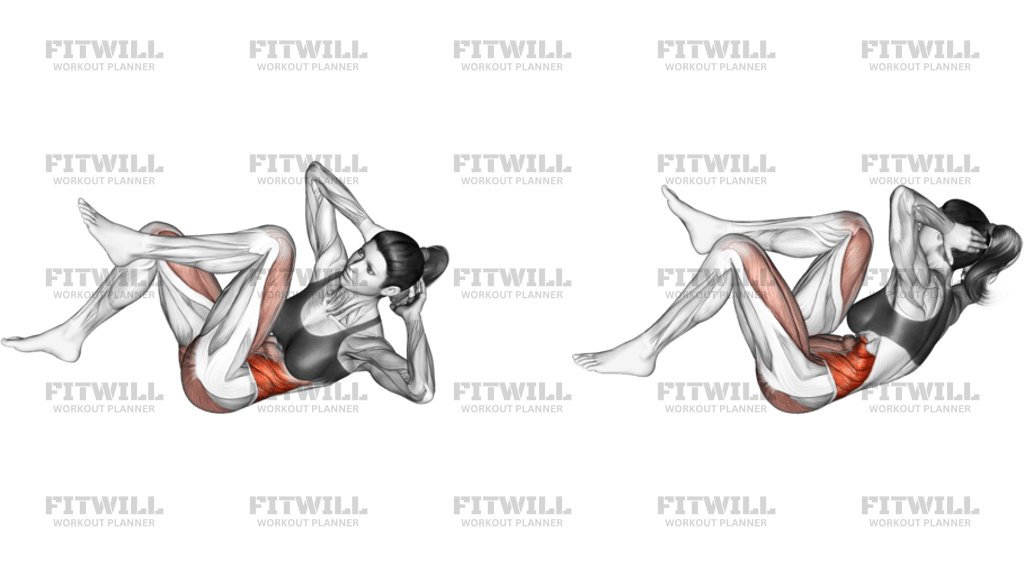
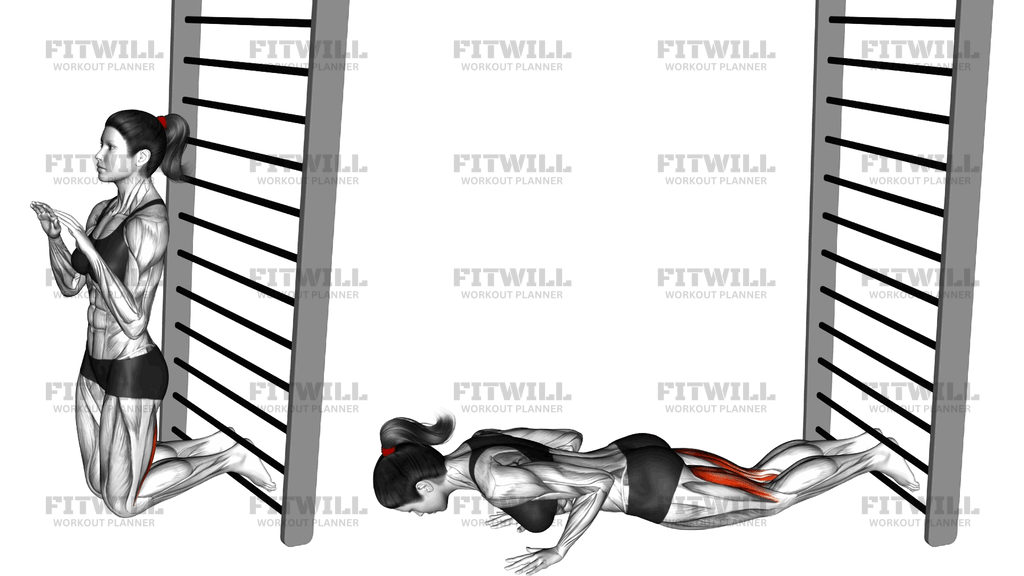
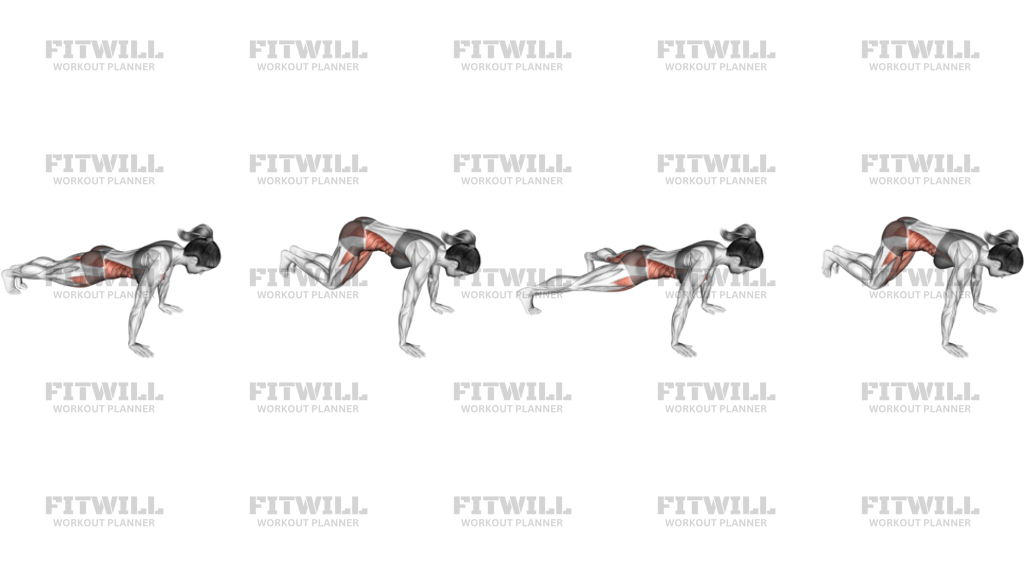
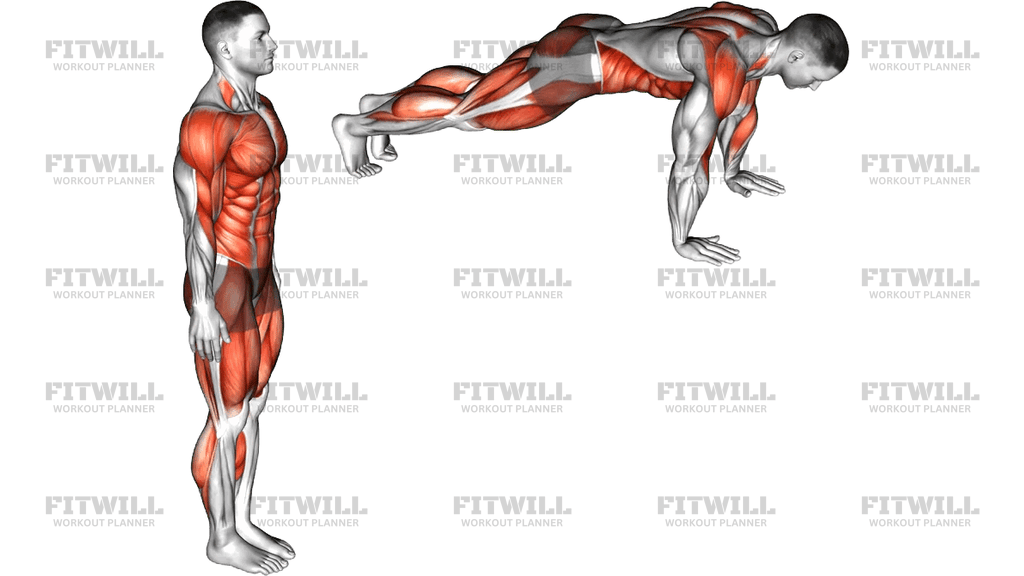
Hanging Oblique Knee Raise
Hanging Oblique Knee Raise is a bodyweight core exercise performed from a pull-up bar or similar overhead support. It trains the side of the trunk by asking you to hang steady, tuck the pelvis, and lift the knees toward one side of the torso instead of simply pulling straight up. That small twist is what shifts the emphasis toward the obliques while still challenging the lower abs, hip flexors, grip, and shoulder stabilizers.
The setup matters because the exercise starts before the knees move. A controlled dead hang keeps the shoulders organized, the rib cage from flaring, and the torso from swinging into the first rep. If the hang is loose or the legs drift freely, the movement turns into a kip rather than a core drill. Done well, Hanging Oblique Knee Raise gives you a strict, repeatable way to build trunk control without loading the spine directly.
The key action is to raise both knees toward one hip or lower rib cage while keeping the upper body quiet. Think about shortening the distance between the pelvis and the ribs on the working side rather than just lifting the thighs. The more the torso stays tall and the pelvis curls slightly upward at the top, the more the obliques do the job instead of momentum or hip flexor swing taking over.
This exercise is useful in core blocks, athletic conditioning, and accessory work after the main lifts. It fits athletes and lifters who want hanging ab work that also improves grip and shoulder endurance. Because the body is suspended, the movement rewards control more than speed, and the best reps are the ones that finish with the knees high, the ribs down, and no leg swing on the way back.
Keep the range honest and the rhythm consistent. If you cannot keep the hang still, shorten the rep or use a captain's chair, bench support, or knee raise station until you can control the twist cleanly. Hanging Oblique Knee Raise is most effective when each rep looks deliberate from the first knee drive to the final controlled lower.
[ Workout Log & Planner ]
Put your next workout in Fitwill
Keep your plan and training log ready when you are.


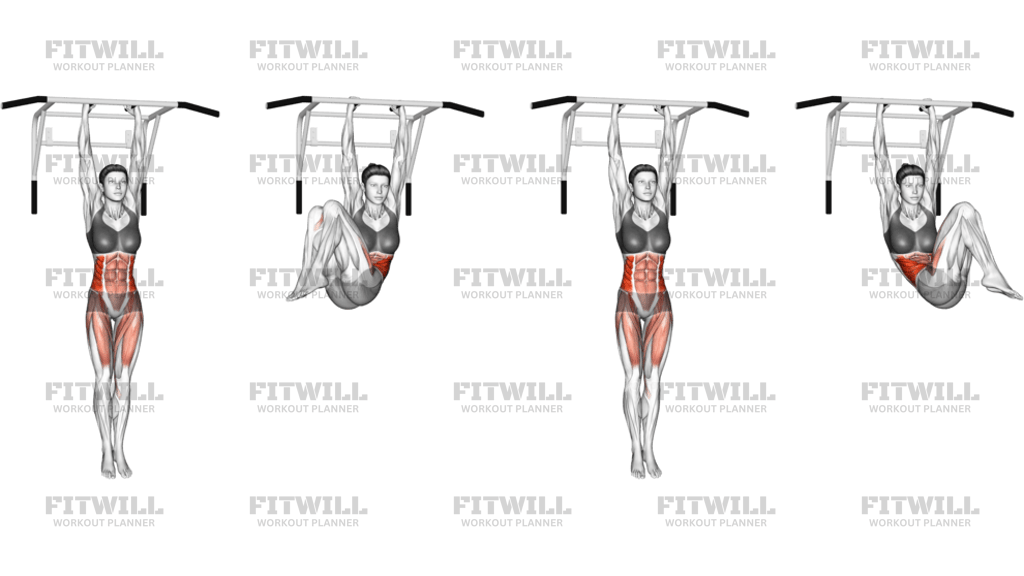
Instructions
- Grip an overhead pull-up bar with both hands shoulder-width apart and hang with your arms straight, shoulders active, and legs together beneath you.
- Set your shoulders down away from your ears and keep your ribs stacked over your pelvis so you start from a still dead hang, not a swing.
- Brace your midsection, then tuck your pelvis slightly as you prepare to lift the knees.
- Raise both knees toward one side of your torso, aiming them toward the lower ribs or hip on that side instead of straight ahead.
- Keep your chest quiet and avoid twisting the shoulders hard; the bend should come mainly from the torso and pelvis, not a full-body swing.
- Pause briefly at the top when the knees are highest and the side of the waist is fully shortened.
- Lower the legs slowly until the knees are straight again and the hang is steady before the next rep.
- Exhale as the knees rise and inhale as you lower under control.
- Alternate sides on the next rep if you are training both obliques, or finish the prescribed side before switching.
Tips & Tricks
- Start each rep from a dead hang with no leg swing; if the body is already moving, the obliques lose tension fast.
- Think about lifting the knees toward the same-side lower rib, not just folding at the hips.
- A small posterior pelvic tilt at the top helps the abs finish the rep instead of the hip flexors doing all the work.
- Keep the shoulders packed down so the hang stays active and the neck does not take over.
- If your torso twists too much, reduce the knee height and make the side bend cleaner before chasing a bigger range.
- Slow the lowering phase; the return is where many lifters start to swing and lose the next rep.
- Use a captain's chair or hanging knee raise station if your grip gives out before your obliques do.
- Stop the set when your knees stop tracking to the same side and start floating straight up with momentum.
Frequently Asked Questions
What muscles does Hanging Oblique Knee Raise work?
It emphasizes the obliques and lower abdominals, with hip flexors, grip, lats, and shoulder stabilizers helping keep the hang under control.
How do I keep from swinging on the pull-up bar?
Start from a dead hang, set the shoulders down, and pause between reps until the legs stop drifting. If the swing keeps building, shorten the range or use a supported knee raise station.
Should both knees go to one side in Hanging Oblique Knee Raise?
Yes, for the oblique version both knees travel toward one side of the torso, usually toward the lower ribs or hip on that side. Alternate sides on the next rep if your program wants both obliques trained evenly.
What is the biggest mistake in Hanging Oblique Knee Raise?
Letting the body kip and turning the rep into a swing is the main error. The knees should rise because the torso and pelvis are working, not because the legs are being thrown upward.
Can beginners do Hanging Oblique Knee Raise?
Yes, but many beginners need a captain's chair, a knee raise station, or a smaller hanging range before they can control the twist from a full hang.
How high should the knees come up?
Lift them as high as you can while keeping the hang still and the side bend clean. The best top position is usually around the lower ribs or hip on the working side, not a sloppy chest-level tuck.
Why do I feel Hanging Oblique Knee Raise in my hip flexors?
The hip flexors help lift the legs, especially if the pelvis stays neutral. Add a slight pelvic tuck at the top and focus on bringing the knees toward one side of the torso so the obliques finish the rep.
Is this harder on the grip than a regular knee raise?
Usually yes, because you must keep the shoulders active and the body stable while rotating slightly. Use straps, a station, or lower rep sets if grip failure happens before the core work does.