Kneeling Straight Leg Kickback
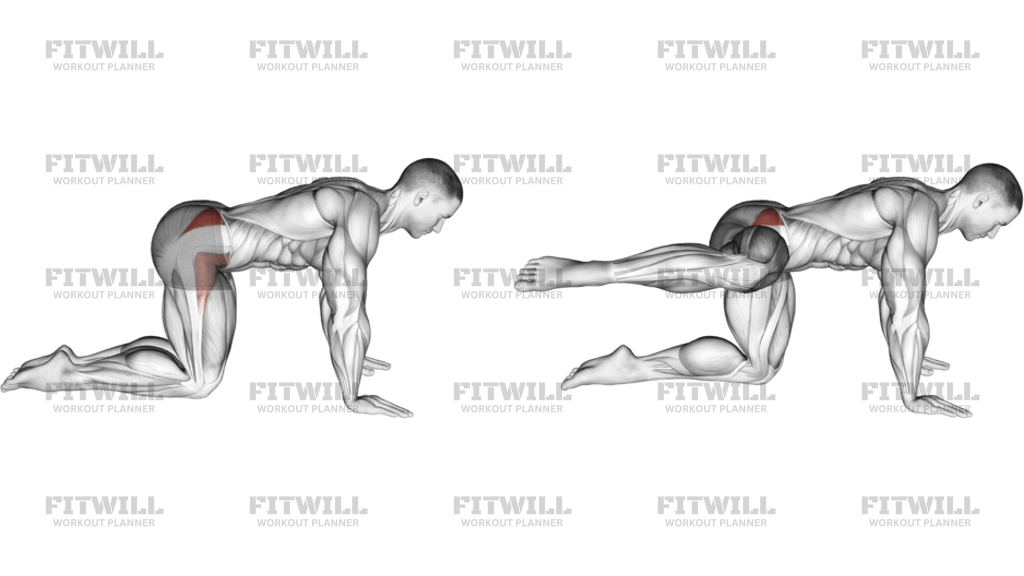
Kneeling Straight Leg Kickback is a bodyweight hip-extension exercise done from hands and knees. It asks you to keep one leg long behind you while you drive the heel upward and back, making the glutes do most of the work while the trunk stays steady. The movement looks simple, but the quality of the rep depends on how well you keep the hips square and the low back from taking over.
This exercise is especially useful when you want a lower-load glute drill that still teaches control at the hip. The primary target is the glutes, with the hamstrings helping extend the leg and the core and lower back working to stop the pelvis from twisting or arching. That makes Kneeling Straight Leg Kickback a good accessory movement on lower-body days, a warm-up drill before heavier glute work, or a technique piece for people who need cleaner hip extension mechanics.
The setup matters more than people expect. Place your hands under your shoulders, bring the supporting knee under the hip, and make sure the working leg has room to travel straight behind you without rotating the torso. If your weight shifts too far forward or your ribs flare, the rep turns into a back-extension exercise instead of a glute kickback. A stable starting position lets you move the leg while the rest of the body stays quiet.
On each repetition, keep the working leg long and drive it up by squeezing the glute, not by swinging the pelvis. The lift should feel like the thigh is reaching back and slightly up while the hips remain level. Lower slowly until you are back in the starting position, then repeat with the same line of motion and the same amount of torso control. Breathing stays simple: brace before the kick, exhale as the leg rises, and inhale as it lowers.
Kneeling Straight Leg Kickback is most useful when you want targeted glute tension without loading the spine or demanding a lot of equipment. It also works well as a filler between heavier compound sets because it reinforces pelvic control and hip extension awareness. Keep the rep smooth, avoid forcing range, and stop the set when you can no longer keep the working side from rotating or the lower back from arching.
[ Workout Log & Planner ]
Put your next workout in Fitwill
Keep your plan and training log ready when you are.


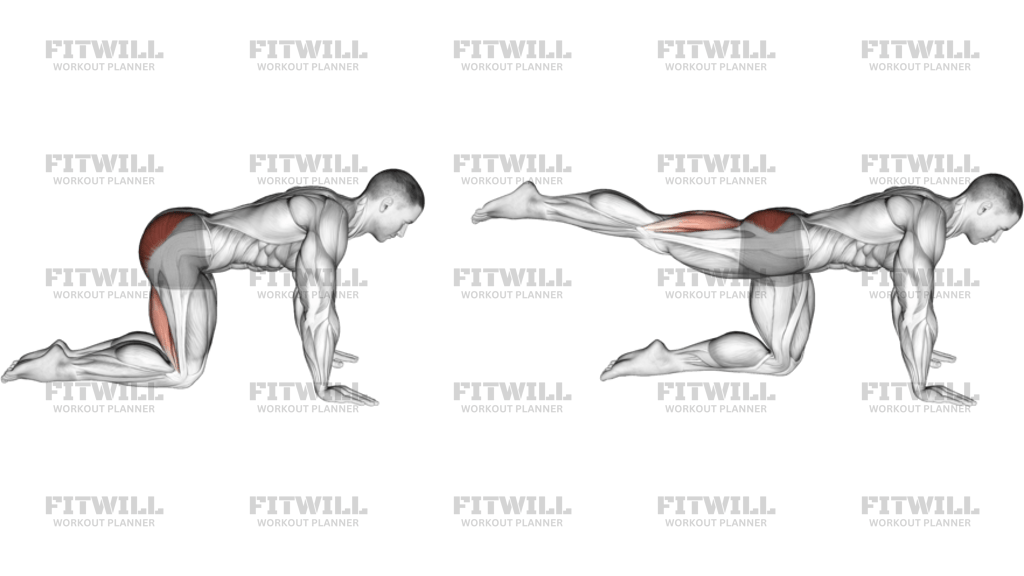
Instructions
- Get on your hands and knees with your wrists under your shoulders and your supporting knee under your hip.
- Keep your torso long, your ribcage stacked over your pelvis, and your head in line with your spine.
- Extend the working leg straight behind you so the hip starts open and the leg has a clear path to travel.
- Brace your midsection before the first rep so your low back stays quiet as the leg moves.
- Drive the straight leg up and back by squeezing the glute, not by pushing the chest forward or arching the spine.
- Lift only until the leg is in line with your torso or just slightly higher, while keeping both hips square to the floor.
- Pause briefly at the top and feel the glute tighten before you lower the leg.
- Lower the leg slowly to the start without letting the pelvis twist or the working knee bend.
- Reset your position after each rep if your shoulders shift forward or your lower back starts to take over.
Tips & Tricks
- Put a folded mat or towel under the supporting knee if the floor pressure makes you rush the set.
- Keep the working leg long for the entire rep; bending the knee turns this into a different kickback pattern.
- Think about pushing the heel back rather than kicking the foot upward so the glute stays in control.
- If your lower back arches, shorten the range until the pelvis stays level.
- Do not let the hip on the working side open toward the ceiling; square both hip bones to the floor.
- A slower lowering phase usually gives better glute tension than trying to lift higher.
- If your shoulders fatigue first, place the hands slightly wider and keep the elbows softly unlocked.
- Use a brief squeeze at the top instead of a long hold if you start cramping in the hamstrings.
- Stop the set when the movement turns into a back extension or a hip twist.
Frequently Asked Questions
What muscles does Kneeling Straight Leg Kickback work most?
It mainly trains the glutes, with the hamstrings helping extend the leg and the core stabilizing the torso.
Is Kneeling Straight Leg Kickback beginner-friendly?
Yes. Bodyweight makes it easy to learn, and beginners can keep the range small until they can hold the pelvis steady.
Should my leg stay straight during Kneeling Straight Leg Kickback?
Yes, keep the working leg long so you keep the focus on hip extension. A soft knee bend is fine, but do not turn it into a bent-knee donkey kick.
How high should I lift my leg in Kneeling Straight Leg Kickback?
Only lift as high as you can without twisting the hips or arching the lower back. For most people, that means stopping around torso height or slightly below.
Why do I feel Kneeling Straight Leg Kickback in my lower back?
Usually the leg is going too high or the ribs are flaring forward. Shorten the range and keep your midsection braced so the glutes do the work.
Can I add resistance to Kneeling Straight Leg Kickback?
Yes, but start with bodyweight first. Once the pattern is clean, ankle weights or a light cable ankle strap can add load without changing the movement.
What is the main setup cue for Kneeling Straight Leg Kickback?
Stack your wrists under your shoulders, keep the support knee under the hip, and square the pelvis before the first rep.
How is this different from a bent-knee donkey kick?
Kneeling Straight Leg Kickback keeps the working leg long, which changes the leverage and shifts the emphasis toward a straighter hip-extension line.