Triceps Dip
Triceps Dip is a triceps-focused pressing exercise performed on an assisted dip machine. The image shows the lifter supported by a knee pad and gripping the parallel handles, which shifts part of the bodyweight so the arms can train hard without requiring a full unassisted dip. That setup makes the exercise useful for building triceps strength, shoulder stability, and pressing control while keeping the path more repeatable than free bar dips.
The main action is elbow extension: you lower your body by bending the elbows and then press yourself back up by driving the handles down until the elbows straighten. The triceps brachii does most of the work, while the front delts, chest, forearms, and core help keep the torso quiet and the shoulder position organized. If the handles feel too wide or the torso drifts forward, the load shifts away from the triceps and the movement becomes harder to control.
The knee support changes the feel of the rep, but the coaching priorities stay the same. Keep the shoulders set, chest tall enough to avoid collapsing, and wrists stacked over the handles. Lower only as far as your shoulders can stay comfortable and your upper arms can track smoothly. On the way up, finish by fully extending the elbows without shrugging or bouncing off the bottom.
This exercise works well in upper-body strength sessions, arm-focused accessory blocks, or as a progression toward unassisted dips. It is also useful when the goal is to train the lockout portion of pressing without overloading the shoulders. Choose a resistance level that lets you keep every rep smooth, and stop the set when the shoulder position, elbow path, or tempo starts to break down.
Fitwill
Log Workouts, Track Progress & Build Strength.
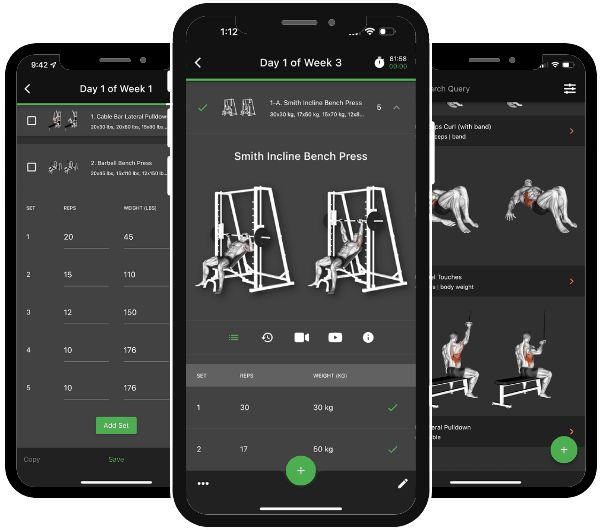
Achieve more with Fitwill: explore over 5000 exercises with images and videos, access built-in and custom workouts, perfect for both gym and home sessions, and see real results.
Start your journey. Download today!


Instructions
- Adjust the assisted dip machine so the knee pad supports your lower legs comfortably and lets you start with your shoulders over the handles.
- Grip the parallel handles with your palms down and set your wrists straight so they stack under your elbows.
- Place your knees or lower legs on the support pad, then lift your body to the top position with the elbows nearly straight.
- Set your chest tall, shoulders down and back, and keep your head in line with your spine before the first rep.
- Inhale and bend your elbows to lower your body between the handles in a controlled path.
- Keep your torso steady as your elbows travel back and your upper arms move toward a comfortable bottom position.
- Press the handles down and extend your elbows to rise back to the top without bouncing off the bottom.
- Exhale as you drive up, then pause briefly at the top with the triceps fully engaged.
- Repeat for the planned reps, then step off the machine under control and reset the pad if needed.
Tips & Tricks
- Keep the knee support high enough that you can control the bottom position without hanging on the shoulders.
- If the handles are too wide for your frame, limit the depth rather than forcing a deep stretch at the shoulder.
- Think about pushing the handles toward the floor instead of shrugging up out of the bottom.
- Let the elbows travel back naturally, but do not flare them so far that the shoulders roll forward.
- Use a range of motion that ends before the front of the shoulder feels pinched or unstable.
- A slight forward torso angle is fine, but avoid turning the rep into a chest dip by leaning hard over the handles.
- Keep the wrists neutral so the forearms stay aligned with the handles instead of folding backward.
- Choose assistance that lets the last repetition look the same as the first one.
Frequently Asked Questions
What does Triceps Dip target most?
The triceps brachii is the main mover, especially through the lockout as you extend the elbows.
Is the assisted dip machine beginner-friendly?
Yes. The knee pad lets you reduce bodyweight so you can practice the dip path with better control.
How should my hands sit on the handles?
Use a firm overhand grip with stacked wrists and forearms, so the force goes straight through the handles.
How deep should I lower on this dip machine?
Lower only until your shoulders stay comfortable and the elbows can still track smoothly behind you.
Why does the torso need to stay steady?
If you swing or lean hard, the movement shifts away from the triceps and becomes harder on the shoulders.
What are common mistakes on assisted dips?
Common errors are shrugging at the top, dropping too deep, bouncing out of the bottom, and letting the elbows flare wildly.
Can I use this instead of bench dips?
Yes. The machine path is usually easier to control and often friendlier on the shoulders than bench dips.
How do I progress this exercise?
Reduce assistance over time, keep the same depth and tempo, and add reps only if every repetition stays smooth.