Resistance Band Seated Biceps Curl
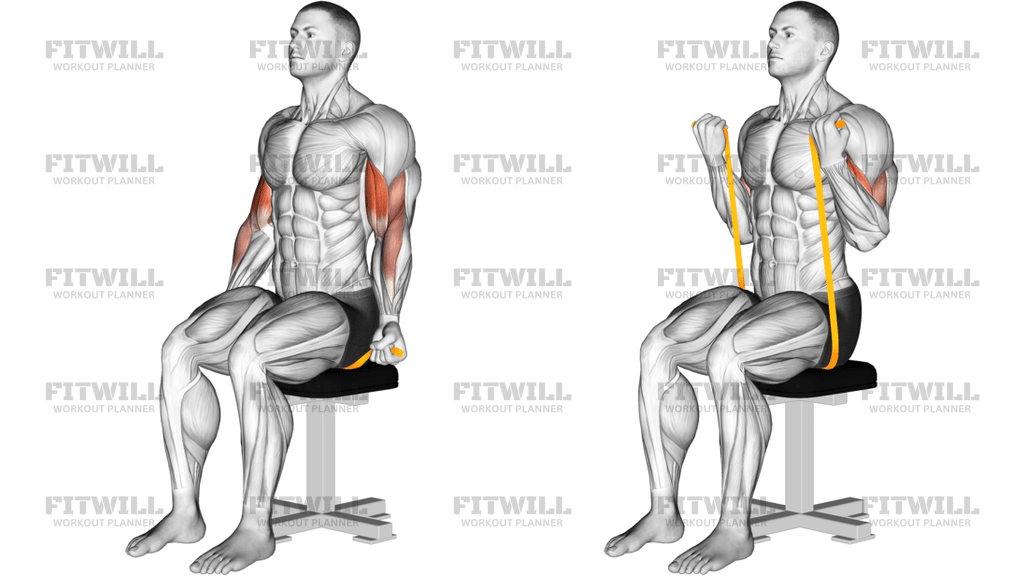
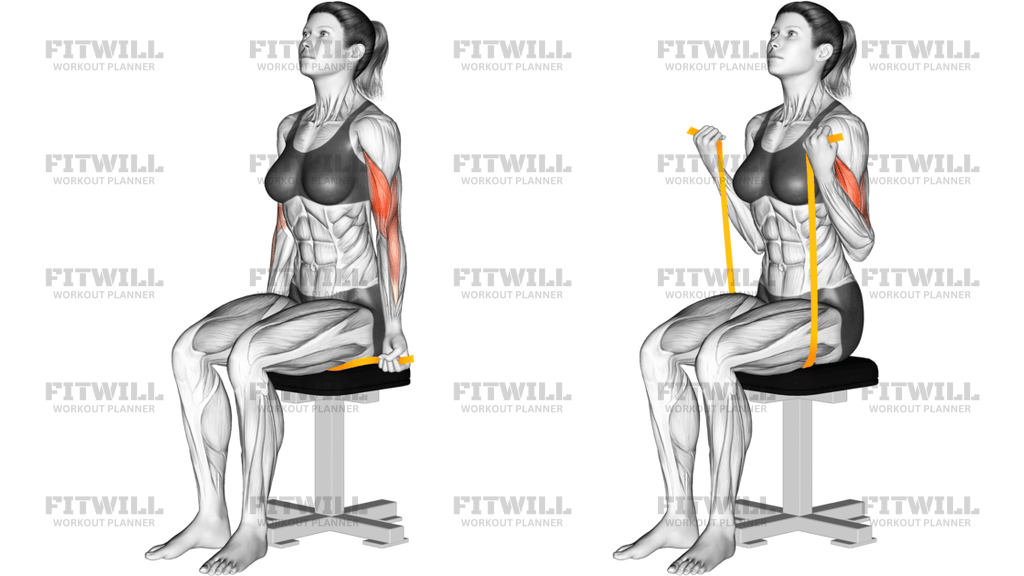
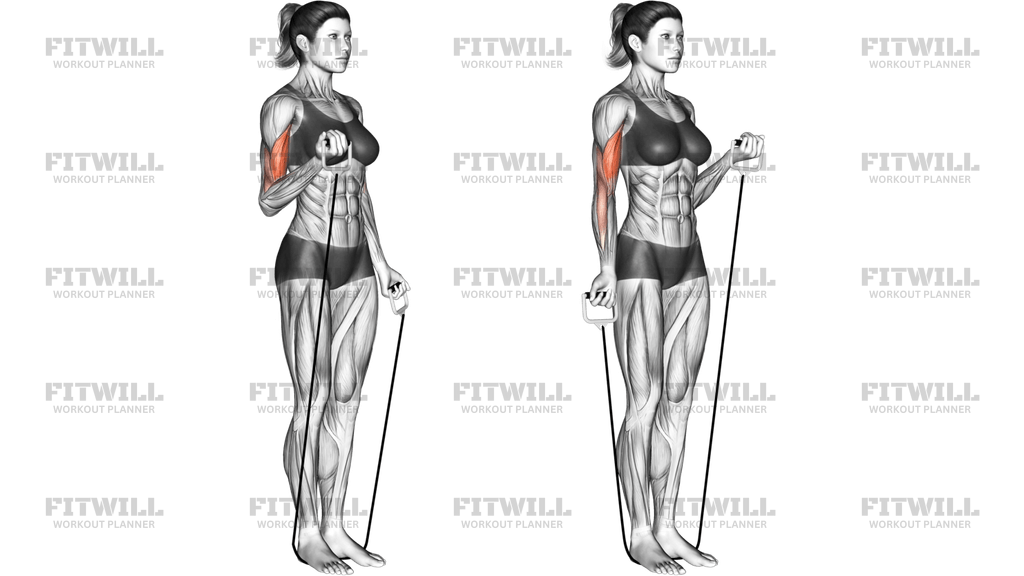
Resistance Band Seated Biceps Curl is a seated arm-flexion exercise that loads the biceps through constant band tension. It is especially useful when you want a simple upper-arm movement that is easy to scale at home, in a hotel gym, or as accessory work after bigger pulling exercises. The seated position reduces cheating from the legs and makes it easier to keep the shoulders quiet while the elbows do the work.
The main muscles involved are the biceps brachii, with help from the brachialis, brachioradialis, and forearm flexors. Because the band gets harder as it stretches, the top half of the curl usually feels the most demanding. That makes setup important: the band needs to be secured under the bench or under the body so the line of pull stays even and each arm receives steady resistance.
Done well, the exercise starts with tall posture, elbows close to the ribs, and wrists stacked over the forearms. From there, the hands curl toward the shoulders without letting the torso rock backward or the shoulders roll forward. The best reps feel smooth and controlled, with the upper arm staying almost fixed while the forearm moves through the curl path. Lowering the band slowly matters just as much as lifting it because the descent keeps tension on the biceps and helps avoid snapping the band downward.
This movement fits well in arm-focused sessions, finishing work after rows or pulldowns, or high-rep strength blocks where joint-friendly loading is useful. It can also be a practical option when heavier free weights are unavailable. Because the resistance comes from an elastic band, the feel changes with band length and tension, so a small change in seating position or hand height can noticeably affect difficulty.
Safety and form quality matter more than chasing speed. Keep the neck relaxed, avoid flaring the elbows forward, and stop the set if the band starts pulling your shoulders out of position. If the band is too light, shorten it or choose a stronger band rather than adding body swing. If it is too heavy, reduce tension so you can maintain the same curl path on every repetition.
[ Workout Log & Planner ]
Put your next workout in Fitwill
Keep your plan and training log ready when you are.


Instructions
- Sit tall on a flat bench with your feet planted and the band secured under the bench or under your body so it stays anchored.
- Hold one end of the band in each hand with your palms facing up and your wrists straight.
- Let your arms hang at your sides with your elbows tucked close to your ribs and your shoulders relaxed.
- Brace your torso without leaning back or shifting your hips.
- Curl both hands toward your shoulders by bending only at the elbows.
- Keep your upper arms still so the elbows do not drift forward as the band gets tighter.
- Squeeze the biceps at the top for a brief pause before lowering.
- Lower the band slowly until your elbows are almost straight and the tension is still under control.
- Repeat for the planned reps, then place the band back down only after the last rep is fully finished.
Tips & Tricks
- If the band pulls your shoulders forward, sit a little more upright or move the anchor point slightly so the curl line stays vertical.
- Keep your palms fully supinated unless wrist comfort forces a small angle change; a palm-up grip puts the biceps in the strongest line of pull.
- Do not let your elbows drift in front of your torso, especially near the top where the band tension is highest.
- Use a shorter band length or a thicker band only when you can still lower the hands under control without snapping the band down.
- A slower lowering phase usually makes this exercise feel harder than rushing the lift, because the band tension stays on the biceps the whole way.
- If you feel the front of the shoulders taking over, reduce the curl height slightly and keep the upper arms pinned closer to the ribs.
- Keep your wrists stacked over your forearms so the band does not fold the hands backward at the top of the curl.
- For cleaner reps, exhale as you curl up and inhale as you lower back down without losing posture.
Frequently Asked Questions
What muscle does Resistance Band Seated Biceps Curl target most?
The biceps are the primary target, with the brachialis and forearms helping during the curl.
How do I anchor the band for the seated curl?
Place the band under the bench or under your seated body so it stays fixed while you curl both handles upward.
Should my elbows move forward during the rep?
No. Keep the elbows close to your ribs and let only the forearms travel until the hands reach shoulder height.
Why does this curl feel harder near the top?
Band tension increases as the rubber stretches, so the last part of the curl is usually the most demanding.
Can I do this with one arm at a time?
Yes, a single-arm version works well if you want to focus on one side or correct left-right differences.
What should I avoid if my shoulders start to help?
Reduce the band tension and stop leaning back so the movement stays in the elbows instead of the upper body.
Is this a good finisher after rows or pull-downs?
Yes, it is a useful accessory curl after back work when you want extra direct biceps volume without heavy weights.
What is the safest way to finish the set?
Lower the last rep slowly, then release the band only after it is fully under control so it does not snap back.