Static Position Standing
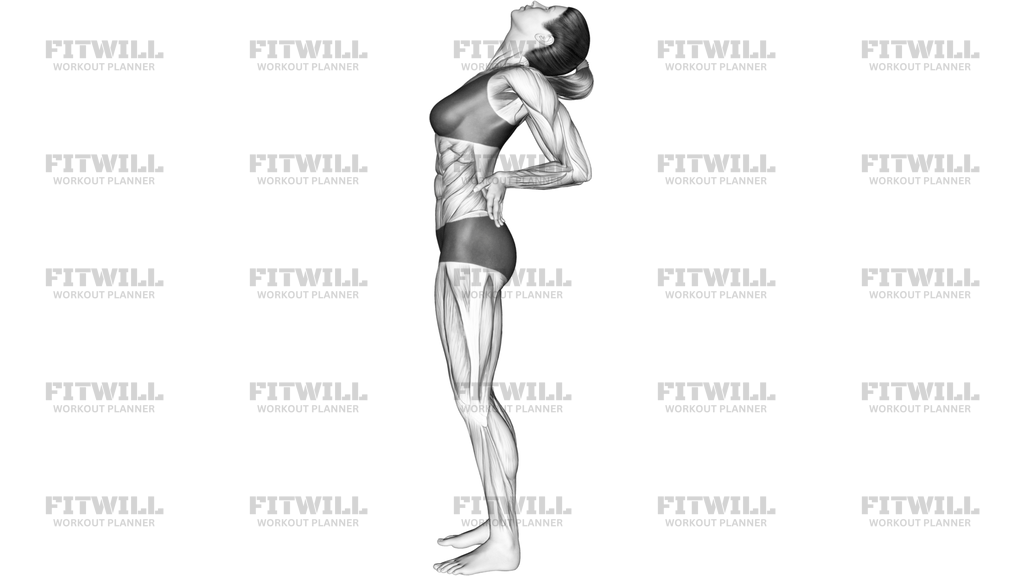
Standing back extension is a simple standing mobility drill that opens the front of the body while teaching you to control spinal extension instead of dumping into it. In the image, the lifter stands upright with the hands braced on the low back and the chest lifted into a gentle backbend, which makes this movement a better fit as a standing lumbar and hip-flexor stretch than as a generic static pose.
The exercise mainly targets the rectus abdominis and the hip flexors through a lengthened position, while the obliques, spinal erectors, and glutes help control how far you lean back. That support matters. If you only tip the head and ribs backward, you can jam the lower back without creating a useful stretch. The goal is a smooth extension through the torso with the pelvis still under control.
The setup is important because the hands on the low back do more than decorate the position. They give you a cue to keep the shoulders down, rib cage lifted, and pelvis stacked before you move. From there, you can press the hips gently forward, keep the knees soft, and let the chest travel up and back a small amount. A clean repetition looks deliberate, not exaggerated.
Use this movement in a warmup, between sets, or after training when the front of the trunk feels tight from sitting, pressing, planks, or squat work. It is especially useful when you want a standing option that does not require a mat or bench. Keep the range moderate and the breath easy. This should feel like an opening through the abdomen and hip line, not a sharp pinch in the lumbar spine.
Because this is a static standing stretch, the best results come from position and control rather than load. Stay centered over the feet, keep the neck relaxed, and come out of the backbend the moment the lower back stops feeling smooth. The image shows a back-extension stretch, so the coaching below is written for that specific movement pattern rather than a generic upright stance.
Fitwill
Log Workouts, Track Progress & Build Strength.
Achieve more with Fitwill: explore over 9600 exercises with images and videos, access built-in and custom workouts, perfect for both gym and home sessions, and see real results.
Start your journey. Download today!




Instructions
- Stand tall with your feet about hip-width apart and place both hands on the low back or upper pelvis, just like the image.
- Keep a soft bend in the knees and stack your ribs over your pelvis before you move.
- Lift the sternum slightly and let the shoulders stay relaxed instead of shrugging up.
- Press the hips gently forward as you lean the chest and head back into a controlled extension.
- Keep the weight centered through the mid-foot and do not let the heels pop up.
- Stop when you feel a strong opening across the abdomen and front of the hips without a sharp pinch in the lower back.
- Hold the stretched position for a brief breath or two, then return to tall standing by bringing the ribs back over the pelvis.
- Repeat for the planned number of reps, keeping every repetition smooth and identical.
Tips & Tricks
- Use your hands on the low back as a cue to keep the chest open and the shoulders from collapsing forward.
- A small backbend is usually enough; chasing a bigger arch often shifts stress into the lumbar spine instead of creating a better stretch.
- Keep the chin from jutting up first. Let the whole torso extend together instead of cranking only the neck.
- If the low back feels pinchy, reduce the range and think about lengthening upward before you lean farther back.
- Soft knees help you keep the pelvis under control and make the stretch feel smoother through the front of the hips.
- Breathe into the ribs while you hold the position so the torso can open without bracing hard.
- Lightly engage the glutes if you tend to over-arch and dump into the lower back.
- This works best as a mobility reset, so stop well before the posture turns into a forced pose.
Frequently Asked Questions
What does the standing back extension stretch target?
It mainly opens the abdominals and hip flexors while the spinal erectors and glutes help control the backbend.
Why are the hands placed on the low back?
The hand position helps you keep the chest lifted and gives you a reference point so you do not collapse or twist as you lean back.
Should I feel this in my lower back?
You may feel the lower back working lightly, but the main sensation should be a smooth stretch through the front of the torso and hips.
How far should I lean back?
Only lean back far enough to feel a controlled opening. If you lose balance or feel a pinch, the range is too large.
Is this the same as a cobra stretch?
No. This version is done standing, with the hands bracing the low back and the feet staying rooted on the floor.
Can beginners do this stretch safely?
Yes, as long as they keep the bend small and avoid forcing the lumbar spine into a hard arch.
What is the most common mistake with this position?
Most people overextend the neck or ribs first and turn the movement into a jammed lower-back bend instead of a controlled stretch.
When should I use this exercise?
It fits well in a warmup, between strength sets, or after sitting and pressing work when the front of the body feels tight.