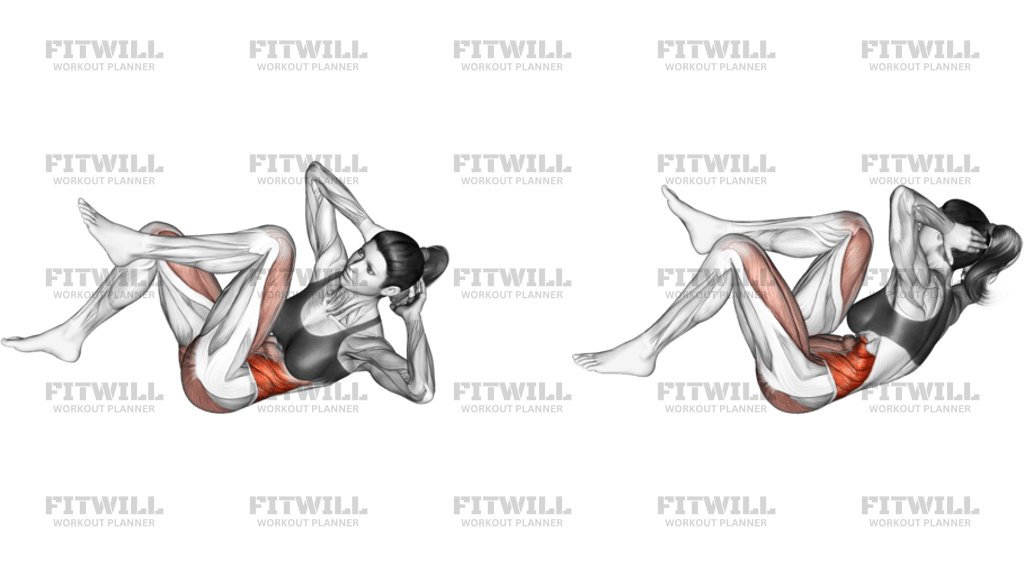
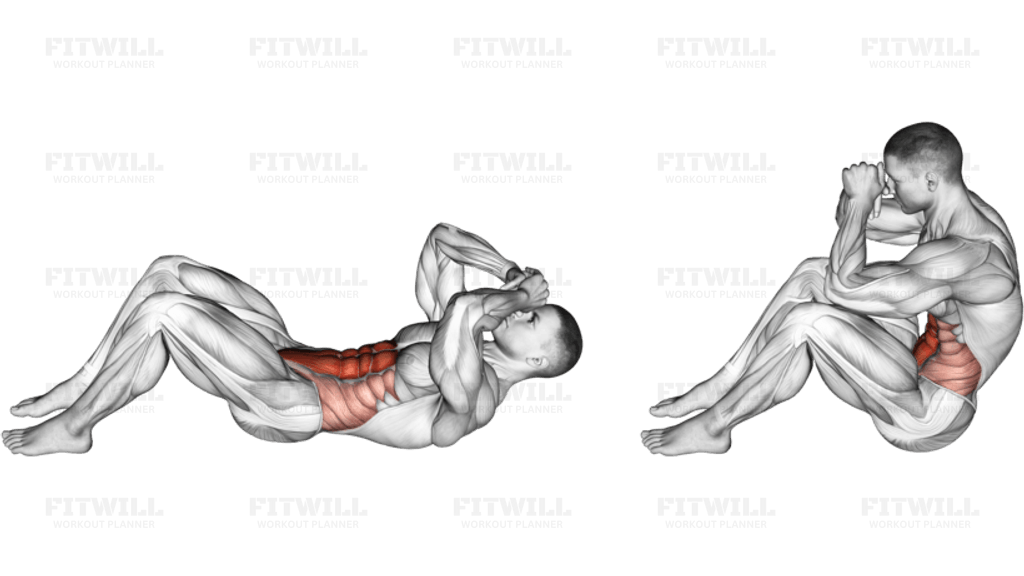
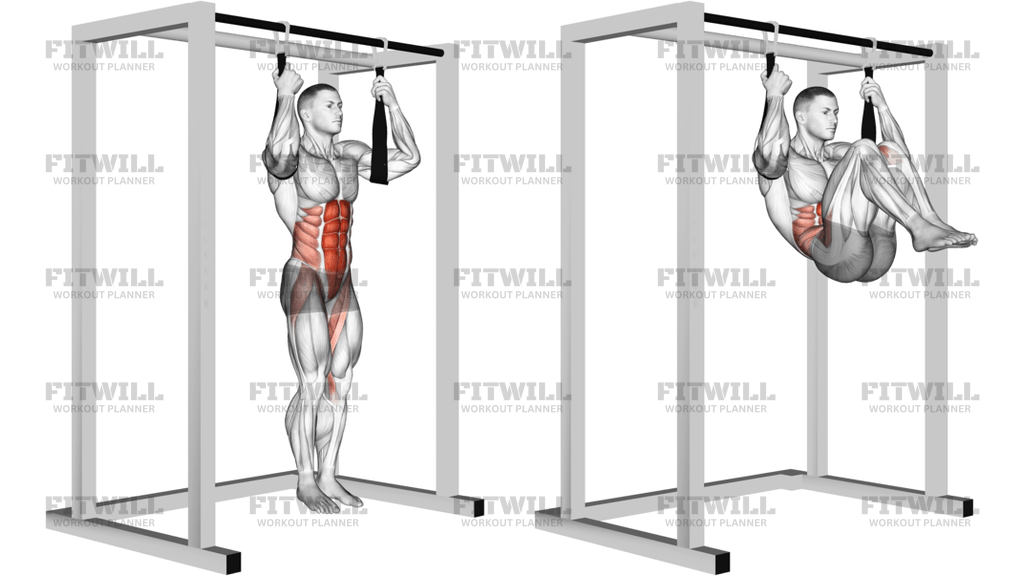
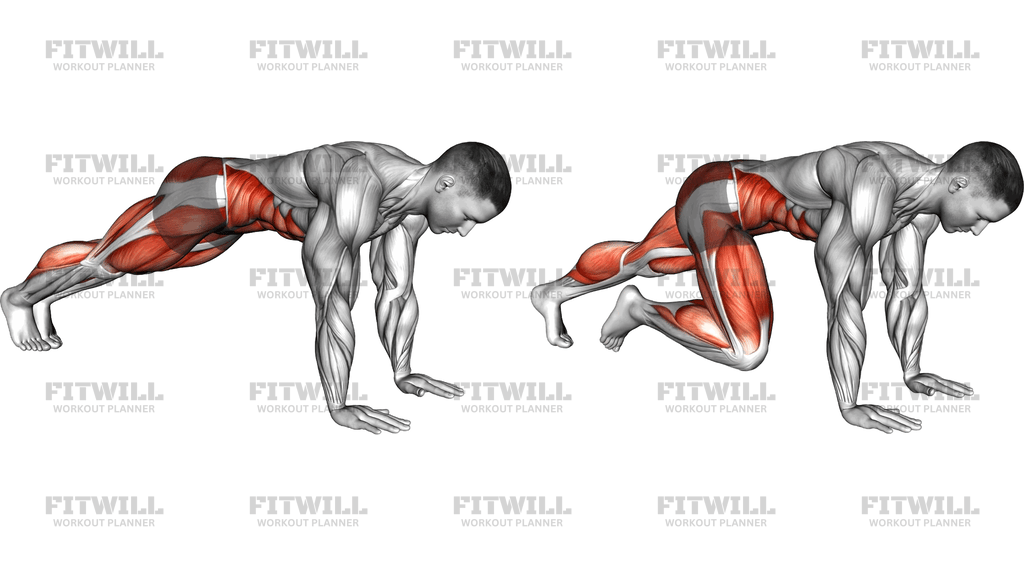
Pelvic Tilt
Pelvic Tilt is a floor-based core exercise performed lying on your back with your knees bent and feet planted. The movement teaches you to control the position of your pelvis and lower spine instead of letting the low back drift into an arched position. That makes it useful for building trunk awareness, improving bracing mechanics, and learning how to keep the ribs, pelvis, and breathing organized during simple core work.
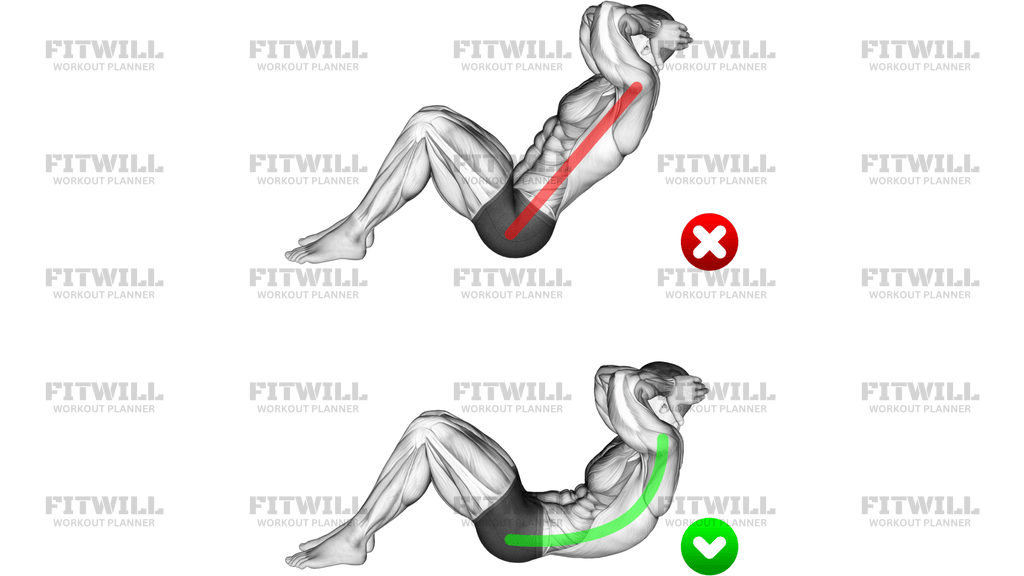
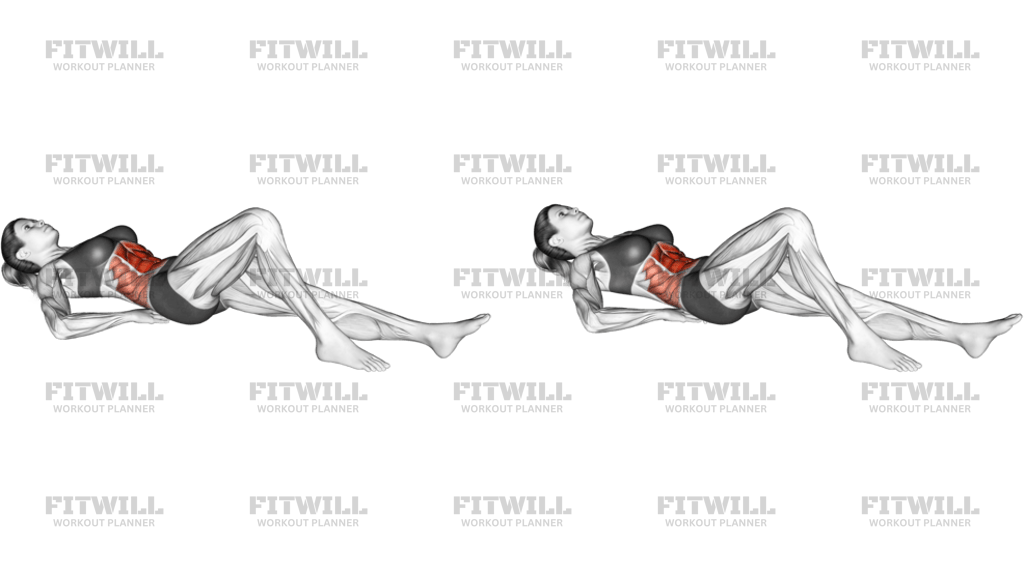
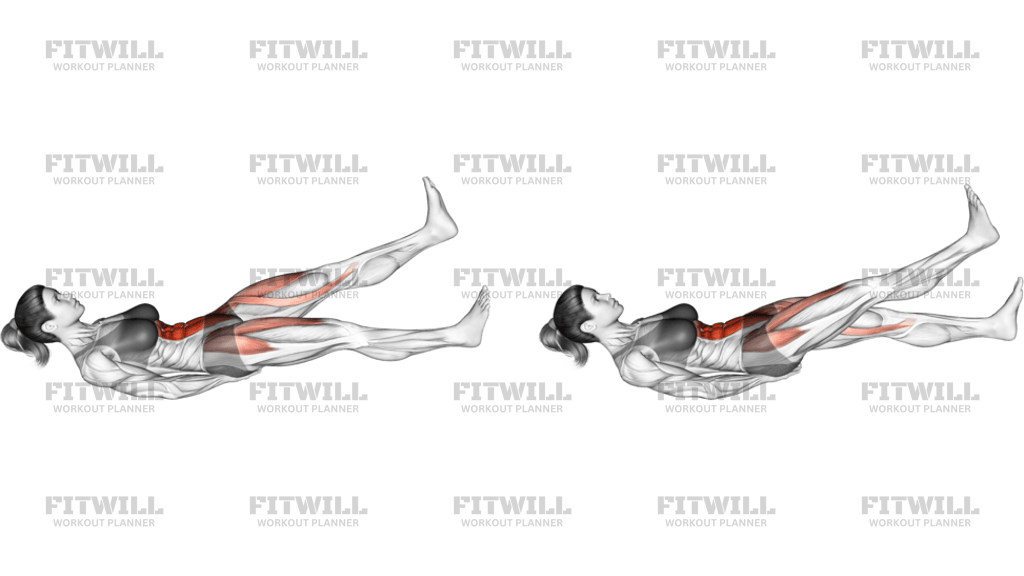
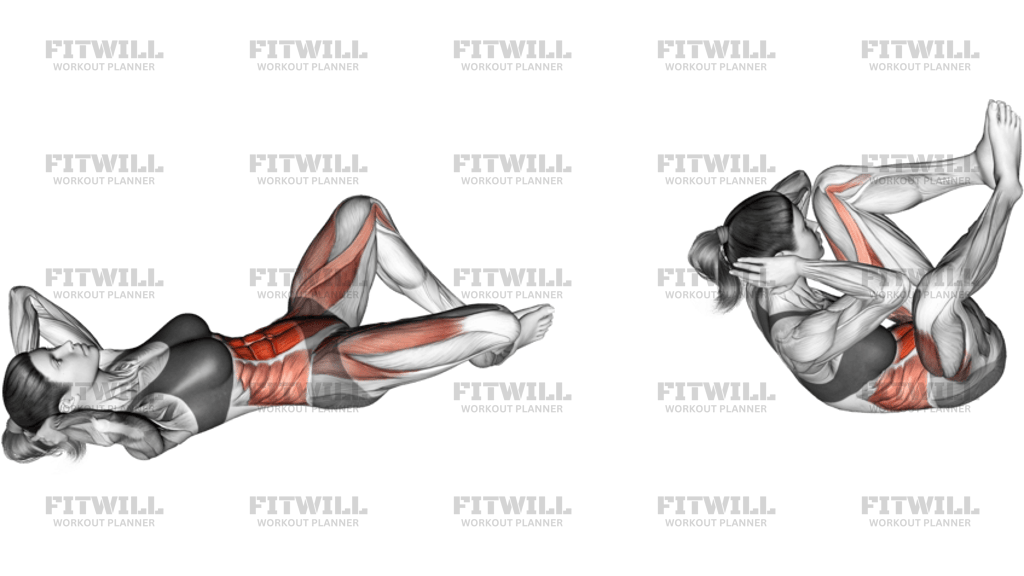
This exercise is usually done with body weight and no equipment, so the setup matters more than load. In the image, the body is supported by the floor, the knees stay bent, and the feet stay flat while the pelvis gently moves through a small, controlled range. The primary effort comes from the abs, with the obliques and deep core muscles helping you flatten the lower back or maintain a steady, tucked position without gripping through the neck or shoulders.
A good rep is subtle. You are not trying to crunch hard or fling the hips around; you are practicing a clean pelvic motion. Start by lying long on the floor, then use the abs to tip the pelvis so the lower back settles toward the ground. Keep the rib cage from popping up, keep the chin relaxed, and let the movement come from the midsection rather than from pushing through the feet or arching the spine.
Because the range is small, this exercise works best when the tempo is deliberate. Pause in the tucked position, breathe out as you set the ribs and pelvis, and return slowly if the variation calls for releasing the tilt between reps. It is a common warm-up or rehab-style core drill, but it also works well as accessory work before heavier lifting when you want better trunk control and cleaner brace mechanics.
Pelvic Tilt should feel controlled and low-risk, not forceful. If the hips or lower back are cramping, the range is probably too big or the effort is shifting into the wrong muscles. Keep the motion smooth, stop before the lower back starts to arch aggressively, and use it to rehearse position, breathing, and abdominal tension before moving on to more demanding core exercises.
[ Workout Log & Planner ]
Put your next workout in Fitwill
Keep your plan and training log ready when you are.


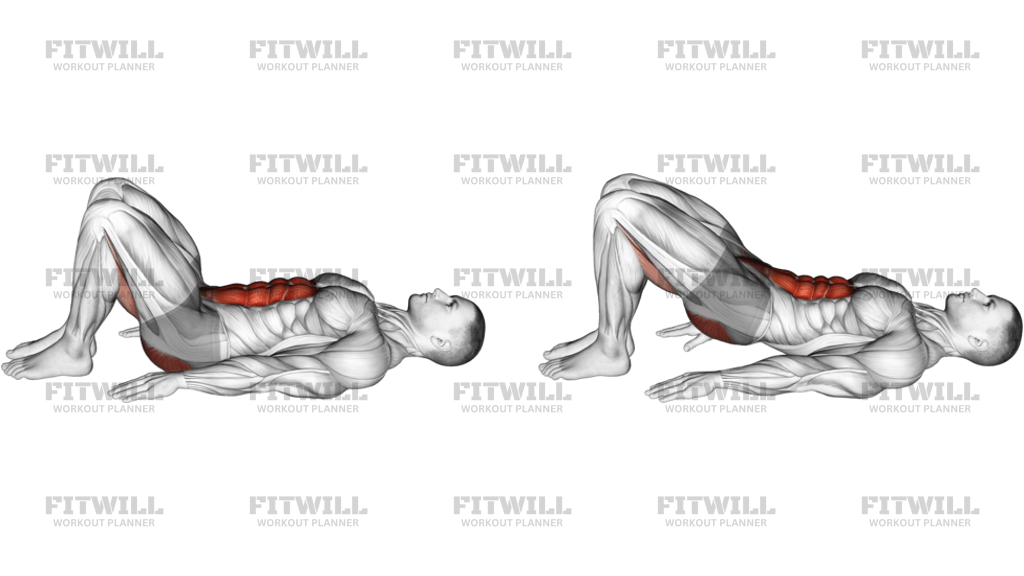
Instructions
- Lie on your back on the floor with your knees bent about 90 degrees and your feet flat, hip-width apart.
- Place your arms relaxed at your sides and let your shoulders, head, and upper back stay heavy against the floor.
- Set your ribs down and gently tighten your abs before you move.
- Exhale and tilt your pelvis so your lower back presses toward the floor.
- Keep the movement small; the goal is control, not lifting your hips high.
- Hold the tucked position for a brief pause without tensing your neck or shoulders.
- If you are using a release-and-repeat style, slowly let the pelvis return to neutral without losing foot contact.
- Repeat for the planned reps while keeping the same tempo and breathing pattern.
Tips & Tricks
- Think of the movement as tipping the belt buckle toward your chin, not pushing the feet into the floor.
- Keep the range small enough that your ribs do not flare or your lower back does not over-arch on the return.
- Exhale through the tilt so the abs can finish the tuck without your hip flexors taking over.
- If your neck tightens, soften your jaw and keep your gaze straight up.
- A slow pause at the tucked position usually teaches pelvic control better than fast repetitions.
- Do not squeeze the glutes so hard that the exercise turns into a bridge.
- If your feet slide, move them a little closer to your hips and reset your stance.
- Stop the set when you can no longer keep the low back position smooth and deliberate.
Frequently Asked Questions
What muscles does a pelvic tilt work most?
It primarily targets the abs, especially the rectus abdominis, while the obliques and deep core muscles help control the pelvis.
Do I need any equipment for this exercise?
No. The standard version is a bodyweight floor drill with your knees bent and your feet planted.
How do I know if I am doing the pelvic tilt correctly?
You should feel your lower back flatten toward the floor as your abs tighten, with no big hip lift or neck strain.
Should my hips come off the floor?
Usually no. The movement is meant to be a small pelvic tuck, not a full bridge.
Can beginners use pelvic tilts?
Yes. It is one of the more beginner-friendly core drills because the setup is simple and the range is easy to control.
Why do my hip flexors take over?
If the feet are too far away or the range is too large, the hip flexors can start driving the motion instead of the abs.
Is this a warm-up or a strength exercise?
It can be both. Most people use it as a warm-up, core activation drill, or low-level accessory movement.
What is the most common mistake?
Most mistakes come from rushing the rep, arching the lower back, or turning the tilt into a bigger hip lift than intended.