Frog Reverse Hyperextension On A Bench
Frog Reverse Hyperextension on a Bench is a bodyweight posterior-chain exercise built around one simple idea: keep your torso anchored on the bench and lift the bent legs behind you with the glutes, not with a swing. The frog leg position shortens the lever a little and usually makes the movement feel more accessible than a straight-leg reverse hyper, while still asking the hips to extend hard at the top.
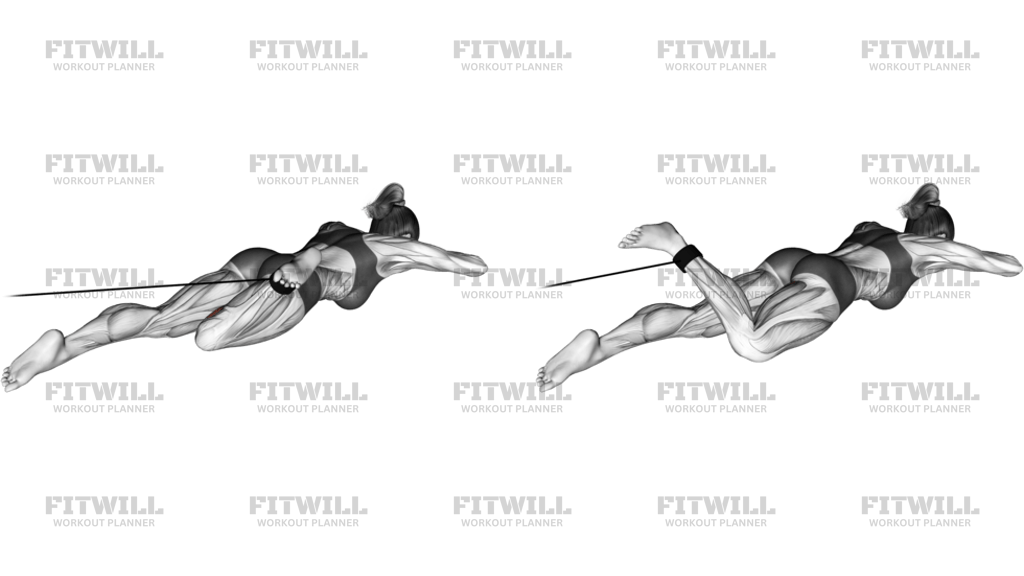
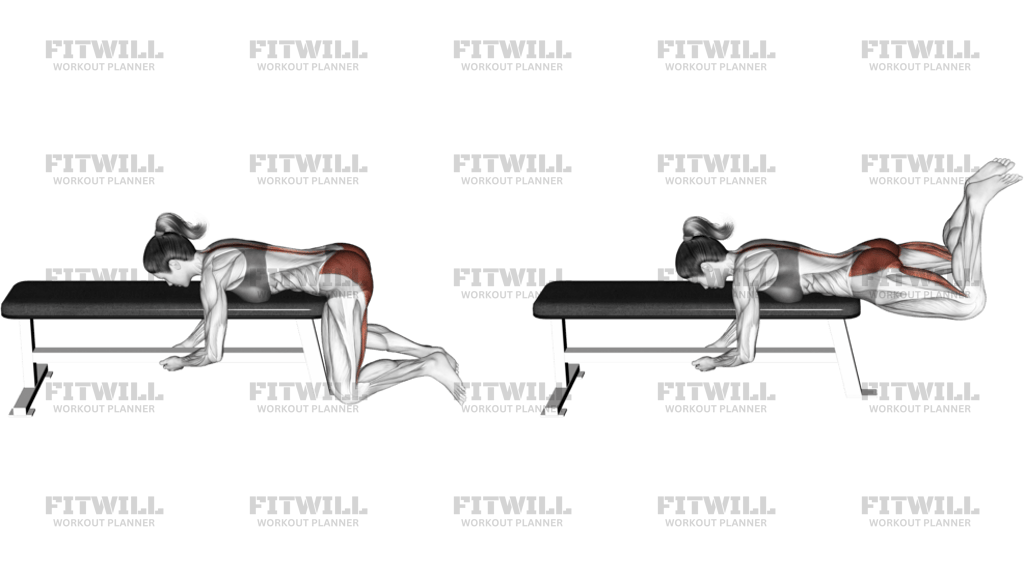
The setup matters because it decides whether the rep loads the glutes cleanly or turns into a low-back wiggle. In the image, the torso lies face down across the bench with the hips close to the edge, the hands holding the bench for stability, and the knees bent with the lower legs tucked together. That position should let the thighs move freely behind the bench without the body sliding forward or the ribcage lifting off the pad.
When the rep starts, the legs are hanging under control, then the hips extend to bring the thighs up until the glutes finish the motion. The top position should feel like a strong squeeze through the back of the hips, not a hard arch through the lumbar spine. On the way down, lower the legs slowly until you are back in the hanging start, keeping the pelvis quiet and the movement smooth. The best reps look compact and repeatable, with the bench doing the support work and the glutes doing the lift.
This exercise is useful as accessory work for glute development, hip extension strength, warmups before lower-body training, or controlled core-and-posterior-chain work when you want less spinal loading than a loaded hinge. It is also a good option for beginners who need a smaller, more controlled reverse-hyper pattern before progressing to a machine or a harder variation. Keep the range pain-free, the neck relaxed, and the tempo deliberate so the movement stays targeted instead of becoming a swing.
[ Workout Log & Planner ]
Put your next workout in Fitwill
Keep your plan and training log ready when you are.


Instructions
- Lie face down on a flat bench with your hips close to the edge and your torso supported.
- Grip the bench or brace your hands on the front edge so your upper body stays fixed.
- Bend both knees and keep the feet together in the frog position under the bench.
- Let the legs hang under control until the hips are fully loaded and the lower back stays neutral.
- Brace your abs, then lift the bent legs behind you by squeezing the glutes.
- Raise the thighs until they are in line with or slightly above the bench without tossing the legs upward.
- Pause briefly at the top and keep the pelvis from rocking or over-arching.
- Lower the legs slowly back to the start and repeat for the planned reps.
Tips & Tricks
- Keep your hips just off the bench edge; too far forward makes the lift awkward and too far back limits the leg swing.
- Squeeze the heels or inner feet together so the frog position stays compact instead of letting the knees drift apart.
- Think about lifting the thighs with the glutes, not kicking the feet toward the ceiling.
- If your lower back pinches, shorten the top range and finish with a glute squeeze instead of extra spinal extension.
- A light pause at the top helps remove momentum and makes the glutes do more of the work.
- Lower the legs slower than you lift them to keep tension on the hips through the full rep.
- Keep your ribs down and your neck long so the torso stays anchored to the bench.
- Use a smaller range if the bench is high or unstable; clean reps matter more than height.
Frequently Asked Questions
What does Frog Reverse Hyperextension on a Bench train most?
It mainly trains the glutes through hip extension, with the hamstrings and lower back helping to stabilize the motion.
Why are the knees bent in the frog position?
Bent knees shorten the lever and make the movement easier to control while still keeping the hips working hard.
Where should I place my hips on the bench?
Set your hips close to the bench edge so the legs can hang freely and swing upward without your torso sliding forward.
How do I know if I am using too much lower back?
If the top of the rep turns into a hard back arch instead of a glute squeeze, shorten the range and keep the ribs down.
Should I hold onto the bench?
Yes. A light grip on the bench helps keep your torso fixed so the hips can do the work.
Is this a good beginner glute exercise?
Yes. The bodyweight setup and bent-knee lever make it a good entry point before harder reverse-hyper variations.
What is the biggest mistake on this bench variation?
Swinging the legs up fast and losing tension on the way down is the most common form breakdown.
How can I make the exercise harder without adding weight?
Slow the lowering phase, add a brief pause at the top, or increase the range only if you can keep the pelvis stable.