Incline Reverse Hyperextension
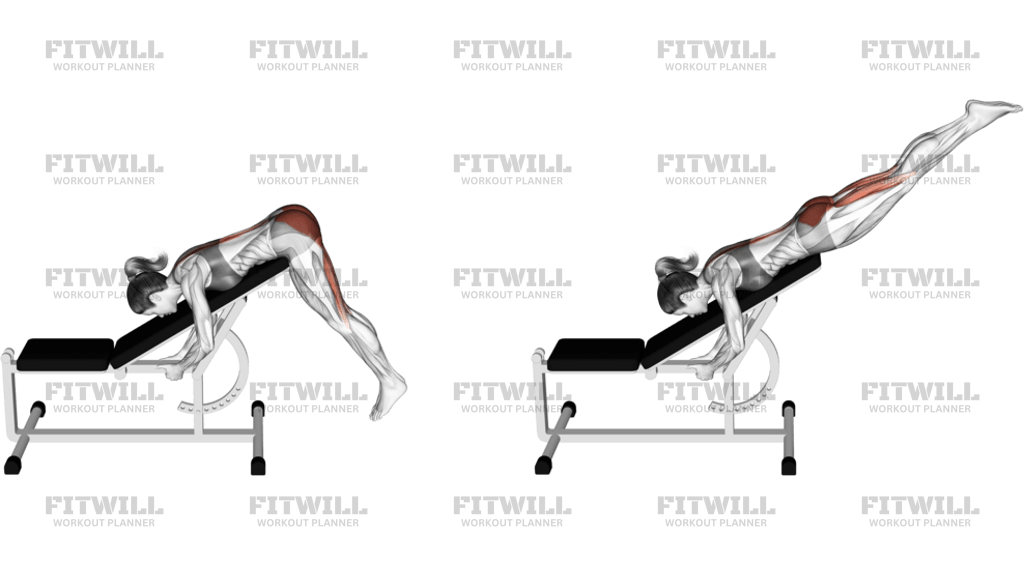
Incline Reverse Hyperextension is a bodyweight hip-extension exercise performed face down on an incline bench. The torso stays supported on the pad while the legs hang freely and swing upward behind the body, which makes the movement a useful way to train the glutes with help from the hamstrings and spinal stabilizers. The setup matters because the bench position controls how much of the rep comes from the hips versus the lower back, and a good setup keeps the pelvis stable while the legs move.
In this exercise, the hips start flexed with the legs hanging toward the floor. As you raise the legs, the glutes drive the motion until the thighs line up with the torso or stop just short of that point if your back begins to arch. The goal is not to kick higher than the bench allows, but to create a clean hip-extension arc with a brief squeeze at the top and a slow return to the hanging start position.
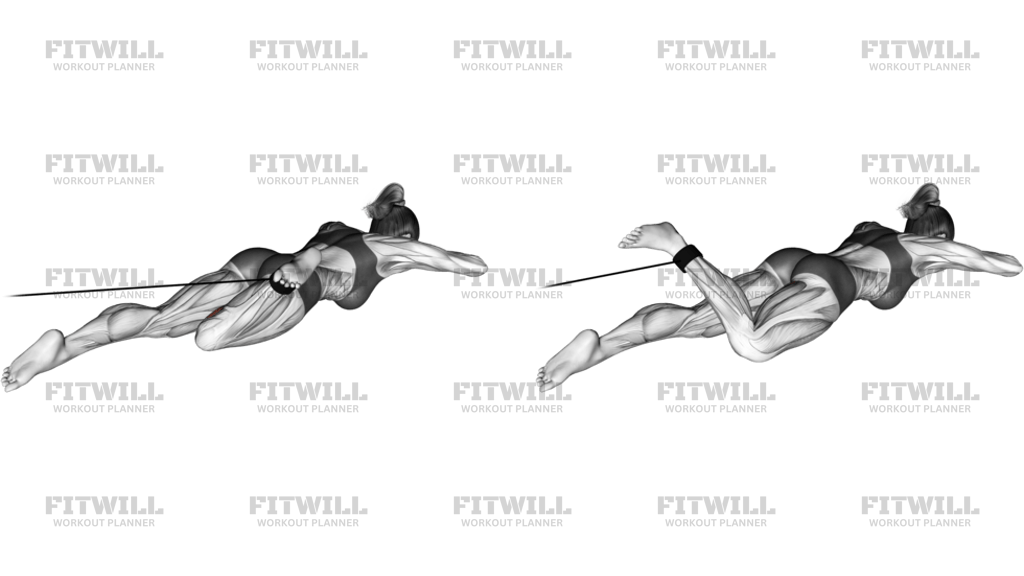
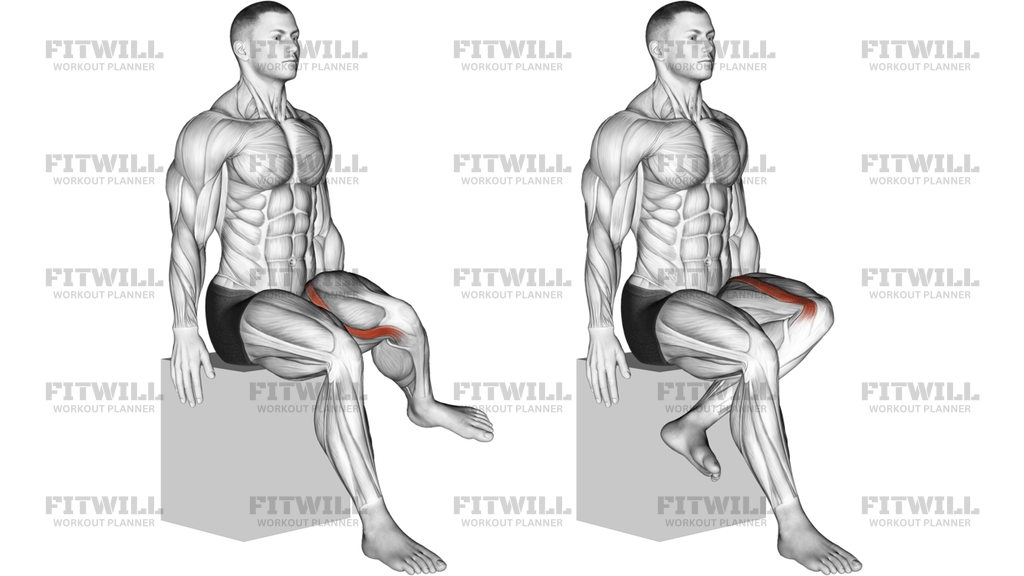
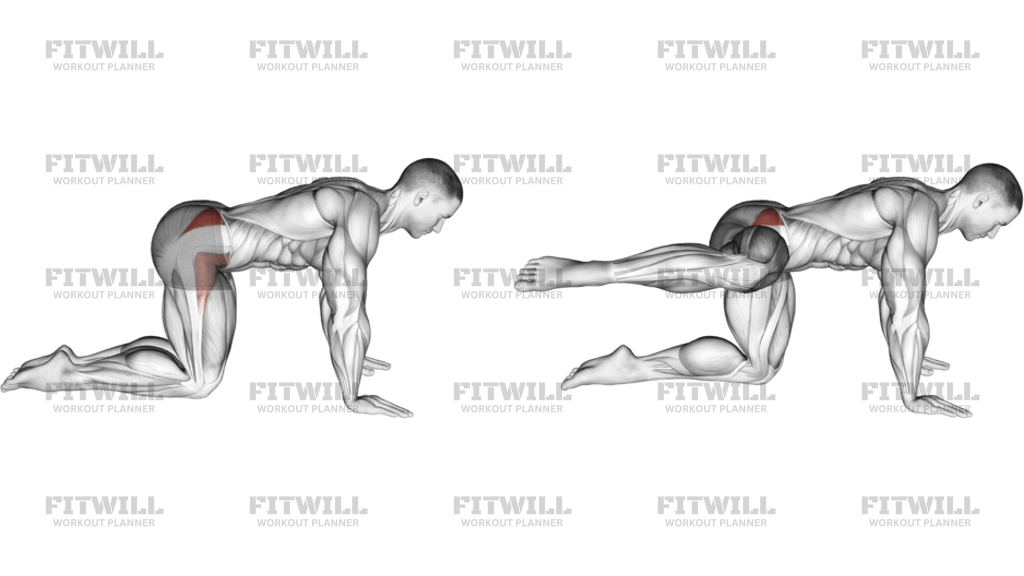
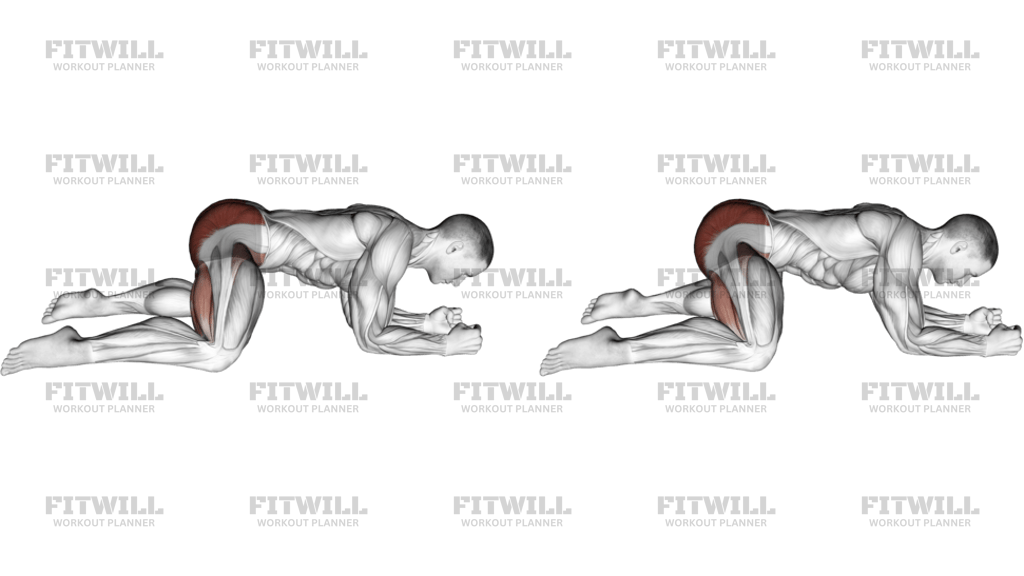
The image shows a classic reverse-hyper pattern on an incline bench: the chest and upper torso are supported, the hands grip the frame for balance, and the legs move together behind the body. That makes the exercise especially useful when you want direct glute work without loading the spine heavily. It also works well as accessory work after squats, deadlifts, or split-stance lower-body training, or as a controlled activation drill before a session that needs better hip extension.
Technique matters more than range here. If the legs swing fast or the torso rocks on the pad, momentum starts to replace muscular work. Keep the ribcage down, avoid cranking the neck, and let the hips open smoothly instead of arching the lumbar spine to chase height. A clean rep should feel like the glutes are lifting the legs away from the floor while the bench keeps the upper body anchored.
Use Incline Reverse Hyperextension when you want a focused, low-load posterior-chain exercise that teaches hip extension, glute engagement, and control through the top half of the rep. It is usually beginner-friendly because the bodyweight load is easy to manage, but the quality standard should stay high: stable contact on the bench, controlled tempo, and a smooth finish without snapping the lower back into extension.
[ Workout Log & Planner ]
Put your next workout in Fitwill
Keep your plan and training log ready when you are.


Instructions
- Set the incline bench so your hips can rest just past the top edge and your torso can hinge freely without sliding forward.
- Lie face down with your upper stomach or low ribs supported on the pad, grab the bench frame or handles, and let your legs hang straight toward the floor.
- Set your pelvis square to the bench, keep your feet together or slightly apart, and brace your midsection before the first rep.
- Start with the legs hanging under control, not swinging, so the movement begins from a dead-stop position.
- Lift your legs behind you by squeezing the glutes and extending at the hips until your body makes a long line from shoulders through heels.
- Stop the upward phase when the legs are near torso height or just below it if your lower back starts to arch.
- Hold the top briefly, then lower the legs slowly back to the hanging start while keeping tension on the glutes and hamstrings.
- Exhale as you lift, inhale on the way down, and reset your torso on the pad before each repetition.
Tips & Tricks
- Let the bench support your torso; if your chest is sliding, the setup is too far forward or the pad is too high.
- Think about driving the heels back rather than throwing the feet upward, which helps keep the work in the glutes.
- Keep the ribs down at the top so the lower back does not take over the last few inches of the rep.
- Use a small pause above the bench to feel the glutes finish the extension instead of bouncing out of the bottom.
- If the legs are swinging, slow the descent until each rep starts from a controlled hang.
- Keep the neck neutral and look down at the bench instead of cranking the head up to watch the feet.
- A slight bend in the knees is fine if it helps you feel the glutes and avoid hamstring cramping.
- Stop the set when you can no longer lift the legs without rocking the torso or arching through the lumbar spine.
Frequently Asked Questions
What does Incline Reverse Hyperextension train most?
It mainly trains the glutes through hip extension, with the hamstrings and lower back helping to stabilize the movement.
Where should my torso sit on the incline bench?
Your upper stomach or low ribs should be supported on the pad so your hips can hinge freely and the legs can hang without the bench digging into your abdomen.
How high should I lift my legs on the bench?
Lift until the legs are near torso height or slightly below it if going higher makes your lower back arch.
Should I keep my knees straight or bent?
A mostly straight leg works well, but a slight bend is acceptable if it helps you keep tension on the glutes and avoid cramping.
What is the most common mistake on this exercise?
The biggest mistake is swinging the legs and turning the rep into a lower-back extension instead of a controlled hip extension.
Can beginners use Incline Reverse Hyperextension?
Yes. It is usually beginner-friendly because it uses bodyweight and the bench provides a clear, stable setup.
Does this exercise need added weight?
Not at first. Bodyweight is often enough to learn the path and keep the hips moving smoothly without momentum.
What can I pair this with in a workout?
It fits well after squats, deadlifts, lunges, or other posterior-chain work when you want extra glute volume without heavy spinal loading.