Quarter Sit-Up
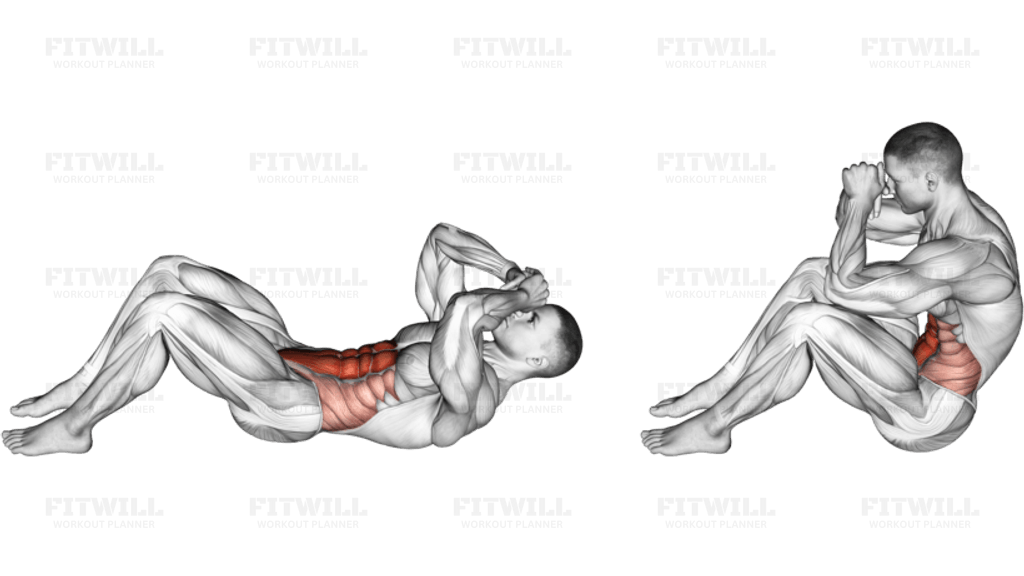
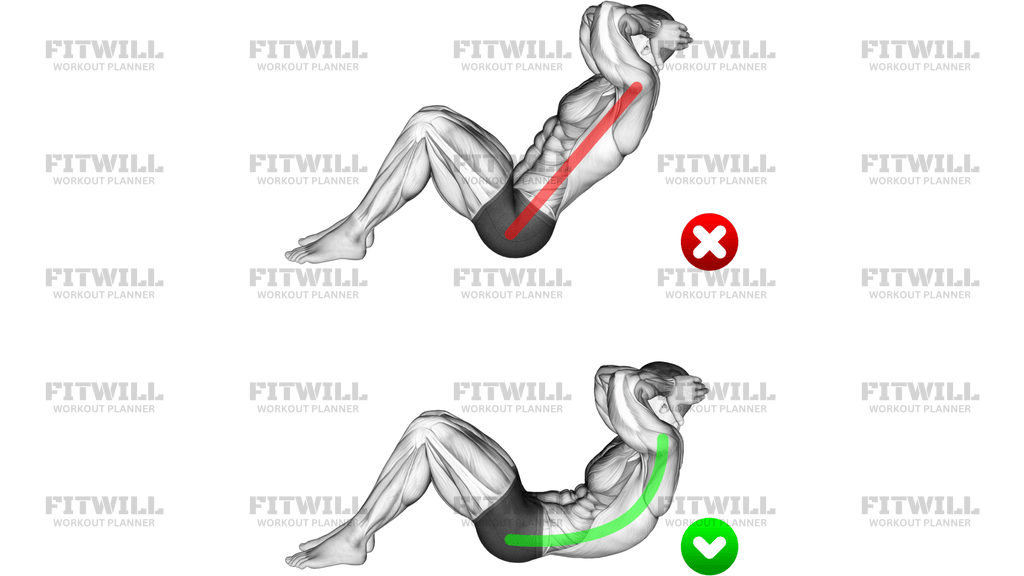
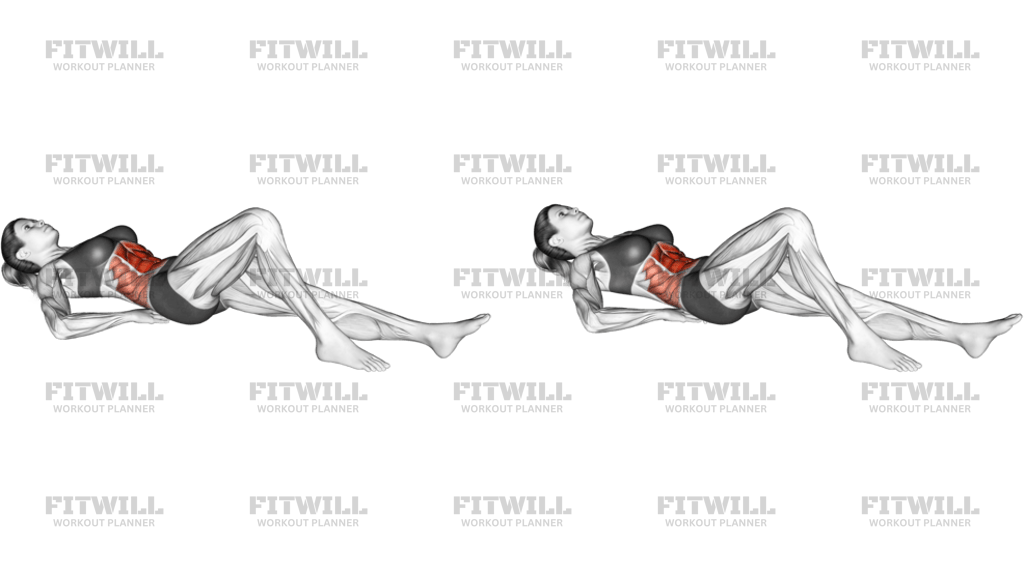
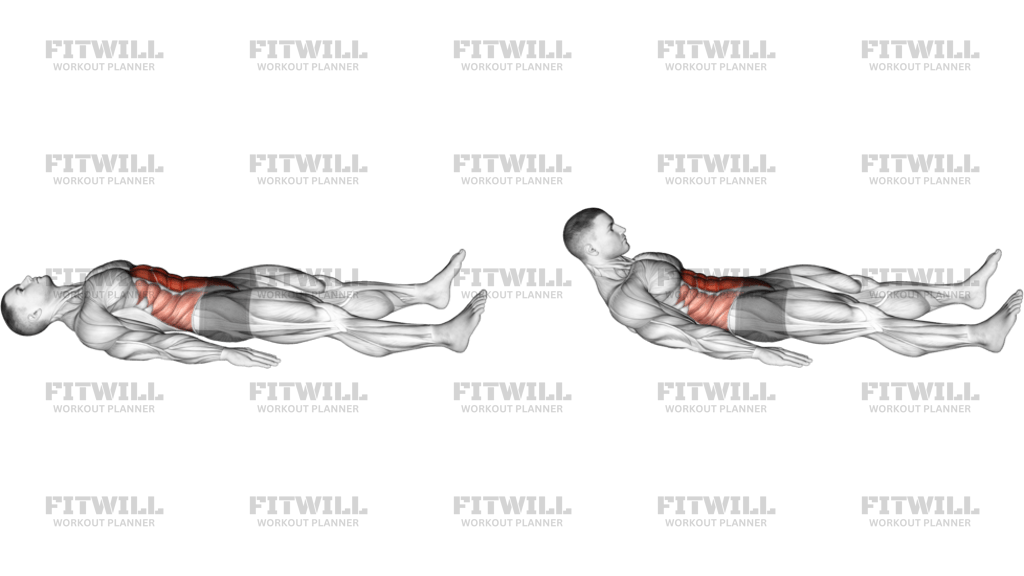
Quarter Sit-Up is a bodyweight abdominal curl done from a supine floor position, using a short range of motion to train the front of the trunk without the bigger leverage demands of a full sit-up. The image shows a controlled partial crunch: the torso lifts only partway, the legs stay long and quiet, and the arms remain down by the sides. That combination makes the exercise useful for building direct abdominal tension while keeping the movement simple and repeatable.
The main job is spinal flexion through the rectus abdominis, with the obliques helping stabilize the rib cage and pelvis and the hip flexors contributing if you drift into a bigger sit-up pattern. In anatomy terms, the main work centers on the Rectus abdominis, with help from External obliques, Iliopsoas, and Transversus abdominis. Because the range is short, the quality of each rep matters more than how high you rise. A clean quarter sit-up should feel like the ribs are curling toward the pelvis, not like the body is being thrown upward.
Setup is important because it keeps the neck, ribs, and low back in the right relationship before the first rep starts. Lie face up on a mat, lengthen the legs as shown, and keep the arms resting along the body. Set the chin slightly back, gently brace the abdomen, and organize the pelvis so the lower back is not overarched. From there, the torso should move as one controlled unit rather than as a fast neck crunch or a swinging sit-up.
On the way up, exhale and curl the shoulders and upper back off the floor just enough to create the quarter-range contraction. Pause briefly at the top, then lower under control until the shoulder blades settle back down. The legs should stay quiet, the neck should stay relaxed, and the return should be slower than the lift. If the rep turns into a leg swing, a yanked neck, or a big hip-flexor sit-up, the range is too large for the goal of this variation.
Quarter Sit-Up fits well in accessory core work, warm-ups, or higher-rep trunk training where you want direct abdominal tension with low complexity. It is also useful when a full sit-up is too much for the low back or when you want to keep the movement strict and easy to scale. Beginners can use it with no load and a short range, while more advanced lifters can make it harder by slowing the tempo, pausing at the top, or keeping every rep identical from start to finish.
Fitwill
Log Workouts, Track Progress & Build Strength.
Achieve more with Fitwill: explore over 9600 exercises with images and videos, access built-in and custom workouts, perfect for both gym and home sessions, and see real results.
Start your journey. Download today!




Instructions
- Lie face up on a mat with your legs long, your arms resting by your sides, and your gaze pointed straight up.
- Gently press your lower back toward the floor and set your rib cage down before the first rep.
- Tuck your chin slightly so the neck stays long instead of leading the movement.
- Exhale and curl your head, shoulders, and upper back off the floor in one smooth motion.
- Lift only partway, stopping when the shoulder blades clear the floor and the abs are fully engaged.
- Keep the legs quiet and the hands relaxed so momentum does not take over the rep.
- Pause for a brief squeeze at the top without pulling on your neck or arching your low back.
- Lower slowly until your shoulder blades touch down again and reset your breath for the next rep.
- Repeat for the planned reps with the same short range and the same tempo on every repetition.
Tips & Tricks
- Think about curling the ribs toward the pelvis instead of trying to sit all the way up.
- Keep the legs still; if they start to float or swing, shorten the range of motion.
- Let the exhale start the rep so the abs do the work before the shoulders move.
- Stop the rep before the neck feels strained or the chin starts jutting forward.
- Use a slow lowering phase so the abs stay loaded instead of dropping back to the floor.
- If the lower back arches off the mat, reduce the curl and re-set the pelvis before continuing.
- Hold the top position for a split second only if you can keep the torso tight without jerking.
- Keep each rep identical; inconsistent height usually means momentum is replacing abdominal tension.
Frequently Asked Questions
What muscles does Quarter Sit-Up work most?
The rectus abdominis does most of the work, with the obliques helping stabilize the torso and the hip flexors assisting if you lift too high.
How is this different from a full sit-up?
Quarter Sit-Up uses a shorter curl, so it emphasizes abdominal tension without the bigger range and hip-flexor demand of a full sit-up.
Should my legs stay straight like in the image?
Yes, this version is shown with the legs long and still. Keep them quiet so the torso curl stays the focus.
How high should I lift my torso?
Only lift until your shoulder blades clear the floor. If you keep climbing much higher, the movement starts turning into a bigger sit-up.
What is the biggest mistake with this exercise?
Rushing the rep and using momentum is the most common issue. A quarter sit-up should look smooth and compact, not jerky.
Can beginners use Quarter Sit-Up?
Yes. It is a simple bodyweight core drill for beginners as long as they keep the range short and the neck relaxed.
What should I do if I feel it in my neck?
Keep the chin slightly tucked, lift less, and slow the lowering phase. If the neck keeps taking over, stop the set and reset your setup.
How can I make it harder without adding weight?
Use a slower tempo, add a brief pause at the top, or keep every rep strict and identical instead of chasing more height.