Swimmer Kicks
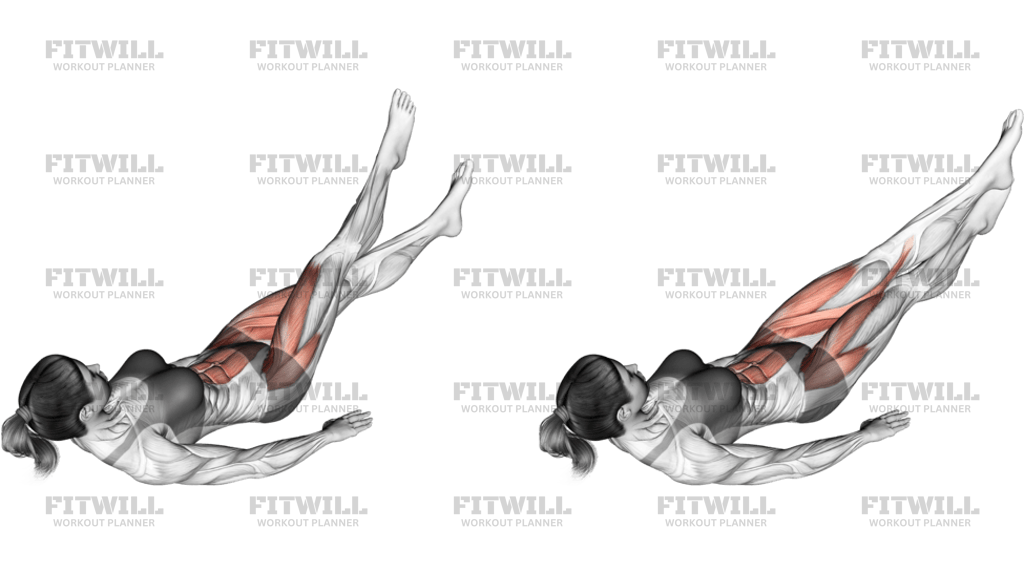
Swimmer Kicks are a prone floor drill for the glutes, hamstrings, lower back, and deep core. You lie face down on a mat and alternate small leg lifts in a steady fluttering rhythm, keeping the pelvis anchored while the legs move. The goal is not to kick high or fast; it is to create a clean, repeatable line of tension through the hips without letting the lower back take over.
This movement is useful when you want bodyweight work that teaches hip extension control and trunk stability at the same time. The gluteus maximus does most of the work, with the hamstrings helping each leg lift and the rectus abdominis and spinal erectors helping keep the torso quiet. If the hips start rocking or the ribs flare off the floor, the set becomes a low-back exercise instead of a glute drill.
Setup matters because swimmer kicks are easy to cheat if you start loose. Lie face down with your legs long, toes pointed, and your forehead or cheek resting on the mat so your neck stays neutral. Brace lightly before the first kick, press the front of the hips toward the floor, and keep the thighs just off the mat rather than arching up to create momentum.
During the set, alternate the legs in short, controlled beats. One leg lifts while the other lowers, and the motion should come from the hip joint instead of a bend-and-swing at the knee. Keep the kick height small, breathe rhythmically, and let the glutes initiate each lift while the core resists rotation through the pelvis.
Swimmer Kicks fit well as an accessory drill, warmup pattern, or core-finisher when you want endurance and control more than load. They are also useful for beginners because the movement is simple, but the challenge comes from staying strict. Stop the set when you can no longer keep the hips down, the low back quiet, and the kicks even on both sides.
[ Workout Log & Planner ]
Put your next workout in Fitwill
Keep your plan and training log ready when you are.


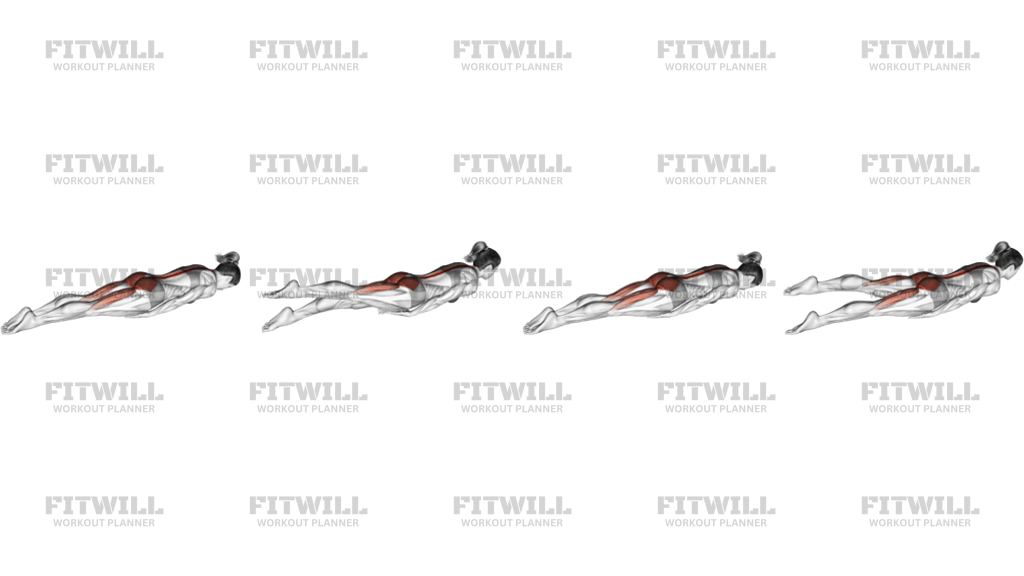
Instructions
- Lie face down on a mat with your legs straight, toes pointed, and your forehead or cheek resting on the floor.
- Reach your arms long overhead or keep them relaxed in line with your body so your neck stays neutral.
- Press your hips and lower abdomen gently into the mat and brace your midsection before you start.
- Lift both legs a few inches off the floor so your thighs are active without cranking your lower back.
- Begin alternating the legs in a small fluttering motion, one leg lifting as the other lowers.
- Keep the kick driven from the hip, not by bending the knees or swinging the feet wide.
- Hold your torso steady while you breathe in a controlled rhythm through the set.
- Lower both legs with control when the set ends and reset on the mat before the next round.
Tips & Tricks
- Keep the kick height small; big lifts usually turn the drill into a low-back arch.
- Think about lengthening the leg away from the hip instead of snapping the knee.
- If your hips rock side to side, slow the cadence until the pelvis stays quiet.
- Press the front of the pelvis into the mat so the glutes have to finish the lift.
- Keep the toes pointed or softly extended so the lower leg stays out of the work.
- Relax the shoulders and jaw; tension there usually shows up as neck strain on the floor.
- Use a steady flutter rhythm instead of pausing at the top of every rep.
- If you feel it mostly in the low back, lower the legs less and shorten the range.
Frequently Asked Questions
What muscles do Swimmer Kicks work most?
They mainly target the glutes, with the hamstrings, lower back, and deep core helping stabilize the body.
How should my body be positioned on the mat?
Lie face down with your legs long, pelvis anchored, and your forehead or cheek resting so your neck stays relaxed.
Should the kicks be big or small?
Keep them small and controlled. The point is to keep tension on the hips without letting the low back take over.
What is the most common mistake with swimmer kicks?
Lifting the legs too high and rocking the pelvis. That usually turns the movement into a back-extension drill instead of a glute drill.
Can beginners do Swimmer Kicks?
Yes. Start with slow alternating kicks and a short range of motion until you can keep the torso still.
Why do my lower back or hamstrings feel it more than my glutes?
Usually the legs are lifting too high or the pelvis is shifting. Reduce the kick height and keep the front of the hips pressed into the floor.
Where do Swimmer Kicks fit in a workout?
They work well as a warmup, core accessory, or finisher when you want low-load glute endurance and trunk control.
How can I make the exercise harder without weights?
Slow the cadence, pause the legs slightly lower to the floor, or extend the set while keeping the same strict body position.