Prone Cobra Hands Interlocked
Prone Cobra Hands Interlocked is a bodyweight floor hold that trains the back side of the body while reinforcing a tall, open upper-body posture. You lie face down, interlock the hands behind the lower back, then lift the chest and shoulders just enough to create a clean cobra shape without dumping into the low back. It is less about brute strength and more about owning a strong isometric position with smooth breathing and tight control.
The exercise leans on the glutes, hamstrings, spinal erectors, and core to keep the pelvis grounded while the chest stays lifted. The shoulders and upper back also work hard to pull the shoulder blades back and down while the arms stay secured behind the body. That combination makes it useful for posterior-chain activation, posture work, and teaching people how to extend through the upper thoracic spine without overreaching through the lumbar spine.
The setup matters because the hold only feels right when the body stays long and organized. If the legs flare, the ribs pop, or the head cranes up, the position turns into a low-back pinch instead of a controlled cobra. The goal is to keep the thighs down, keep the neck long, and let the sternum rise slightly away from the floor while the hands stay interlocked behind the hips or sacrum.
Perform each rep or hold by lifting into the cobra position with a deliberate inhale, then staying braced as you hold the top. Squeeze the glutes lightly, reach the crown of the head forward, and keep the shoulders away from the ears. If you are doing repetitions instead of a timed hold, lower slowly and reset on the floor before the next rep so every repetition begins from a stable base.
This movement fits well in a warm-up, mobility block, posture circuit, or as a light accessory drill after bigger lifts. It is not meant to be loaded heavily; the challenge comes from precision, not resistance. Keep the range pain-free, stop if the low back takes over, and aim for a position you can repeat cleanly rather than the highest chest lift possible.
[ Workout Log & Planner ]
Put your next workout in Fitwill
Keep your plan and training log ready when you are.


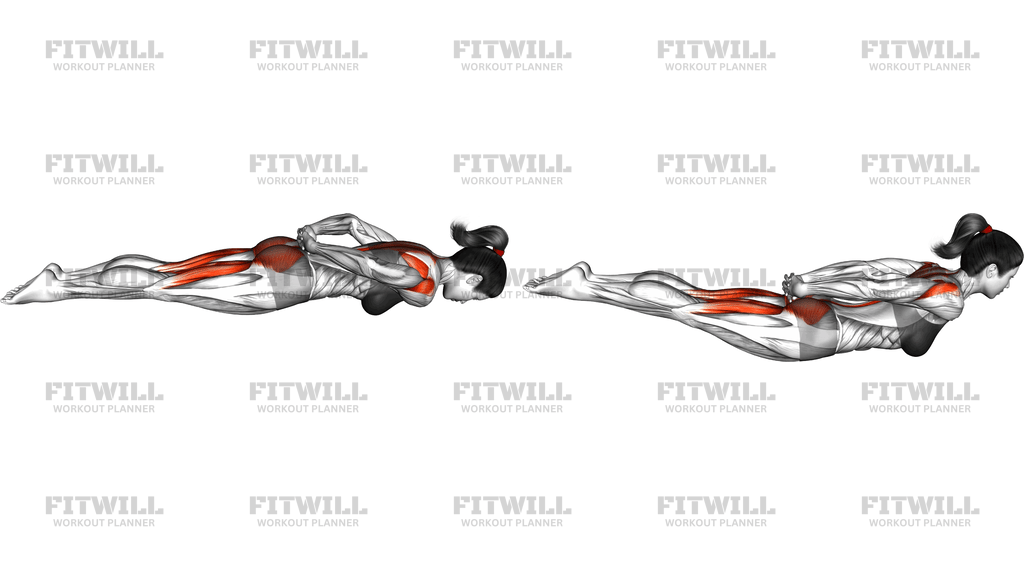
Instructions
- Lie face down on the floor with your legs straight, tops of the feet resting down, and your forehead or chin hovering just above the mat.
- Interlock your hands behind your lower back or sacrum, then roll the shoulders back so the arms stay secure and the chest can open.
- Keep your neck long and your ribs tucked before you lift so the hold starts from a neutral, organized position.
- Squeeze the glutes lightly and press both thighs into the floor to stop the pelvis from tipping forward.
- Lift the chest a few inches by drawing the shoulder blades back and down rather than yanking the head upward.
- Hold the top position for the planned count while breathing quietly and keeping the low back from taking over.
- If the exercise is programmed as reps, lower slowly until the chest and shoulders return to the floor, then reset before the next rep.
- Finish each set by relaxing the arms and neck first, then lower fully and rest on the floor.
Tips & Tricks
- Think of the lift as a sternum rise, not a backbend; the chest should come up before the low back does.
- Keep the pubic bone and upper thighs anchored so the pelvis does not peel off the floor.
- If the shoulders shrug toward the ears, lower a little and reset the scapulae before continuing.
- Use a short hold at first, because the quality of this position drops quickly once the neck and lumbar spine start compensating.
- Keep the interlocked hands gently pressed into the lower back; do not yank the arms backward to force more height.
- Breathe through the hold without letting the ribs flare aggressively on every inhale.
- A tiny lift with clean glute and upper-back tension is better than a high lift with a pinched low back.
- If you feel it mostly in the neck, lengthen the back of the neck and look slightly down instead of forward.
Frequently Asked Questions
What does Prone Cobra Hands Interlocked train most?
It mainly trains the posterior chain and upper-back posture, with the glutes, hamstrings, spinal erectors, and mid-back all helping keep the hold stable.
Is this more of a stretch or a strength drill?
It is best treated as a low-load strength-and-control drill. The position is active, but the goal is still a smooth, pain-free hold.
Where should the hands go in the interlocked position?
The hands usually stay interlocked behind the lower back or sacrum so the shoulders can stay retracted without the arms drifting upward.
How high should I lift my chest?
Only lift enough to feel the upper back and glutes working. If the low back starts pinching or the neck strains, the lift is too high.
Can beginners do this exercise?
Yes. Beginners should keep the hold short, use a small lift, and focus on staying long through the neck and ribs.
What is the most common mistake?
The biggest mistake is cranking the chest up and turning the movement into a low-back arch instead of a controlled prone cobra.
How long should I hold each rep?
Use a short, controlled hold that you can repeat with the same posture every time. Quality matters more than duration.
What should I do if I feel it mostly in my neck?
Lower the chest a little, keep the chin tucked slightly, and think about lengthening the back of the neck while the shoulder blades stay down.