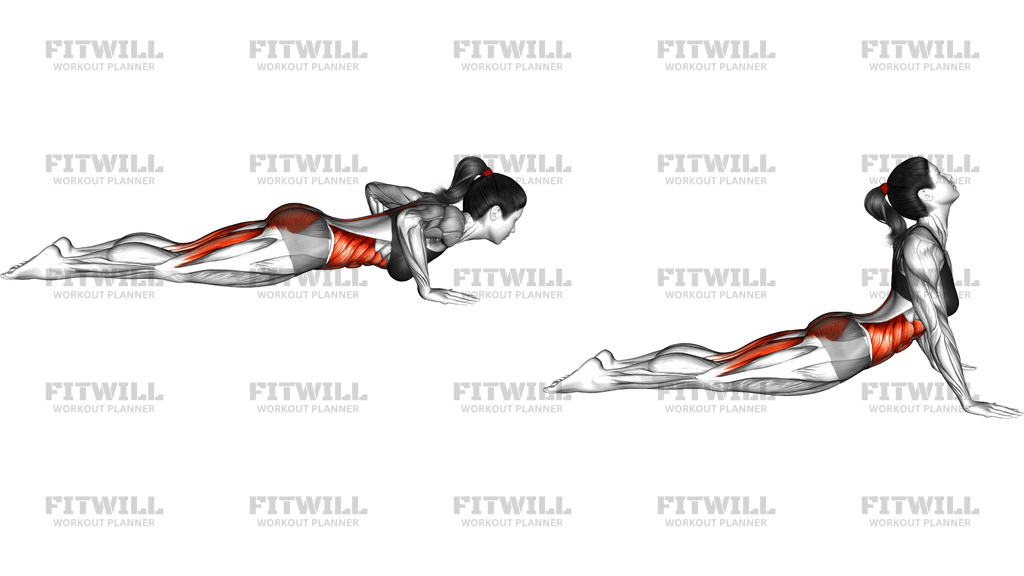
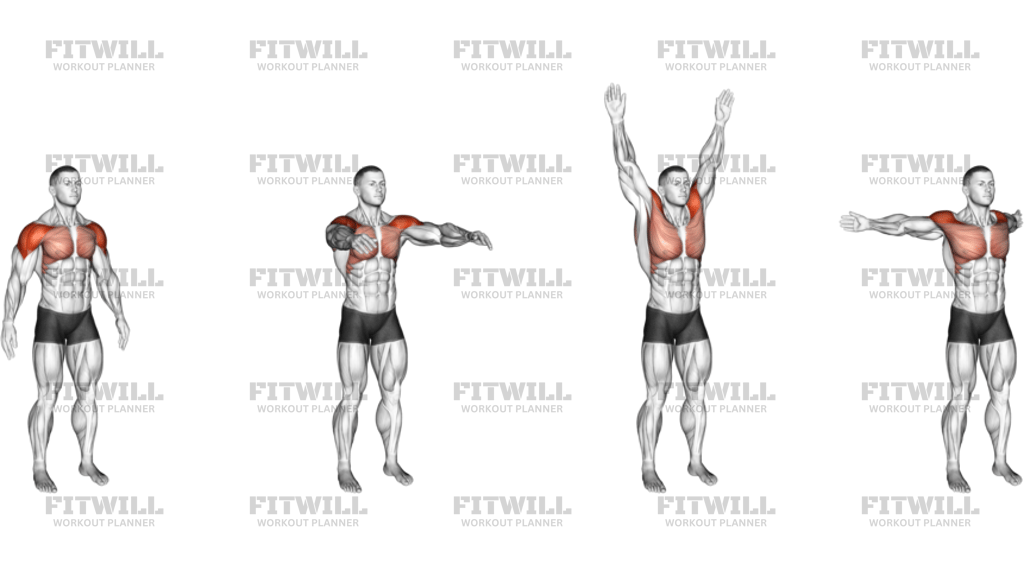
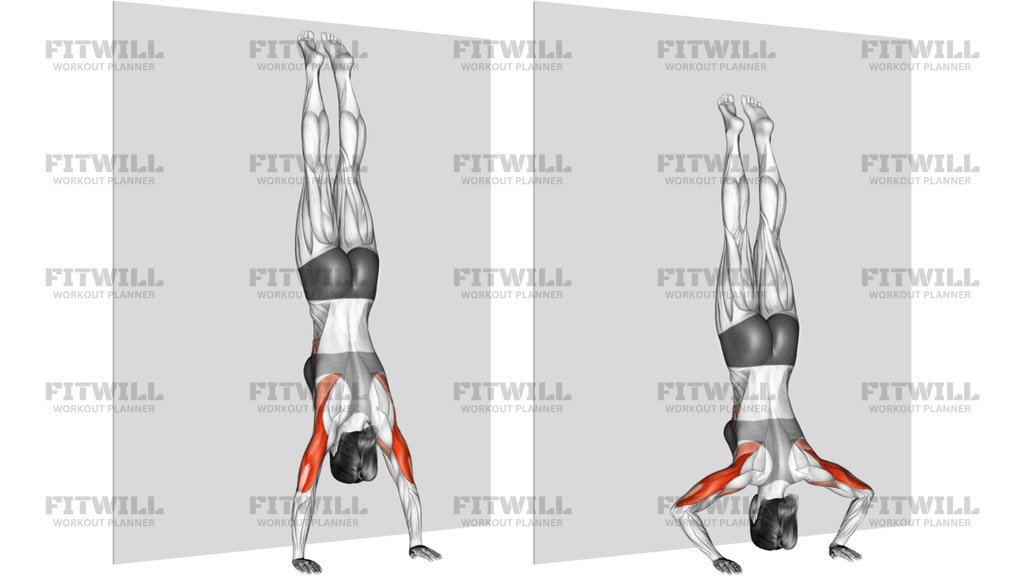
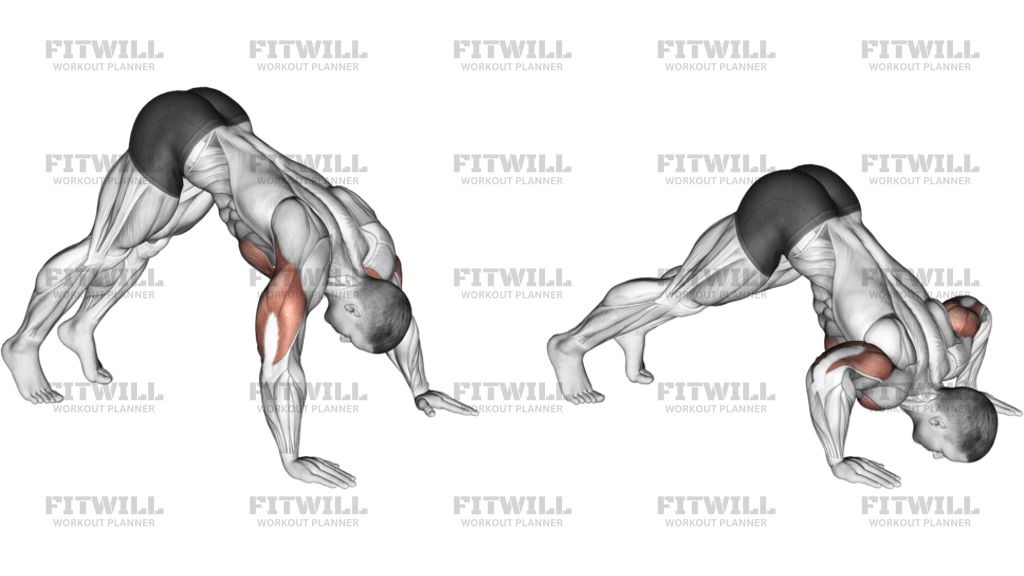
Chest Tap Push-Up
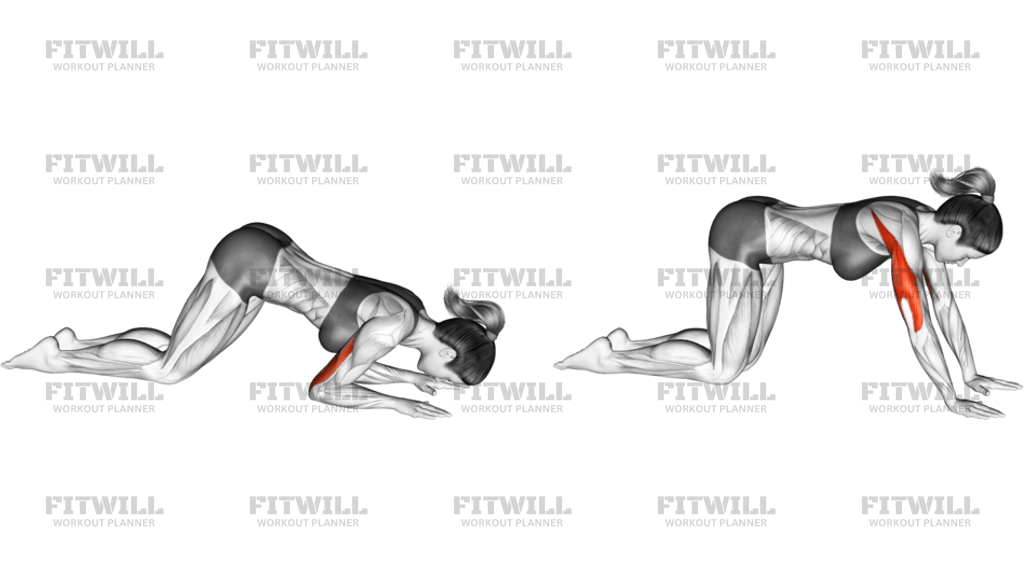
Chest Tap Push-Up is a bodyweight push-up variation that adds an anti-rotation challenge at the top of the rep. You lower and press like a standard push-up, then briefly free one hand to tap the chest before returning it to the floor. That small reach makes the exercise much less forgiving than a regular push-up, because the torso has to stay level while one arm leaves the base of support.
The main training effect comes from the chest and triceps, with the front shoulders, serratus, and core working hard to keep the body square. In anatomical terms, the primary emphasis is on the triceps brachii, with the pectoralis major, anterior deltoid, and rectus abdominis contributing to the press and the anti-rotation demand. If the hips twist or the ribcage flares, the target muscles lose tension and the set turns into a balance drill instead of a clean strength rep.
Set the hands under or slightly wider than the shoulders, lock the feet in a stance that lets you control sway, and build a straight line from head to heels before the first rep. Lower under control until the chest is close to the floor, then press back up to a solid plank. At the top, keep the shoulders quiet, lift one hand just enough to tap the chest, place it back down, and alternate sides. The tap should be light and deliberate, not a reach that drags the torso off center.
Breathing matters because the rep is short but demanding. Inhale on the way down, exhale as you press, and use a quick brace at the top before each chest tap. A wider foot position makes the exercise easier to stabilize, while a narrower stance increases the anti-rotation challenge. If the shoulders shrug, the low back sags, or the body rocks side to side, the rep has become too fast or too difficult.
Use Chest Tap Push-Up as a controlled accessory movement, a core-and-upper-body coordination drill, or a conditioning tool when you want push-up strength with extra stability demands. It works well for athletes and trainees who can already perform solid push-ups and want more control through the trunk and shoulder girdle. Beginners can regress it by elevating the hands on a bench or wall, or by using a knees-down version until they can keep the torso still through the chest tap.
[ Workout Log & Planner ]
Put your next workout in Fitwill
Keep your plan and training log ready when you are.


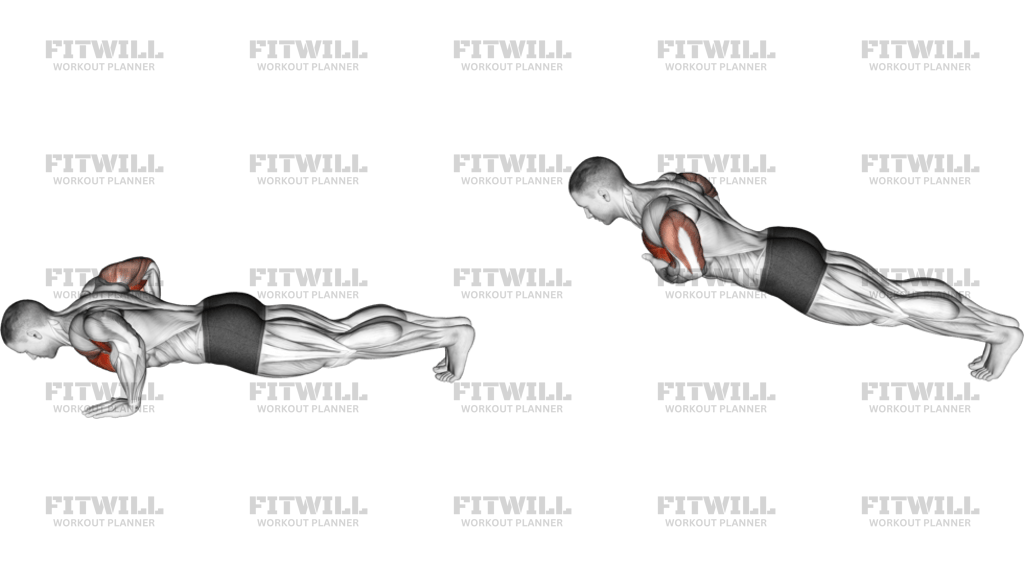
Instructions
- Place your hands on the floor under or slightly wider than your shoulders and set your feet in a stance that lets you hold a straight plank from head to heels.
- Brace your abs, squeeze your glutes, and keep your neck long before the first rep so the torso stays level when one hand leaves the floor.
- Lower your chest toward the floor with both elbows bending smoothly and keep your ribs and hips from drifting side to side.
- Press back up until your arms are straight and your body is in a firm top-plank position.
- Pause briefly at the top so the shoulders stop moving before the tap.
- Lift one hand just enough to tap your upper chest, keeping the tapping motion short and controlled.
- Return that hand to the floor under your shoulder and re-establish a stable plank before the next rep.
- Alternate the tapping hand from rep to rep or side to side as planned while keeping the hips as square as possible.
- Inhale on the way down and exhale on the press and chest tap, then stop the set if you cannot keep the torso steady.
Tips & Tricks
- A slightly wider foot stance makes the anti-rotation demand easier; narrow your feet only after you can keep the hips quiet.
- Tap the chest lightly with the free hand instead of reaching across hard enough to twist the ribcage.
- Keep the supporting shoulder stacked over the wrist so the planted arm does not collapse inward when the tap starts.
- If the lower back sags during the tap, shorten the range and make the rep slower rather than adding speed.
- Let the chest move between the hands on the way down; a half-rep lowers the training value and makes the tap feel harder than it should.
- Keep the gaze slightly ahead of the hands so the head does not jut forward as the free hand lifts.
- Use a bench, box, or wall incline if you can press well but still lose trunk control during the chest tap.
- Stop the set when the hips start rotating more than the chest tap itself, because that means the anti-rotation work has broken down.
Frequently Asked Questions
What muscles does the Chest Tap Push-Up work most?
The chest and triceps do most of the pressing, while the front shoulders and core work hard to keep the body from twisting during the tap.
Is the chest tap just a balance drill?
No. It is still a push-up, but the brief hand lift adds a clear anti-rotation challenge that makes the core and shoulder stabilizers work harder.
Where should the free hand tap?
Tap the upper chest lightly with the hand that is not supporting your weight, then place it back under the shoulder before the next rep.
Why do my hips rotate when I tap my chest?
The reach is usually too large or the feet are too narrow. Shorten the tap, widen the stance, and slow the press until the torso stays level.
Can beginners do this exercise?
Yes, but many beginners should start with incline chest tap push-ups or knee push-ups until they can keep the plank steady through the tap.
How is this different from a regular push-up?
The press is similar, but one hand briefly leaves the floor at the top, which makes trunk control and shoulder stability much more demanding.
Should I alternate hands every rep?
Alternating keeps the loading even from side to side, but the important part is to keep each tap short and controlled.
What is the easiest way to make it harder?
Bring the feet closer together, slow the lowering phase, or pause longer at the top before each chest tap.