Resistance Band Hip Thrusts On Knees
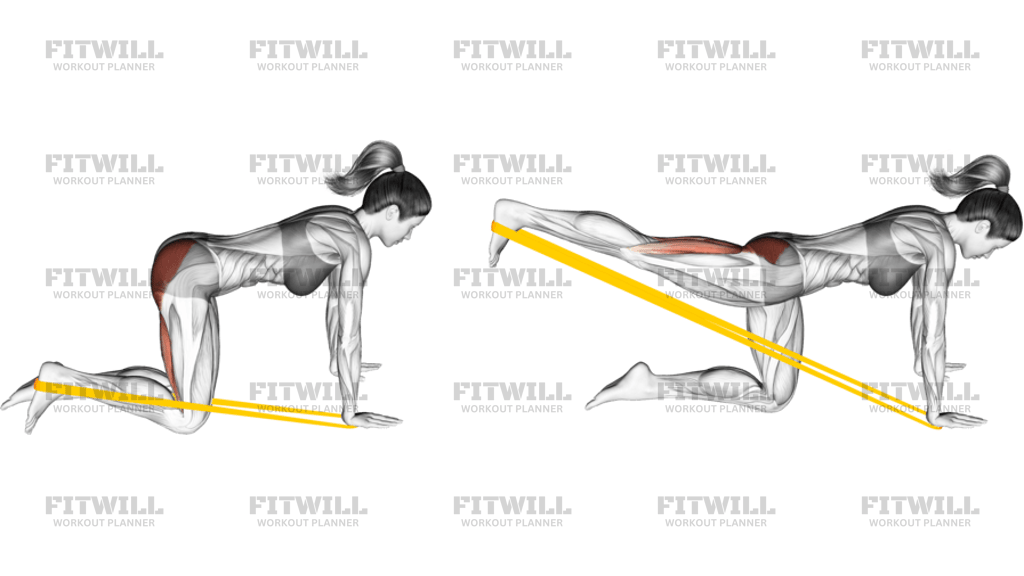
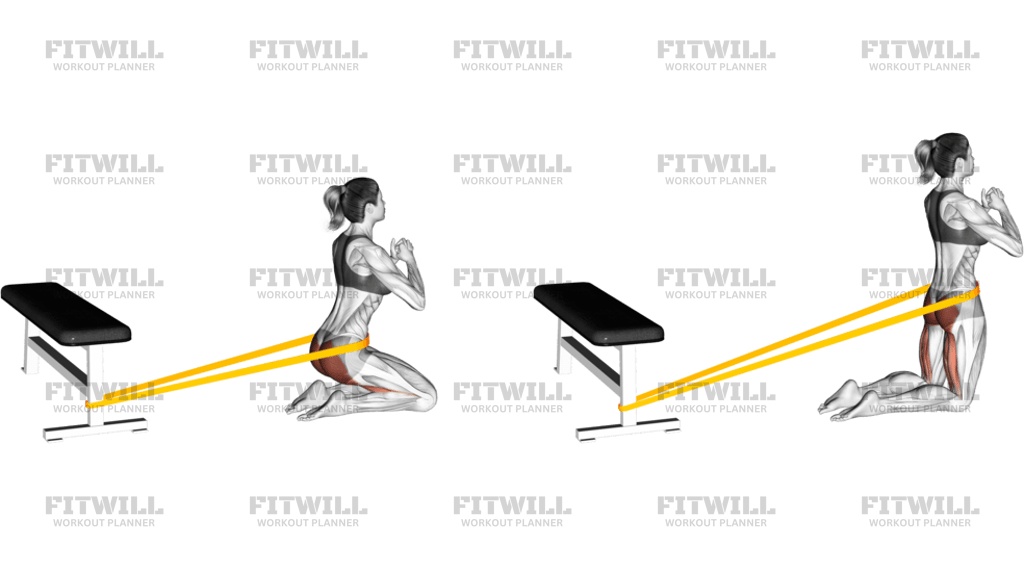
Resistance Band Hip Thrusts On Knees is a kneeling glute bridge variation that uses a low anchored resistance band to load hip extension from the bottom of the movement. In the setup shown here, the band is fixed low behind the lifter and looped around the hips, so the glutes have to drive the pelvis forward against constant backward pull. That makes the exercise useful for glute-focused strength work, warm-ups, and accessory work when you want hip extension without standing load.
The main job is to extend the hips while the torso stays tall and the ribs stay stacked over the pelvis. The glutes are the primary movers, with the hamstrings helping at the hip and the core stabilizing the trunk so the movement does not turn into a lower-back arch. Because the knees stay on the floor, the drill also encourages a controlled kneeling position and a clean finish without bouncing through the top.
Setup matters more than range. Kneel on both shins, keep the knees about hip-width, and position the band low around the pelvis or hip crease so the line of pull stays level and predictable. Start with the hips slightly back and the band already tensioned. From there, squeeze the glutes to drive the hips forward until the body reaches a tall kneeling line, then stop before the ribs flare or the low back takes over.
This is not a hip thrust done for height; it is a hip extension drill done for tension. The best reps feel smooth, deliberate, and centered in the glutes at lockout. If the band is too heavy, the hips will shoot forward and the ribs will pop up to finish the rep. If the anchor is too high or the band rides up, the load stops feeling like a glute exercise and turns into an awkward full-body brace.
Use it when you want a banded glute pattern that is friendly to the knees, easy to load, and simple to coach. It works well before lower-body lifting, in glute circuits, or as a technique-focused finisher. Keep the motion controlled, keep the pelvis from dumping forward, and choose a band tension that lets you repeat the same line of motion rep after rep.
[ Workout Log & Planner ]
Put your next workout in Fitwill
Keep your plan and training log ready when you are.


Instructions
- Anchor a resistance band low behind you, loop it around your hips or pelvis, and kneel on both shins facing away from the anchor.
- Set your knees about hip-width apart, keep your toes relaxed on the floor, and hold your torso tall with your hands in front of your chest.
- Start with your hips slightly back so the band already has tension and your glutes are loaded at the bottom position.
- Brace lightly, keep your ribs stacked over your pelvis, and avoid leaning back before the rep begins.
- Drive your hips forward by squeezing your glutes until you reach a tall kneeling position.
- Finish the rep with your hips fully extended, but stop before your low back arches or your ribs flare up.
- Pause briefly at the top while keeping tension in the band and pressure through both shins.
- Return your hips back under control until you feel the glutes lengthen and the band pull you into the bottom position.
- Reset your posture, breathe, and repeat for the planned number of repetitions.
Tips & Tricks
- Keep the band low on the pelvis; if it rides up onto the waist, the pull gets less direct and the rep feels less stable.
- Think about driving the hips forward from the glutes, not throwing the chest back to make the finish look bigger.
- Keep the knees planted and the shins in contact with the floor so the body does not rock forward onto the toes.
- A slight posterior pelvic tilt at the top helps the glutes finish the rep without turning it into a low-back arch.
- Use a band tension that lets you pause at the top without shaking or losing rib position.
- Exhale as the hips move forward, then inhale as you return to the start and re-stack the torso.
- If the anchor pulls you too far backward, shorten the range and keep the torso more upright through the whole set.
- Stop the set when you can no longer keep the ribs down and the pelvis moving as one unit.
Frequently Asked Questions
What does Resistance Band Hip Thrusts On Knees work most?
The glutes are the main target, with the hamstrings and core helping to keep the hips and torso organized.
Where should I feel the band during the rep?
You should feel the band trying to pull your hips backward, while the glutes push the pelvis forward against that tension.
Why is the band anchored low behind me?
A low anchor keeps the pull line close to the hips, which makes the exercise feel like a true hip extension drill instead of a loose upper-body movement.
Should my lower back move a lot at the top?
No. The finish should come from the glutes driving the hips forward, not from arching the lumbar spine to cheat the lockout.
Is this a good beginner glute exercise?
Yes. The kneeling position reduces balance demands, and a light band makes it easy to learn clean hip extension mechanics.
What if I mainly feel my low back or abs?
Usually the ribs are flaring or the pelvis is dumping forward. Shorten the range and keep the torso stacked over the hips.
How many reps should I use for this movement?
It works well for moderate-to-higher reps with a controlled pause at the top, as long as each rep stays smooth.
What should my hands do during the exercise?
Keep them in front of the chest or lightly braced, so they do not help you yank the torso forward or backward.