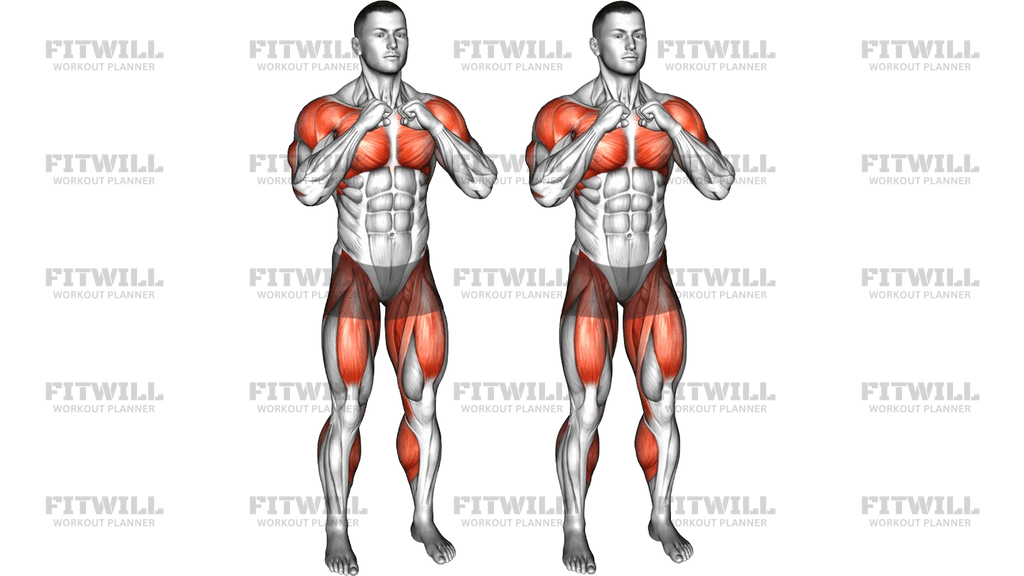
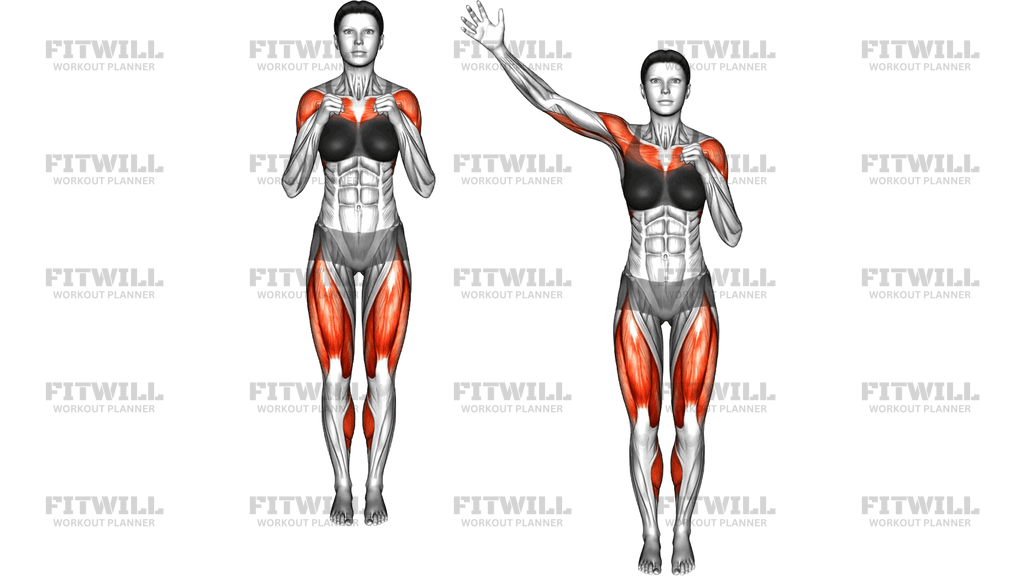
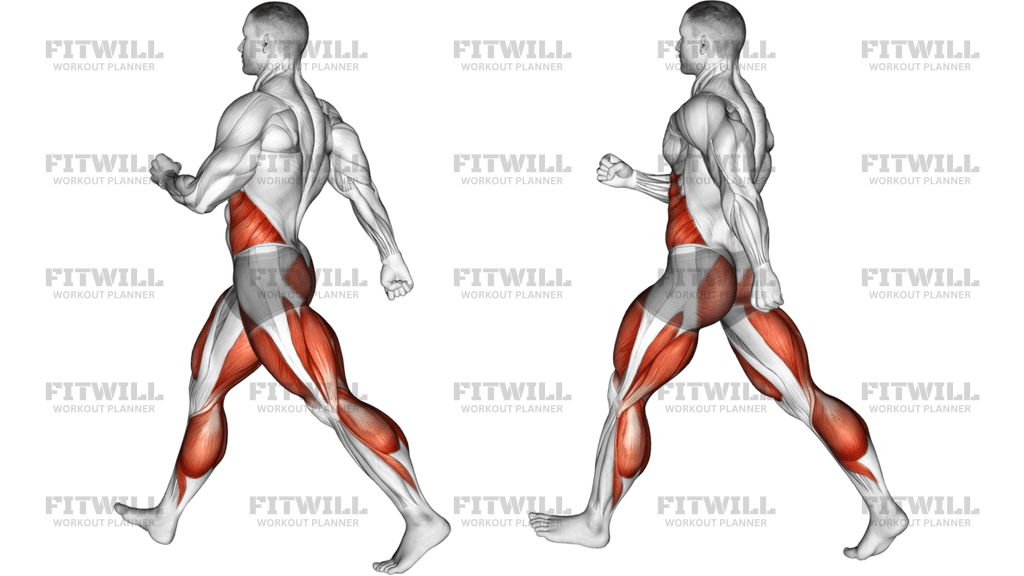
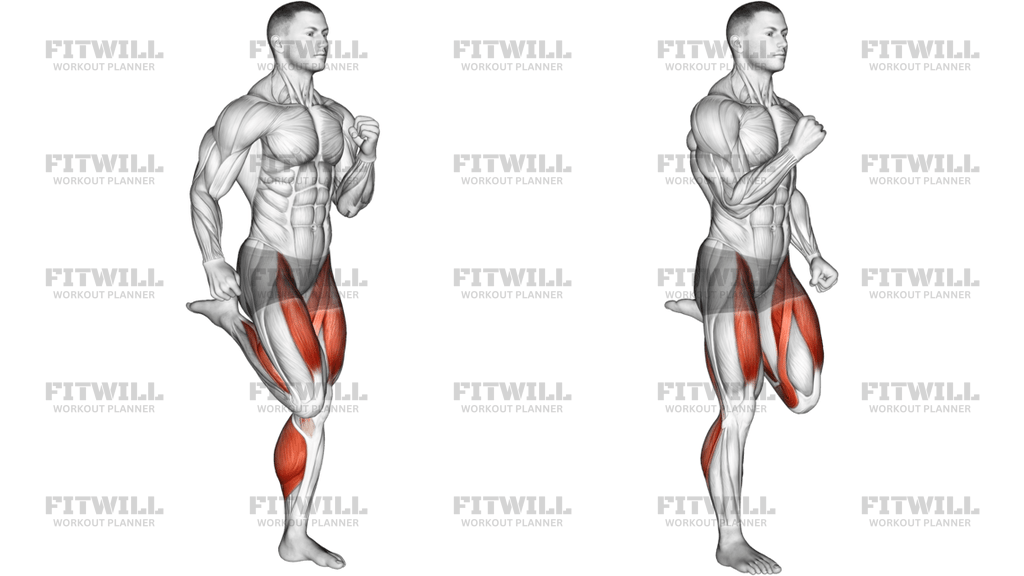
Run And Hop
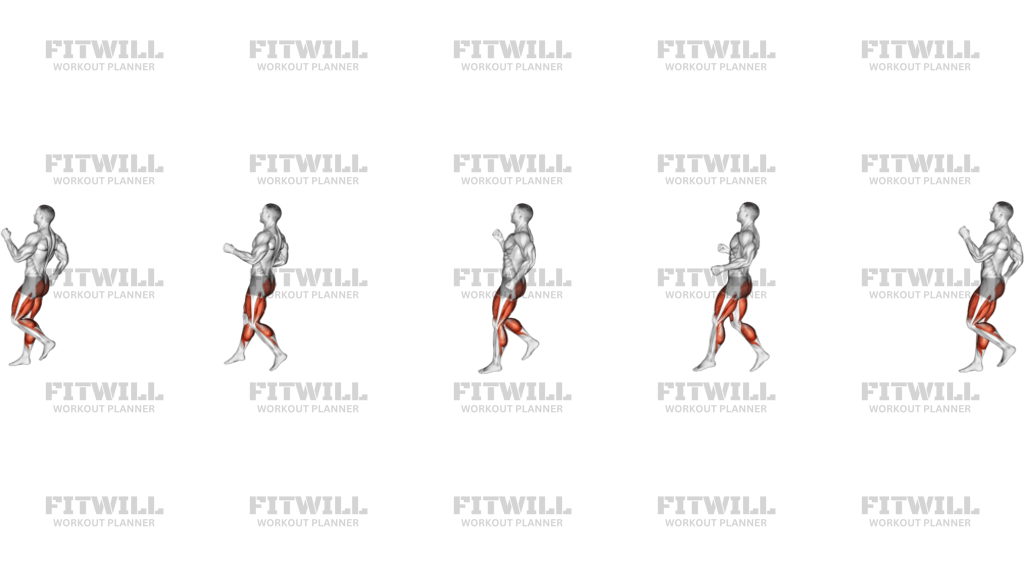
Run And Hop is a bodyweight plyometric cardio drill that combines a light running rhythm with repeated hops and knee drive. It is meant to raise heart rate, sharpen coordination, and teach the body to absorb and reuse force cleanly rather than to chase height or speed at any cost. The drill is simple in appearance, but the quality of each landing and rebound determines whether it feels springy and athletic or sloppy and jarring.
This movement loads the lower body one leg at a time, so the stance foot, ankle, knee, and hip need to stay organized through every contact. Keep the torso tall, the ribs stacked over the pelvis, and the gaze forward so the hop comes from the leg and ankle instead of from a loose trunk or a dramatic lean. The core acts as a stabilizer, while the glutes, quads, calves, and hip flexors help create the repeated run-and-hop rhythm.
The working pattern is a quick push off the floor, a brief float, and a soft landing under the hips. The free knee should drive naturally rather than snapping forward, and the support leg should stay springy instead of collapsing inward. Arms can move in a relaxed sprint pattern to help timing, but the exercise should still look quiet and controlled. Think low, fast, and balanced, not high and explosive.
Run And Hop fits well in warm-ups, conditioning blocks, athletic prep, or any session where you want lower-body turnover and body control without external load. It is especially useful when you want to practice landing mechanics and foot speed together. If the feet start slapping the floor, the torso starts drifting, or the knee stops tracking cleanly, the pace is too aggressive and the set should be reduced.
Beginners can use a smaller range of motion, slower cadence, or short intervals until they can stay light on the feet. Use a cushioned surface and supportive shoes if impact tolerance is limited, and stop the drill if the landing becomes noisy or the ankle, knee, or shin feels irritated. The best version of Run And Hop looks rhythmic, quiet, and repeatable from the first rep to the last.
Fitwill
Log Workouts, Track Progress & Build Strength.
Achieve more with Fitwill: explore over 9600 exercises with images and videos, access built-in and custom workouts, perfect for both gym and home sessions, and see real results.
Start your journey. Download today!




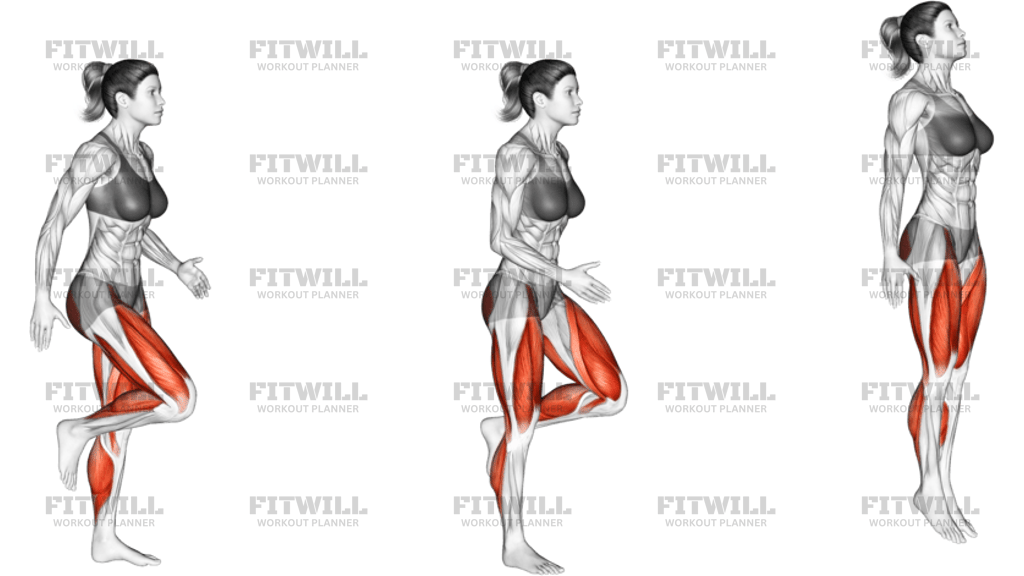
Instructions
- Stand tall on one foot with the opposite knee bent and lifted in front of you, chest up and eyes forward.
- Keep your stance foot under your hip and rest most of your weight on the ball of the foot.
- Brace your midsection so your ribcage stays stacked over your pelvis before you leave the floor.
- Push through the stance leg and make a short hop, driving the free knee upward as you come off the ground.
- Land softly on the same foot or switch to the other foot if you are alternating, keeping the knee aligned over the toes.
- Let the heel lower only as much as needed to absorb the landing, then rebound quickly into the next hop.
- Use relaxed opposite-arm action like a sprint so the upper body helps the rhythm without twisting.
- Keep each contact quiet, steady, and centered under your hips for the planned time or repetitions.
- When the set ends, slow to a walk and settle your breathing before repeating another round.
Tips & Tricks
- Keep the hops low. This drill is about rhythm and elastic rebound, not maximum jump height.
- Aim for a quiet landing. A loud foot strike usually means you are dropping too hard into the floor.
- Do not reach the free foot far in front of you. Let the knee come up while the landing stays under your center of mass.
- If your torso starts rocking side to side, shorten the hop and slow the cadence.
- Keep the support knee softly bent on contact instead of locking out the leg at the bottom.
- Use your arms to match the running rhythm, but avoid swinging them across your body.
- Choose a pace you can repeat without the ankle collapsing inward or the knee caving toward the midline.
- A small forward lean from the ankles is fine, but bending at the waist turns the drill into a posture leak.
- If your calves or shins fatigue first, cut the interval short rather than forcing sloppy contacts.
- For conditioning, build time gradually before trying to make the hops faster.
Frequently Asked Questions
What does Run And Hop train?
It trains cardio capacity, foot speed, single-leg balance, and the ability to land and rebound cleanly through the ankle, knee, and hip.
Is this just high knees?
No. High knees are mostly a running drill, while Run And Hop adds a visible hop and more single-leg loading with each contact.
How high should the hop be?
Only high enough to feel a quick rebound. If you are jumping for height, the drill is too aggressive.
Should I stay on the ball of my foot?
Yes. The ball of the foot should take the initial contact so you can absorb force and spring back up quickly.
What are the biggest form mistakes?
Common errors are stomping the landing, leaning back, overstriding, and letting the working knee collapse inward.
Can beginners do this exercise?
Yes, but they should start with small hops, short intervals, and a slower rhythm until the landings stay quiet and balanced.
Can I do it in place or moving forward?
Either works. In place is easier for control, while moving forward makes it more of an athletic conditioning drill.
When should I stop the set?
Stop when the contacts get noisy, the torso loses alignment, or the ankle, shin, or knee can no longer absorb the landing smoothly.