Walking On Spot Shoulder Tap Raise
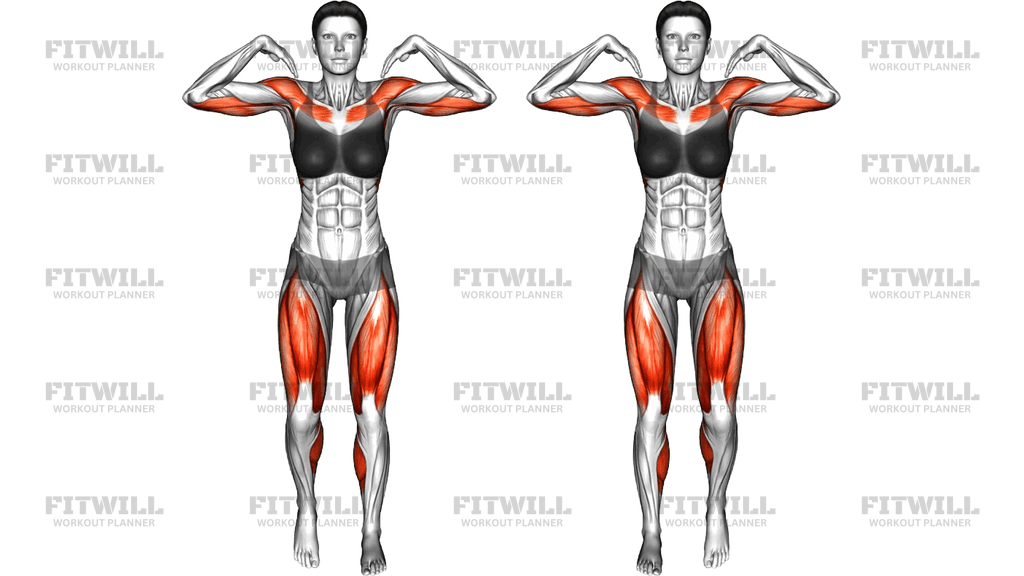
Walking On Spot Shoulder Tap Raise is a standing body weight drill that combines a marching-in-place step with a deliberate shoulder tap and elbow raise. You stand tall, lift one knee at a time as if walking without going anywhere, and each time a knee comes up, the opposite hand taps the top of the opposite shoulder before the elbow lifts out and up to roughly ear height. The result is a movement that works the shoulders through a controlled arc while your legs and trunk handle the rhythm and balance.
The shoulder does most of the visible work here. Raising the elbow out to the side with the hand at the shoulder loads the side and front delts along with the upper traps, while keeping the hand in contact with the shoulder forces you to drive the movement from the upper arm rather than swinging from the wrist. Because you are standing on one leg for a moment with every rep, your hip flexors and quads lift the knee, your calves and ankle stabilizers handle the weight shifts, and your abs and obliques keep your ribcage from leaning or twisting as the arms move.
This drill suits a wide range of people. Beginners can use it as a joint-friendly way to learn overhead-adjacent shoulder control without any load. More experienced trainees often use it as a warm-up before pressing days, as an active recovery movement between heavier sets, or as part of a longer body weight circuit where the marching step adds a mild cardio element without any impact from jumping.
Setup matters more than it looks. Your stance should be about hip-width with soft knees and weight spread across the whole foot, because every rep involves a small transfer of weight from one leg to the other. Keep your torso tall and your eyes forward; if you collapse your chest or stare at your feet, the marching pattern gets choppy and the shoulder raise loses its clean path.
Execution comes down to coordination and tempo. March at a pace where each knee lift lines up neatly with the opposite shoulder tap, and treat the raise as its own distinct phase rather than one rushed motion. A controlled pace — roughly two seconds up, one second down per side — keeps the delts under tension and gives your balance system enough time to settle between steps.
From a safety standpoint, the main things to watch are posture and range. Stop the elbow raise at a height where your shoulder stays comfortable and your ribs stay stacked over your pelvis; forcing the elbow past a comfortable position is where people usually start shrugging and arching. If you feel it more in your neck than your shoulders, lower the elbow height and soften your shoulders away from your ears.
[ Workout Log & Planner ]
Put your next workout in Fitwill
Keep your plan and training log ready when you are.


Instructions
- Stand with your feet hip-width apart, weight spread evenly across both feet, knees soft, and arms relaxed at your sides.
- Bring both hands up and place your fingertips lightly on the tops of your shoulders, elbows pointing out to the sides and down.
- Brace your abs lightly, lift your chest, and look straight ahead so your head stays stacked over your ribcage and pelvis.
- Shift your weight onto your left foot and lift your right knee to about hip height in a marching step.
- As the right knee lifts, raise your left elbow up and out to the side until it reaches a comfortable height near shoulder or ear level, keeping your fingertips on your right shoulder the whole time.
- Pause briefly at the top with the elbow high and your torso still upright, avoiding any lean or twist.
- Lower your left elbow back to the starting position with control as you set your right foot back down on the spot.
- Repeat on the other side, stepping with the left knee while the right elbow raises, and keep alternating sides to build the walking-on-spot rhythm.
- Exhale as the knee and elbow rise, inhale as you lower and switch sides.
- Reset your stance between sets if your feet have drifted, and keep the pace steady enough that every step matches a clean elbow raise.
Tips & Tricks
- If your elbows creep forward so the taps happen in front of your chest, redirect them out to the sides — the raise should feel like a lateral arc, not a front raise.
- Watch for shrugging: if your shoulders climb toward your ears at the top of the raise, drop the elbow a few inches and relax your upper traps before continuing.
- Keep the knee lift honest. A lazy knee turn forces a hip hitch and side bend, so drive each knee to at least mid-thigh height to keep the marching pattern symmetrical.
- Stay on the spot. Travel steps are a sign the marching tempo is too fast — slow down until each foot lands where it started.
- Your fingertips should stay in light contact with the shoulder throughout. If the hand floats away, you are turning the raise into a partial arm circle and losing the delt emphasis.
- Keep your ribs stacked over your pelvis. If your lower back arches each time the elbow goes up, brace your abs a little firmer and shorten the raise range slightly.
- Land quietly. Heavy foot strikes mean you are dropping the leg instead of controlling the descent, which also throws off the arm rhythm.
- If your coordination breaks down when you combine both sides, drill the pattern slowly on one side for several reps before alternating.
- Breathe in a steady cycle tied to the steps rather than holding your breath during the tap — this drill should feel rhythmic, not strained.
Frequently Asked Questions
What muscles does Walking On Spot Shoulder Tap Raise work?
The primary work happens in the shoulders, especially the side and front delts, with the upper traps assisting the elbow raise. The marching step brings in the hip flexors, quads, and calves, while your abs and obliques stabilize your trunk the whole time.
Why does my hand stay on my shoulder during the raise instead of extending the arm?
Keeping the fingertips on the shoulder shortens the lever so the delt does the raising without momentum from a swinging arm. It also makes it easy to feel whether the elbow is traveling out to the side rather than forward.
Is Walking On Spot Shoulder Tap Raise suitable for beginners?
Yes. Because there is no load and the range can be shortened easily, it is a low-risk way to build shoulder control and coordination. Beginners can slow the marching tempo or reduce the knee height until the arm and leg pattern feels natural.
How high should I raise my elbow during the tap raise?
Raise it to wherever your shoulder stays comfortable, typically around shoulder to ear height, with the elbow staying wide. If you notice shrugging or neck tension, stop a few inches lower.
Should the marching step and the arm raise happen at the same time?
They should be coordinated but sequenced: the knee lift leads and the opposite elbow rises with it, then both lower together. Rushing them independently is what makes the drill feel uncoordinated.
Can I use Walking On Spot Shoulder Tap Raise as a warm-up?
Yes, it works well before pressing or overhead days because it raises your heart rate mildly while taking the shoulders through a controlled arc. A set of 30 to 60 seconds at a relaxed tempo is usually enough.
Why do I lean to one side when I lift my knee?
That lean usually means you are rushing the weight transfer or letting the hip on the lifting side drop. Slow the tempo, keep your abs braced, and imagine staying perfectly vertical as each knee comes up.
What can I substitute if the coordination is too difficult?
Drop the marching and perform the shoulder tap raise with both feet planted, then add the knee lift back in once the arm pattern feels automatic. Alternatively, march without the arm raise to build the leg rhythm first.
How many reps or how long should I perform this drill?
For strength-endurance and control, work in sets of 20 to 40 total steps, or time blocks of 30 to 60 seconds. Since it is low load, you can repeat it across a circuit without much fatigue carryover.
Is Walking On Spot Shoulder Tap Raise safe if I have cranky shoulders?
The tap position keeps the arm close to the body, which many people find comfortable, but you should still respect your current range. Raise the elbow only within a pain-free arc and stop if you feel pinching rather than muscle effort.