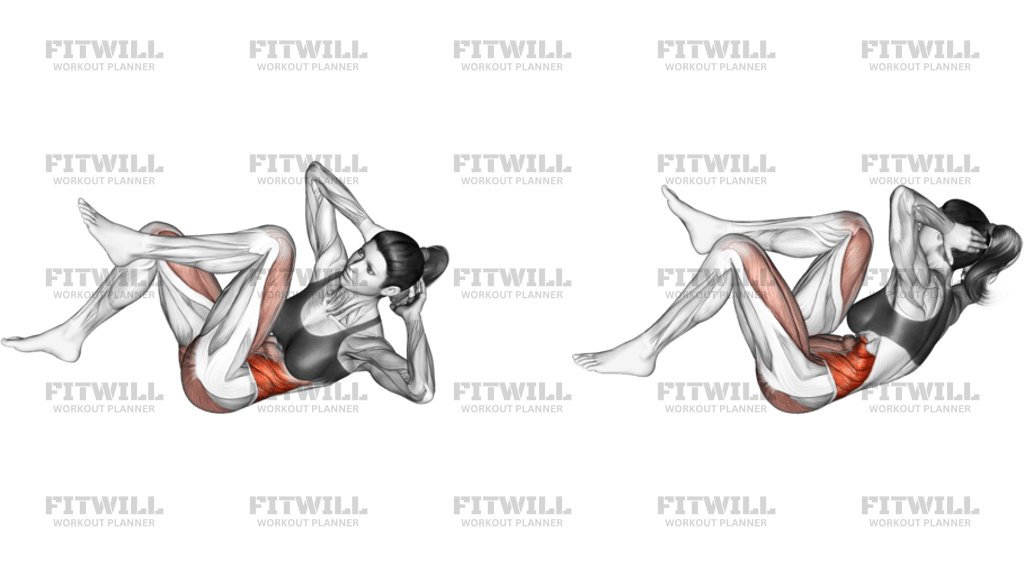
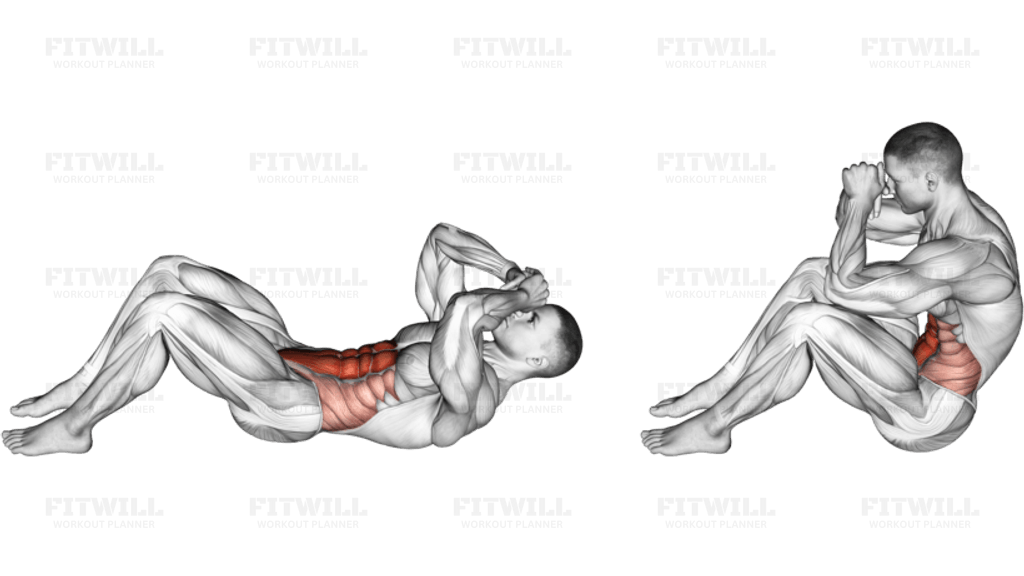
Floor Crunch Feet On Bench
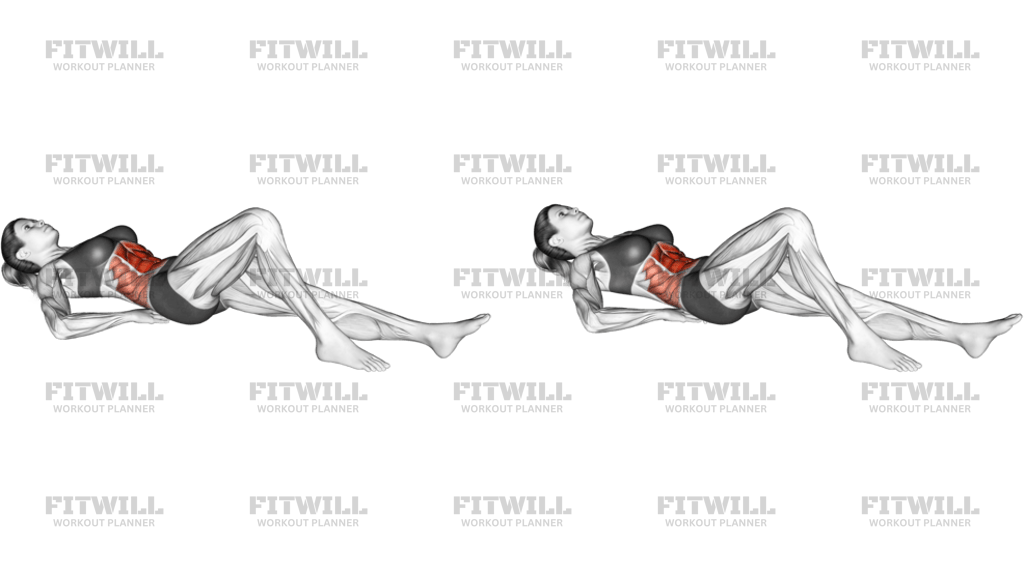
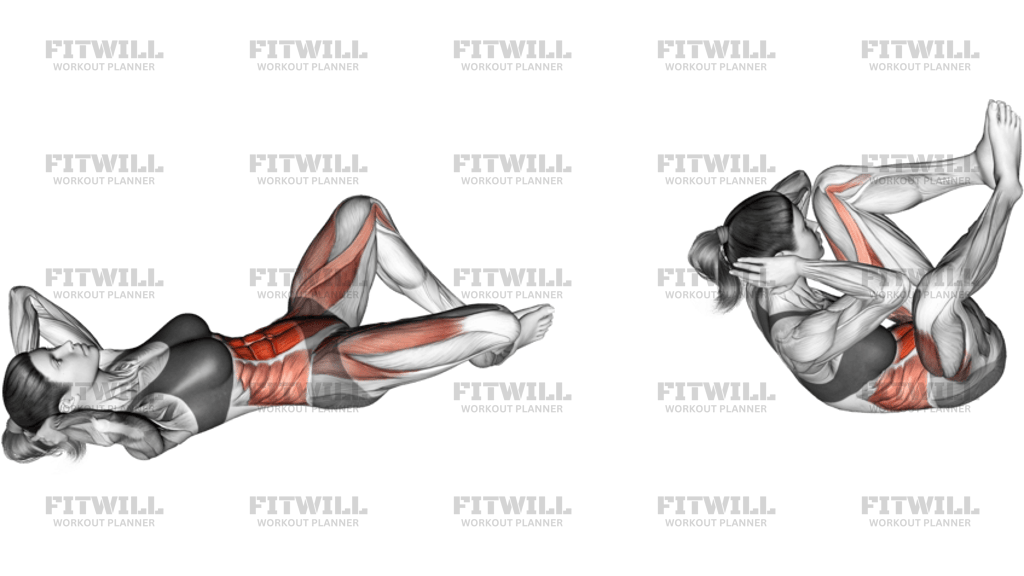
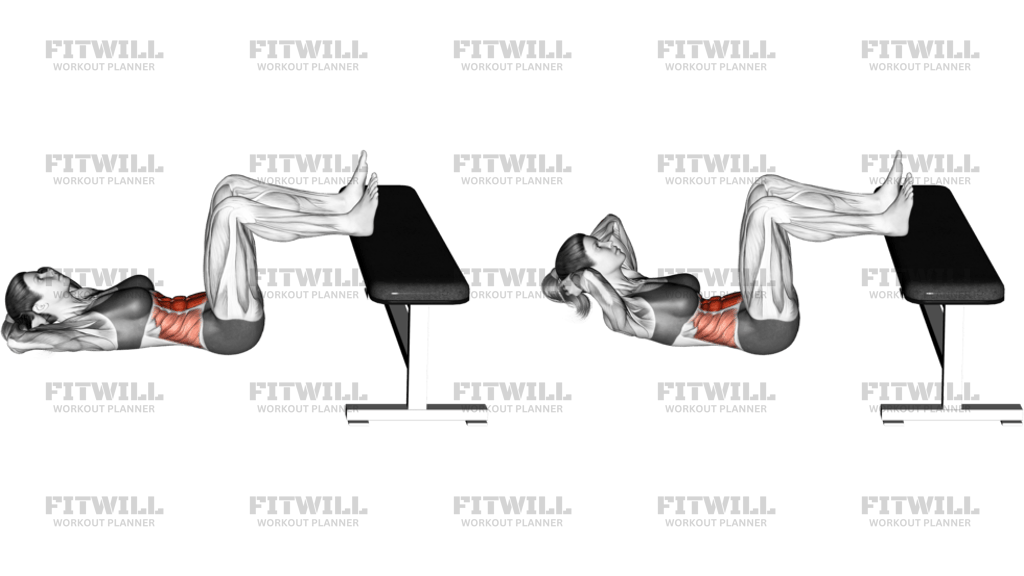
Floor Crunch Feet On Bench is a floor-based abdominal crunch with the lower legs supported on a bench so the hips stay flexed and the trunk can curl without turning into a swinging leg raise. The setup shifts the emphasis toward spinal flexion and controlled ribcage-to-pelvis shortening, which makes the movement useful for direct ab training, warm-ups, and accessory core work. It is still a bodyweight exercise, but the quality comes from how cleanly you move rather than from how many reps you can rush through.
The main target is the rectus abdominis, with the obliques and transversus abdominis helping you keep the torso organized and the pelvis steady. Because the feet are supported, the hips do not need to drive the motion. That matters: if you keep the thighs quiet and let the abs do the curling, the set feels much more like a crunch and much less like a hip-flexor exercise. A good rep should shorten the front of the torso, not pull the head forward or yank the knees in.
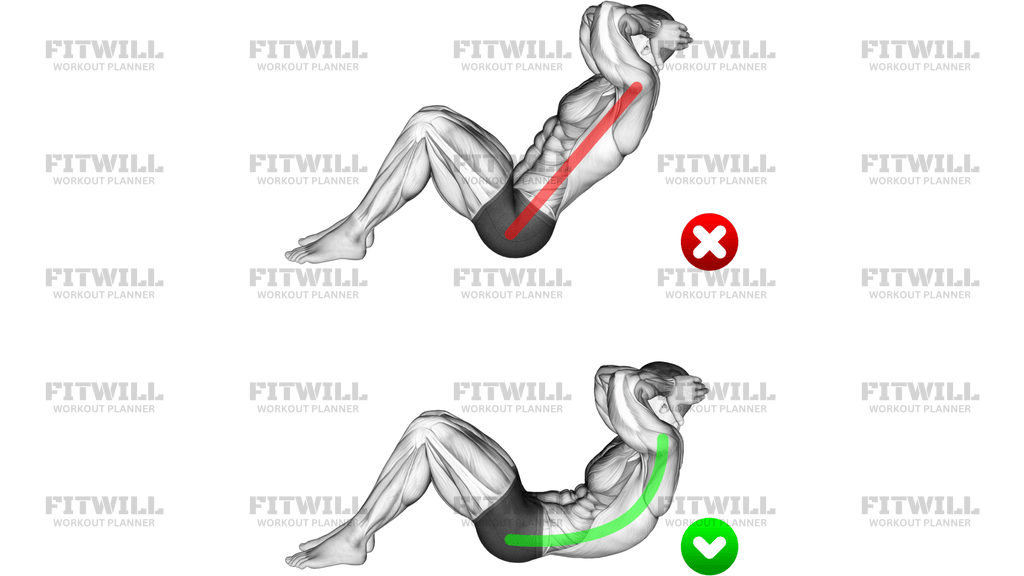
The bench position also changes how the lower back behaves on the floor. With the knees and hips bent, many people can keep the lumbar spine calmer and avoid the big arch-and-swing pattern that ruins standard crunches. Set your heels or lower legs on the bench, lie back with the knees bent roughly to 90 degrees, and keep the chin slightly tucked while the hands stay light behind the head or crossed over the chest. From there, exhale as you curl the shoulder blades off the floor and bring the ribs toward the pelvis.
At the top, stop when the torso has clearly shortened and the abs are fully on, not when the elbows touch the knees or the neck starts to strain. Lower under control until the shoulder blades settle back down, then begin the next rep without losing the leg position on the bench. This exercise works best with a smooth rhythm, moderate volume, and a range of motion you can repeat exactly. If the hips start to take over, the elbows start pulling, or the neck feels overloaded, shorten the rep and slow the tempo.
Use Floor Crunch Feet On Bench when you want a simple abdominal drill that is easy to load with repetition quality instead of external weight. It fits well in core circuits, accessory blocks, and beginner programs because the bench support reduces the need for balance and lets the lifter focus on trunk mechanics. Keep the movement strict, keep the legs quiet, and let the abs initiate every rep.
Fitwill
Log Workouts, Track Progress & Build Strength.
Achieve more with Fitwill: explore over 9600 exercises with images and videos, access built-in and custom workouts, perfect for both gym and home sessions, and see real results.
Start your journey. Download today!




Instructions
- Lie on your back with your head on the floor and place your heels or lower legs on a flat bench so your hips and knees are bent about 90 degrees.
- Set your feet hip-width apart on the bench and keep your legs quiet; do not push against the bench to start the rep.
- Place your hands lightly behind your head or across your chest and keep your elbows open so the neck stays relaxed.
- Brace your abs, then exhale as you curl your shoulder blades off the floor and bring your ribs toward your pelvis.
- Lift only as high as you can while keeping the movement in your abs instead of yanking with your neck or hips.
- Pause briefly at the top when the trunk is clearly shortened and the abs are tight.
- Lower slowly until your shoulder blades touch down again, keeping tension in the midsection instead of fully relaxing.
- Reset your breath at the bottom and repeat for the planned number of reps.
Tips & Tricks
- Keep the bench support passive; if you start pressing hard through the feet, the hip flexors usually take over.
- Think about curling the ribcage toward the pelvis rather than trying to sit all the way up.
- Stop the rep before the elbows start pulling the head forward or the chin jams into the chest.
- A short, strict range is better here than a big swing that comes off the floor with momentum.
- Exhale through the crunch to help the abs shorten and keep the neck from overworking.
- Let the low back make a natural contact with the floor, but do not violently flatten it by tucking the pelvis hard.
- If your hip flexors dominate, bring your feet a little closer together and slow the lowering phase.
- Use a steady tempo and avoid bouncing your shoulder blades off the floor between reps.
Frequently Asked Questions
What muscles does Floor Crunch Feet On Bench work most?
The rectus abdominis is the main target, with the obliques and deeper core muscles helping stabilize the torso.
Why put the feet on a bench for this crunch?
The bench supports the lower body so you can focus on curling the ribcage instead of turning the rep into a leg-driven movement.
Should my knees and hips stay bent the whole time?
Yes. Keep them flexed at roughly a right angle so the legs stay quiet and the abs do the work.
How high should I crunch up?
Only lift until the shoulder blades come off the floor and the abs are fully shortened; you do not need to sit upright.
What is the most common mistake on this exercise?
Pulling on the neck or driving with the hip flexors instead of curling the torso is the most common problem.
Can I keep my hands behind my head?
Yes, but keep the hands light and the elbows open. If your neck feels strained, cross your arms over your chest instead.
Is this exercise suitable for beginners?
Yes. It is a simple bodyweight crunch, and the bench support usually makes it easier to learn than a floor crunch with active leg movement.
How can I make the set harder without adding weight?
Slow the lowering phase, pause at the top, and keep every rep strict instead of increasing the range with momentum.