Front Lever
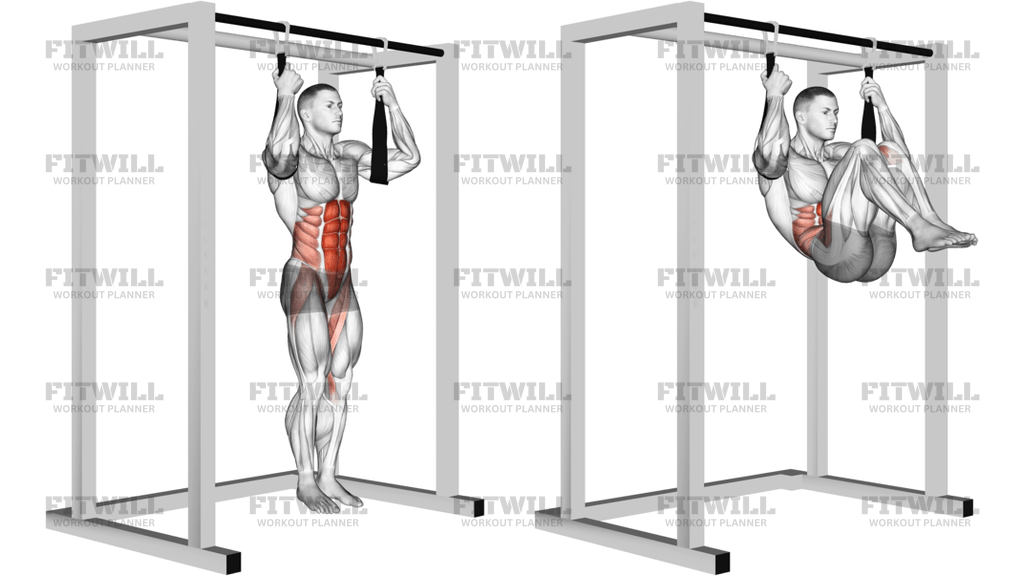
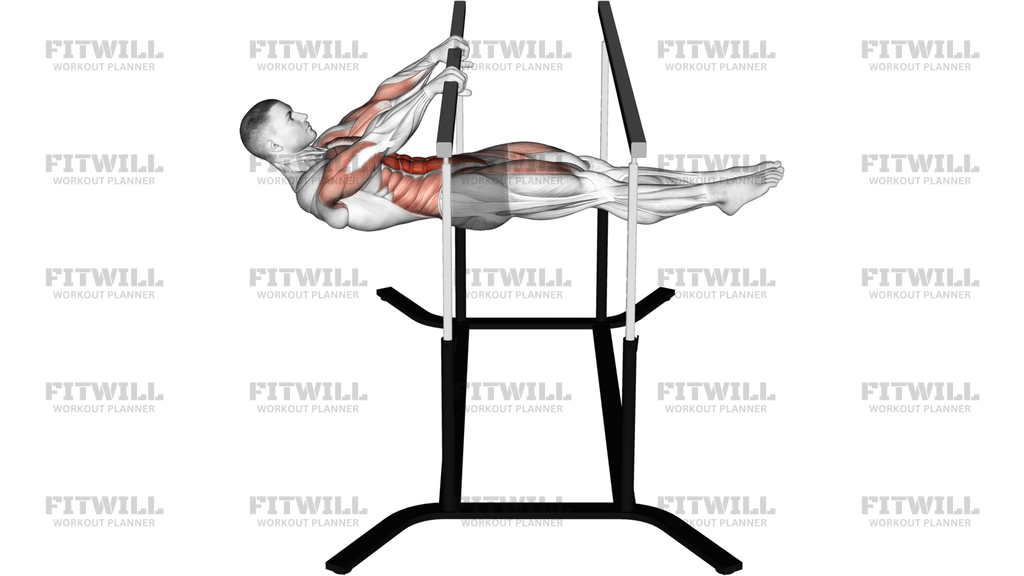
Front Lever is a bodyweight isometric hold performed on parallel bars, dip bars, or a similar sturdy station. In the position shown, the body stays rigid and nearly horizontal while the arms support the torso and the shoulders stay packed down away from the ears. It is a demanding calisthenics strength skill that builds control through the trunk, shoulders, lats, and grip while teaching you to resist sagging at the hips.
The main training effect comes from keeping a straight line from shoulders to ankles without letting the lower back arch or the knees drift. That makes the exercise especially useful for advanced core work, shoulder stability, and straight-arm lat strength. The visible setup matters because the bars must be high enough to clear the legs, the hands need a firm neutral grip, and the shoulders have to stay depressed so the hold does not collapse into the joints.
Treat the hold as a tension drill, not a swinging leg raise. Start by locking the elbows, setting the shoulders down and slightly forward, and tightening the abs and glutes before the feet leave the floor. Once you lift into position, keep the ribcage down and the pelvis tucked so the body stays long and level instead of bending at the hips. If the full lever is too hard, use a tuck, advanced tuck, straddle, or band-assisted version to keep the same shape with better control.
This movement is usually used in advanced skill work, core sessions, or calisthenics strength blocks where quality matters more than rep count. Short, clean holds are better than long attempts that turn into shaking and arching. Because the shoulders bear a lot of the load, it is important to stop if the elbows soften, the neck cranes forward, or the low back starts to take over. The best version of the front lever looks calm, rigid, and deliberate from the first second to the last.
[ Workout Log & Planner ]
Put your next workout in Fitwill
Keep your plan and training log ready when you are.


Instructions
- Grip the parallel bars or dip bars firmly with straight wrists and hands about shoulder-width apart.
- Press down through the bars, lock your elbows, and set your shoulders away from your ears before lifting.
- Lean back into the support and raise your legs until your body is level or as close to level as you can control.
- Keep your legs together, toes pointed, and knees straight unless you are using a tucked progression.
- Tighten your abs, glutes, and quads so your ribs stay down and your pelvis does not tip forward.
- Hold the horizontal position without swinging, shrugging, or letting the hips drop.
- Breathe in small controlled breaths while keeping the trunk braced.
- Lower with control back to the support and reset before the next hold.
Tips & Tricks
- A hollow-body shape is the goal: flatten the lower back by posteriorly tilting the pelvis before you lift.
- If the shoulders creep toward the ears, the hold is too hard or you are losing lat tension.
- Keep the elbows fully straight; bending the arms turns the movement into a different strength drill.
- Do not kick into position. Set the body first, then float up under control.
- Short holds of 5 to 10 seconds with perfect shape are more useful than a long, sagging attempt.
- If your legs cannot stay straight, use a tuck or advanced tuck until the torso line stays clean.
- Pointing the toes and squeezing the legs together makes it easier to keep the body rigid.
- Stop the set when the low back arches or the hips start to fold, even if you still have grip left.
Frequently Asked Questions
What muscles does the front lever work most?
It strongly challenges the lats, abs, shoulders, and grip while demanding a rigid full-body brace.
Is the full front lever beginner-friendly?
No. Most people need to build it with tuck, advanced tuck, straddle, or band-assisted holds first.
Why does the image show the body on dip bars instead of a pull-up bar?
A stable pair of parallel bars lets you support the body with straight arms while keeping the torso horizontal.
What is the biggest form mistake on the front lever?
Letting the hips sag or the lower back arch breaks the straight-line lever and shifts the work away from the trunk.
How long should I hold each rep?
Use short, high-quality holds that preserve shape, then rest and repeat instead of grinding through sloppy seconds.
How do I make the front lever easier?
Bend the knees into a tuck, shorten the lever with an advanced tuck, or use band assistance while keeping the same body line.
Should I feel this more in my abs or shoulders?
Both should work hard, but the abs and lats should control the body line rather than the shoulders carrying everything alone.
What should I do if I can only hold the position for a moment?
Build capacity with tuck holds, eccentric lowers, and repeated short attempts before trying longer full front lever holds.