Full Planche
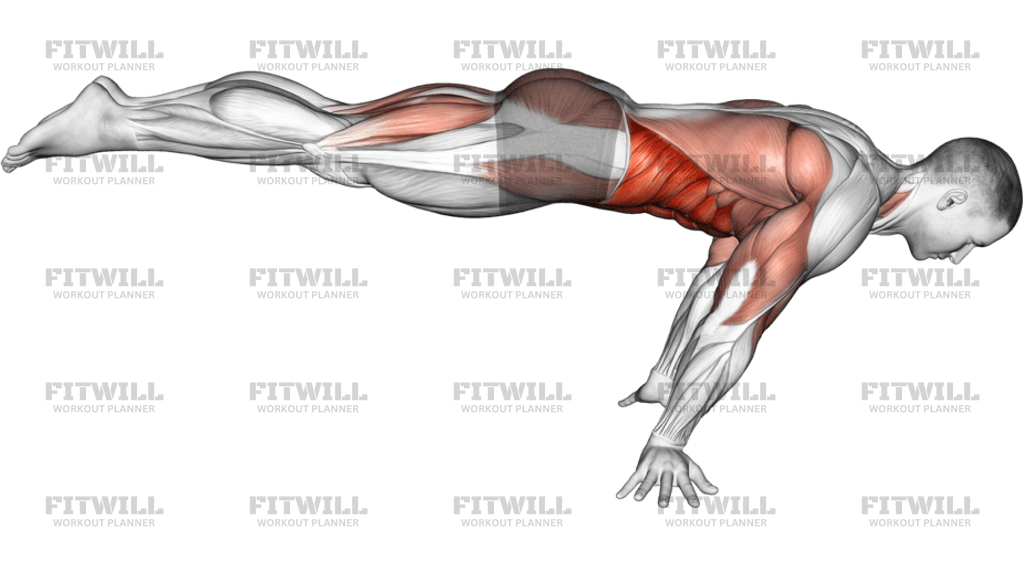
Full Planche is an advanced bodyweight hold performed with the hands on the floor, elbows locked, shoulders pushed forward, and the entire body held parallel to the ground. The image shows a strict horizontal position with the torso, hips, and legs lifted as one line, so the exercise is about shoulder strength, straight-arm support, trunk tension, and total-body control rather than speed or repetition.
The main demand comes from the shoulders and chest working to support the lean while the triceps keep the elbows extended. The abs, obliques, hip flexors, and glutes keep the body from sagging or folding at the hips. In practice, the rectus abdominis, external obliques, iliopsoas, and transversus abdominis all have to stay active so the planche line does not break when the center of mass shifts forward.
Setup matters more here than in most exercises. The hands need a firm base on the floor, the fingers should spread for balance, and the shoulders should stay protracted instead of collapsing between the arms. A good planche starts with enough forward lean that the feet can float while the ribs stay tucked and the pelvis stays level. If the head drops, the low back arches, or the elbows bend, the hold stops being a true planche and becomes a compensation drill.
This movement is best treated as a skill-strength hold: build it with short, high-quality attempts, then come down before form breaks. Use the full planche as a peak calisthenics strength element, or work through easier planche leans, tuck planches, or straddle progressions until you can keep the body rigid and horizontal. It is not a beginner exercise, and wrist and shoulder tolerance matter, so keep the range pain-free and stop if the wrists, elbows, or front shoulders feel unstable.
Fitwill
Log Workouts, Track Progress & Build Strength.
Achieve more with Fitwill: explore over 9600 exercises with images and videos, access built-in and custom workouts, perfect for both gym and home sessions, and see real results.
Start your journey. Download today!




Instructions
- Place your hands on the floor under your shoulders or slightly wider, spread your fingers, and lock your elbows straight before lifting your feet.
- Lean your shoulders forward so they move in front of your wrists, then protract your shoulder blades to create a strong rounded upper-back position.
- Tighten your abs, squeeze your glutes, and keep your pelvis level so your lower back does not arch as you shift weight forward.
- Lift both feet until your body is nearly parallel to the floor, with toes pointed and legs pressed together.
- Hold the position while keeping your head neutral and your gaze slightly ahead of your hands.
- Breathe shallowly and steadily without losing tension through the ribs, hips, or knees.
- Lower your feet or step out of the hold as soon as the body line starts to break or the elbows soften.
- Rest, reset your shoulder lean, and repeat for short, high-quality holds.
Tips & Tricks
- Treat this as a straight-arm strength hold, not a rep-based exercise.
- The farther your shoulders travel in front of your wrists, the more planche demand you create.
- Keep the elbows fully locked; even a small bend usually means the shoulders are under less load than they should be.
- Push the floor away and round the upper back slightly so the shoulder blades stay protracted.
- Keep the ribs down and the pelvis tucked to stop the low back from taking over.
- Point the toes and squeeze the legs together to reduce swing and make the body line cleaner.
- Use very short holds if wrist tolerance is limited, because long attempts often fail from the hands before the shoulders.
- Work from easier progressions if you cannot keep the body horizontal without piking or arching.
Frequently Asked Questions
What does Full Planche train most?
It heavily trains the shoulders, chest, triceps, and deep core, with the abs and hip flexors working hard to keep the body horizontal.
Is Full Planche beginner-friendly?
No. Most people need planche leans, tuck planches, or straddle progressions before they can hold a true full planche safely.
Why do my shoulders need to move forward over my hands?
That forward lean shifts your center of mass far enough ahead of the hands to let the feet float; without it, the position will not balance as a planche.
Should my elbows bend during the hold?
No. A true full planche uses straight arms, and bending the elbows usually turns it into a different support position.
Why does my lower back arch when I try this?
An arch usually means the ribs are flaring and the pelvis is losing posterior tilt. Tuck the pelvis, squeeze the glutes, and shorten the hold.
What is the best progression if I cannot hold the full version?
Use planche leans, tuck planches, advanced tuck holds, or straddle planches until you can keep the shoulders forward and the body line tight.
Can I do this on parallettes instead of the floor?
Yes, parallettes can reduce wrist extension and make the setup more comfortable, but the shoulder and core demand stay very high.
How long should I hold each attempt?
Use short holds with perfect shape, often just a few seconds, instead of chasing long sets that collapse at the hips or shoulders.