Straddle Maltese
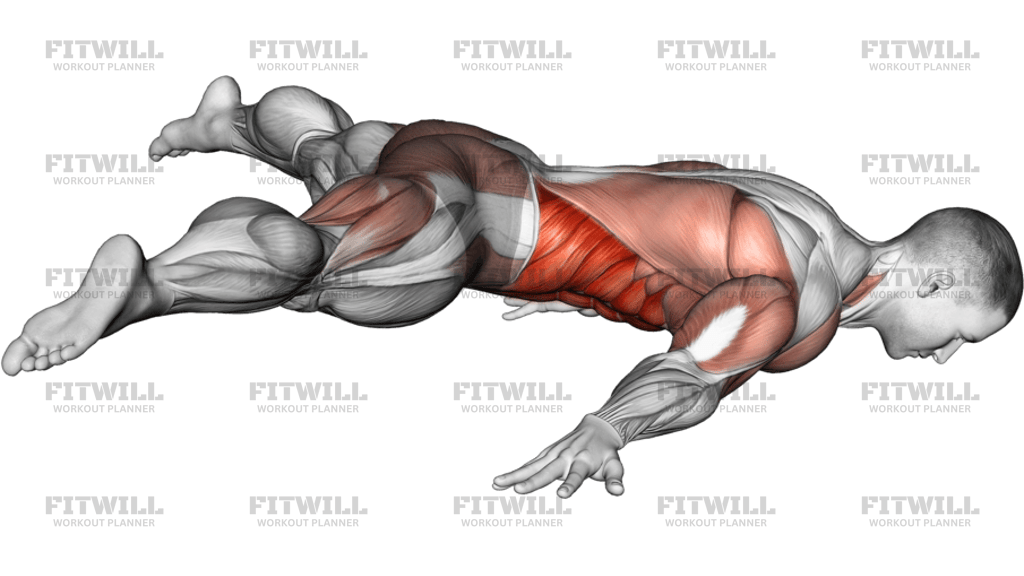
Straddle Maltese is an advanced bodyweight strength hold built around a long forward lean, a wide leg split, and a rigid torso. The straddle position shortens the lever compared with a full Maltese, but it still asks a lot from the shoulders, chest, core, and hips. Treat it as a skill-strength drill, not a passive stretch, because the value comes from holding a hard line without losing shape.
The setup matters more here than in most bodyweight exercises. Start face down on the floor with the legs opened into a comfortable straddle and the hands planted on a stable surface that lets you press evenly through the palms. Keep the elbows straight, spread the fingers, and organize the ribcage and pelvis before you load the position. If the low back arches as soon as you set up, the leverage is too long or the brace is too loose.
Once you are set, press the floor away and shift into the strongest line you can control. Keep the shoulders from shrugging up toward the ears, keep the torso from twisting, and squeeze the glutes so the hips do not sag as you hold. A good Straddle Maltese feels like intense straight-arm tension across the front of the body, with the legs open only as wide as you can keep square and steady.
This exercise is useful for gymnasts, calisthenics athletes, and advanced bodyweight trainees who want better straight-arm shoulder strength and midline control. It also fits well as a short accessory hold after pressing or skill work, when you want focused tension without much total volume. Because the position is demanding on the wrists and shoulders, the best version is usually a short, clean hold rather than a long attempt that turns into a grind.
Progress by widening the straddle, shortening the hold, or reducing how far you lean before you try to make the position harder. If the wrists complain, use a more neutral hand angle or a slightly raised support; if the shoulders pinch, back off and rebuild the line from a less aggressive angle. Straddle Maltese should end with a controlled return to the floor and a reset that leaves you ready for another clean attempt.
Fitwill
Log Workouts, Track Progress & Build Strength.
Achieve more with Fitwill: explore over 9600 exercises with images and videos, access built-in and custom workouts, perfect for both gym and home sessions, and see real results.
Start your journey. Download today!




Instructions
- Lie face down on a floor or other stable surface and open the legs into a wide, comfortable straddle.
- Plant your hands firmly on the floor slightly wider than shoulder width, then spread the fingers and press through the whole palm.
- Set the chest, ribs, and pelvis before you load the hold, and keep the neck long with your gaze just ahead of your hands.
- Straighten the elbows and squeeze the glutes so the hips stay level instead of dumping into the low back.
- Lean the shoulders forward into the hardest line you can control while keeping both legs open and square.
- Hold the Straddle Maltese without shrugging the shoulders or twisting the torso, and breathe in small, controlled breaths.
- Lower back to the floor before the shape breaks, keeping the movement slow enough that you do not collapse onto the hands.
- Reset the hands and leg position completely before the next hold, or finish the set and relax the shoulders.
Tips & Tricks
- Widen the straddle first if the shoulders shake; a bigger leg split shortens the lever and usually makes the hold more manageable.
- Keep the elbows locked straight. Bending the arms turns Straddle Maltese into a different support pattern and usually steals tension from the shoulders.
- Press evenly through both palms so one shoulder does not dump forward while the other side stays high.
- If the ribs flare, shorten the forward lean instead of trying to force a bigger line.
- Short holds of 5 to 10 seconds are more useful than long attempts that end with a sagging low back.
- Keep the glutes active so the hips stay square and the legs do not drift or rotate.
- Use a neutral or slightly turned-out hand angle if wrist extension feels aggressive.
- Stop the set as soon as the shoulders shrug toward the ears or the neck starts craning forward.
Frequently Asked Questions
What muscles does Straddle Maltese work?
The main demand is on the shoulders and chest, with the core, glutes, and hip flexors helping keep the body rigid and level.
Is Straddle Maltese a stretch or a strength hold?
It is a strength hold. The position should feel like hard straight-arm tension, not a relaxed mobility drill.
Do I need special equipment for Straddle Maltese?
No. The basic version can be done on the floor, though raised handles or parallettes can make the wrist angle friendlier.
How wide should my legs be in Straddle Maltese?
Wide enough to shorten the lever and keep the torso controlled, but not so wide that the hips rotate or the low back arches.
Why do my wrists hurt in Straddle Maltese?
You are probably loading too far forward or dumping pressure into the heel of the hand. A more neutral hand angle or a raised support usually helps.
Can beginners do Straddle Maltese?
Most beginners should build with easier straddle leans, floor supports, or other straight-arm holds before trying a true Straddle Maltese.
How long should I hold each rep?
Start with very short holds, around 5 to 10 seconds, and only add time if the shoulders, ribs, and hips stay stacked.
What is the difference between Straddle Maltese and Full Maltese?
The straddle version shortens the lever and is more manageable. Full Maltese keeps the body line longer and demands much more shoulder and trunk strength.