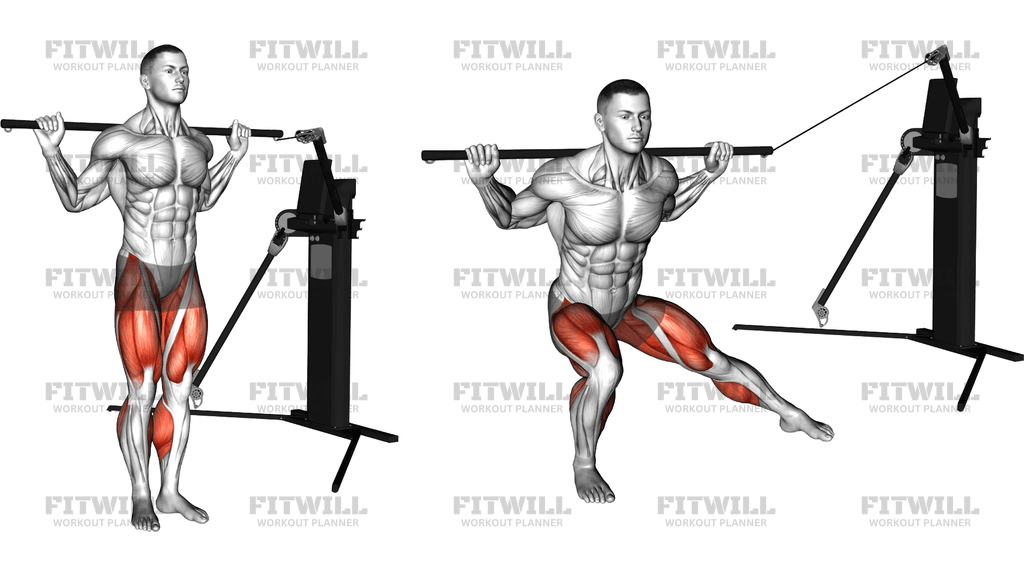
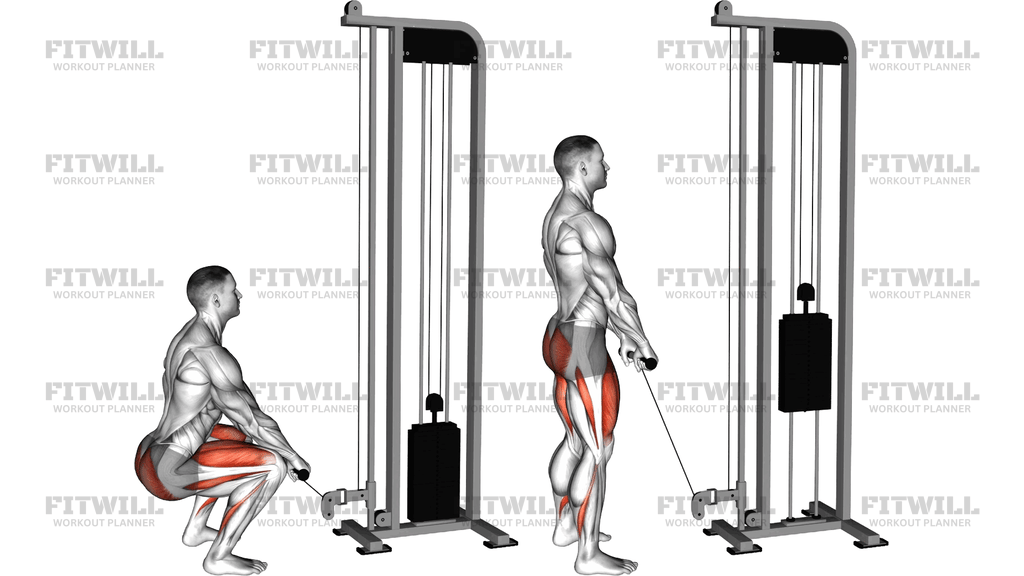
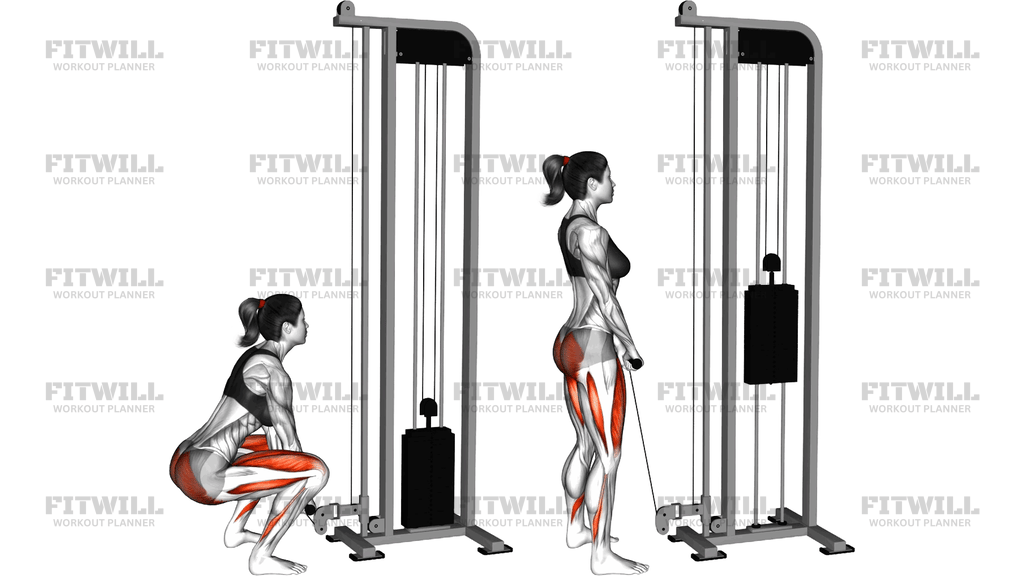
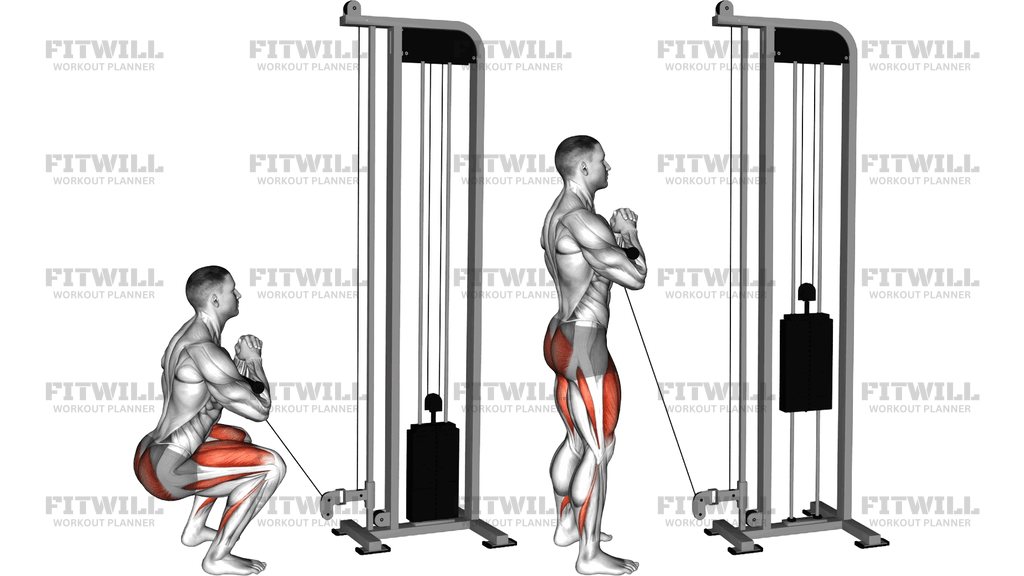
Cable Forward Lunge
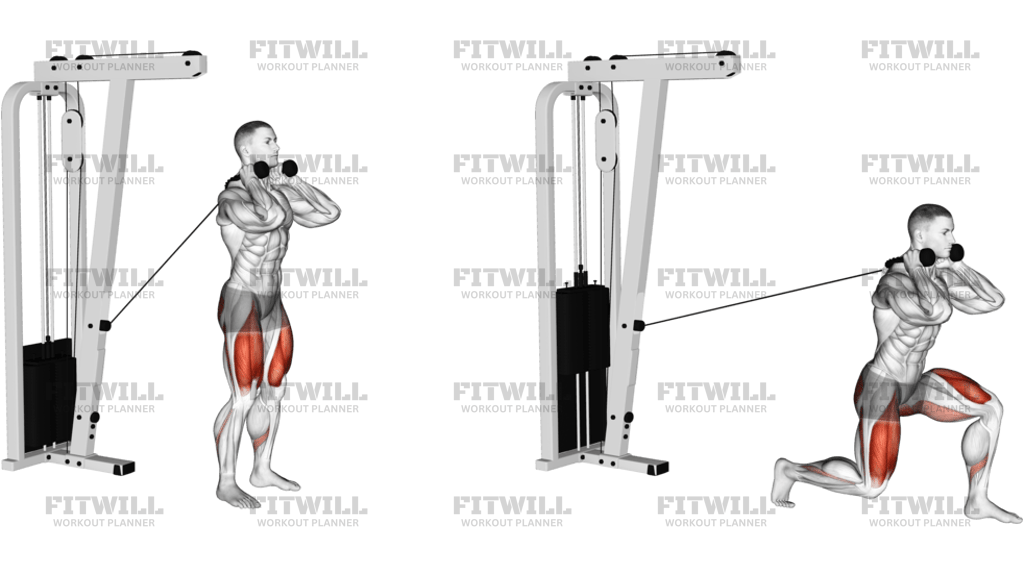
Cable Forward Lunge is a cable-assisted split-stance leg exercise that loads the front leg while the cable keeps tension on the movement through the whole rep. With the handle held at the chest and the cable pulling from behind, the exercise challenges the glutes, quads, and hip stabilizers in a way that feels more guided than a free-weight lunge. It is useful when you want single-leg strength work with constant resistance and a clear path for the torso and hips.
The setup matters because the cable changes the balance demands. Stand facing away from the stack, hold the handle close to the chest, and start with enough distance that the weight does not yank you forward before you step. From there, the cable should stay taut while you take a long forward step, lower under control, and keep the chest stacked over the hips. If the step is too short, the front knee gets crowded; if it is too long, you may lose pelvic control and feel the rear hip twist open.
A clean repetition should feel like a controlled drop into the lunge, a brief pause near the bottom, and a strong drive back to standing through the front foot. The front shin can travel forward, but the knee should still track in line with the toes rather than collapsing inward. Keep the rib cage down, keep the handle steady at the chest, and let the front leg do the work instead of leaning hard into the cable.
This movement is often used for lower-body hypertrophy, unilateral strength, and sport preparation because it exposes side-to-side differences without requiring a barbell on the back or shoulders. It can be a good accessory after squats or deadlifts, or as a main single-leg pattern when you want less spinal loading. Beginners can learn it well with light weight because the cable provides a predictable line of resistance and makes it easier to feel the working leg.
Treat the lunge as a repeatable pattern, not a balance stunt. Each rep should finish with the hips square, the front foot planted, and the back knee under control before you step back or bring the feet together. Stop the set if the cable starts pulling you off line, the front knee caves, or you need to bounce out of the bottom to stand up.
[ Workout Log & Planner ]
Put your next workout in Fitwill
Keep your plan and training log ready when you are.


Instructions
- Set the cable pulley low, attach a single handle, and stand facing away from the stack with the handle held at chest height.
- Take a staggered stance with your feet about hip width apart and move far enough from the machine that the cable is taut before you step.
- Brace your torso, keep your ribs down, and square your hips before the first step.
- Step one foot forward far enough to create a long lunge, landing heel first and keeping the front foot flat.
- Lower straight down until the back knee is close to the floor while the front knee tracks over the middle toes.
- Keep the handle fixed at your chest and let the cable provide steady backward pull as you descend.
- Drive through the whole front foot to stand up, squeezing the front glute and thigh as you return to the start.
- Reset your stance after each rep so the next step starts balanced, controlled, and in line with the cable.
- Breathe in on the descent and exhale as you push back to standing.
- Repeat on the same side for the planned reps, then switch sides if the program calls for it.
Tips & Tricks
- Choose a light enough load that the cable does not drag your shoulders forward at the bottom of the lunge.
- A longer step usually helps keep the front heel planted and gives the hip room to work without the knee collapsing inward.
- Keep the handle close to your sternum instead of reaching it forward, or the cable will turn the rep into an upper-body tug-of-war.
- Think about dropping straight down before you push back up; if you drift forward, the front foot often slides and the torso folds.
- Let the front shin travel naturally, but keep the knee lined up with the second or third toe.
- Use the rear leg only for balance; most of the drive back to standing should come from the front glute and quad.
- Pause for a split second at the bottom if you tend to bounce off the floor or lose hip position.
- Keep your back heel lifted and your rear knee softly under the hip instead of reaching far behind you.
- If the stack is too close, step farther away so the resistance stays smooth through the full range of motion.
- Stop the set when you start twisting away from the cable or cannot return to standing without shifting weight sideways.
Frequently Asked Questions
What muscles work most in a cable forward lunge?
The front leg does most of the work, especially the glutes and quads, while the hamstrings and core help stabilize the rep.
Why hold the handle at the chest instead of letting it hang?
Keeping the handle at the chest helps the torso stay tall and prevents the cable from pulling your shoulders and rib cage out of position.
Should I face toward or away from the cable stack?
Face away from the stack so the cable pulls from behind you during the forward step and keeps tension through the lunge.
How far should I step forward?
Step far enough that the front heel stays down and the back knee can drop without crowding the front knee or forcing the hips to twist.
What is the most common form mistake?
Most people either take too short a step, which jams the front knee, or lean forward and turn the movement into a balance fight against the cable.
Can I use this as a beginner exercise?
Yes. Start with a light stack and focus on a smooth step, a tall torso, and a controlled push back to standing.
Is the back leg supposed to do much?
No. The back leg mainly helps with balance; the front leg should control the lowering phase and drive most of the return.
How can I make the exercise harder without changing the machine load?
Use a slower descent, pause at the bottom, or add a longer stride so the front leg has to control more range before standing back up.
What should I do if the cable pulls me off balance?
Step a little farther from the stack, lower the weight, and keep the handle pinned to your chest so the pull stays straight and predictable.