Cable Hip Abduction Version 2
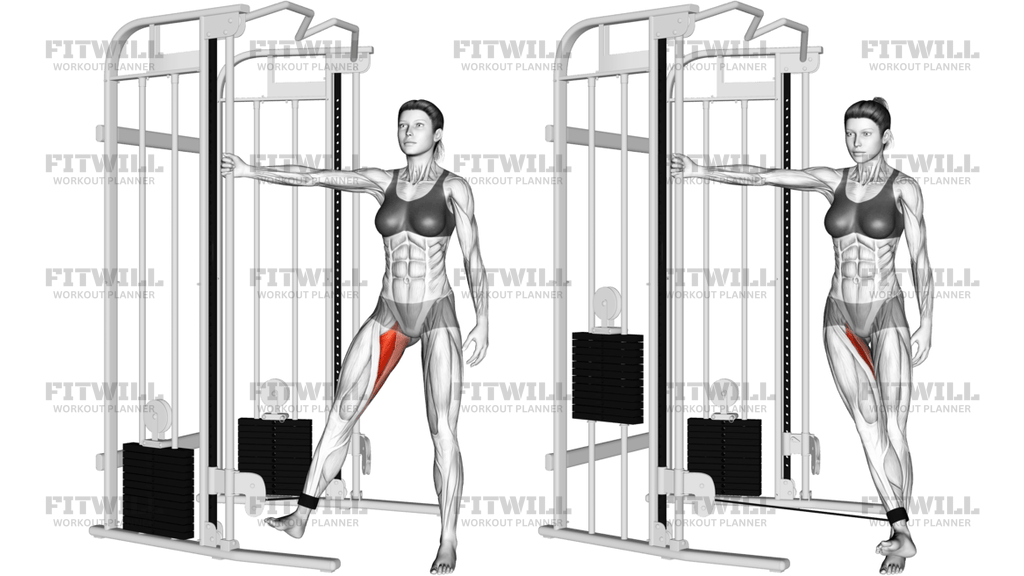
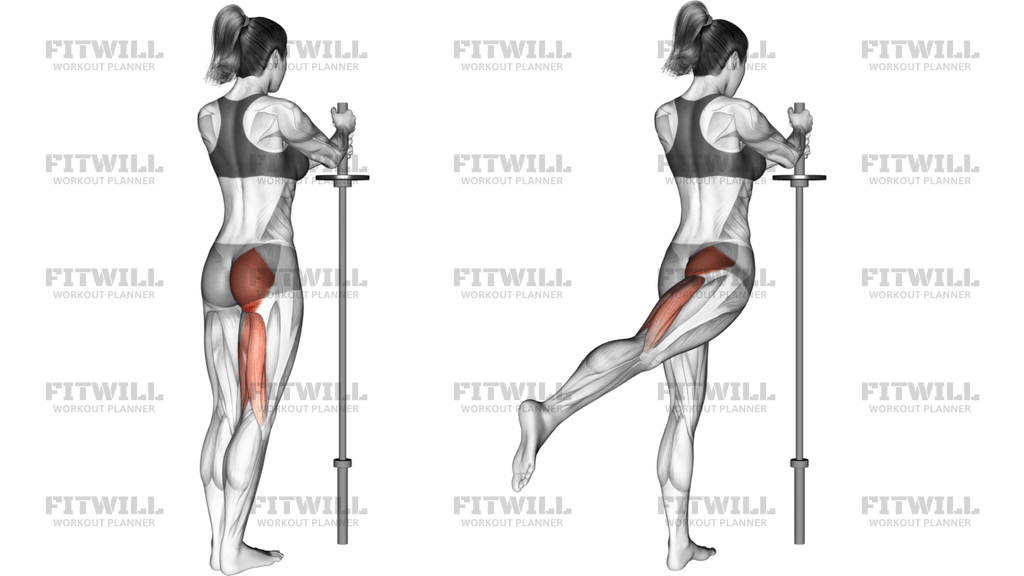
Cable Hip Abduction Version 2 is a standing single-leg cable exercise that trains the outer hip to move the leg away from the body under constant tension. In the image, the working ankle is attached to a low cable, the lifter stands side-on to the stack, and one hand holds the machine for balance while the torso stays tall. That setup matters because the exercise is about isolating hip abduction, not leaning, twisting, or swinging the leg to create momentum.
The main training goal is to strengthen the glutes on the outside of the hip, especially the fibers that help control pelvic position when you walk, run, climb stairs, or stand on one leg. The supporting muscles around the trunk and standing leg help you stay stacked and steady, but they should not take over the movement. If the pelvis drifts, the trunk rotates, or the working foot starts flicking through the air, the cable is no longer loading the hip the way it should.
A clean rep starts with the cable set low, the cuff secured around the ankle, and the standing leg planted firmly next to the machine. The support hand stays on the frame so you can keep the rib cage, pelvis, and shoulders quiet while the outer leg moves. The working leg should travel smoothly away from midline and return just as smoothly, with the cable controlling both the lift and the lowering phase.
This exercise is useful as accessory work for lower-body strength, glute activation, pelvic stability, or as a low-joint-stress option when you want direct hip work without heavy squatting or hinging. It also works well in higher-rep sets because the cable keeps tension on the target muscles through the whole range. Load it lightly enough that you can keep the pelvis square and the standing foot quiet through every repetition.
Treat the movement like a precision drill. A successful set feels local to the outer hip of the working leg, with minimal sway from the rest of the body. Stop the set if you need to swing the leg, shrug into the support hand, or turn the toes and pelvis to cheat the range. The best version of Cable Hip Abduction Version 2 is controlled, deliberate, and repeatable from the first rep to the last.
[ Workout Log & Planner ]
Put your next workout in Fitwill
Keep your plan and training log ready when you are.


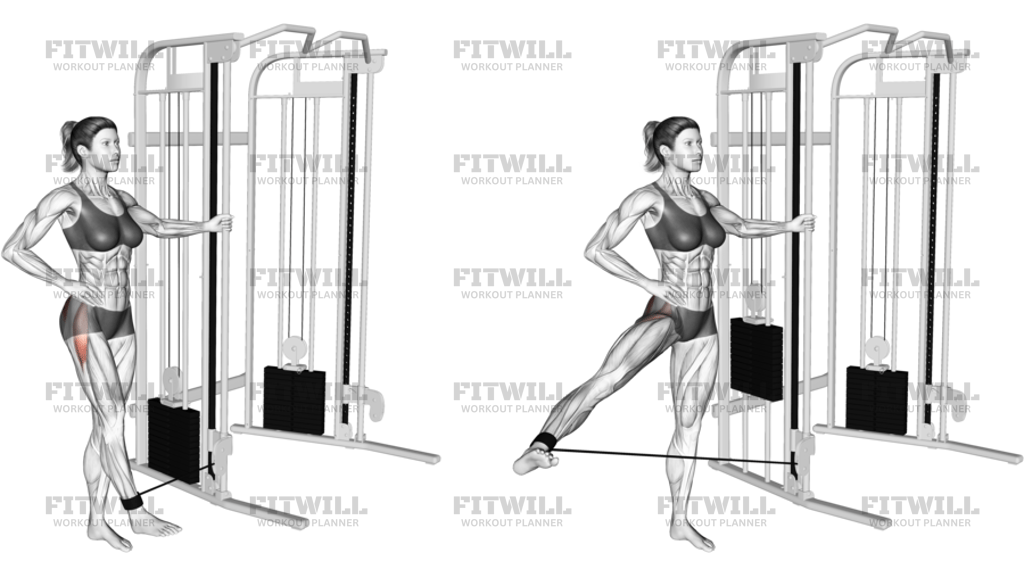
Instructions
- Set the cable pulley to the lowest position and attach the ankle cuff to the leg closest to the machine.
- Stand sideways to the stack with the support hand on the frame, the standing foot planted, and the cuffed leg relaxed near the midline.
- Square your hips and ribs to the front, then soften the standing knee and brace your midsection.
- Keep the toes of both feet facing forward or slightly down so the movement comes from the hip, not a turned-out foot.
- Drive the cuffed leg out to the side in a smooth arc without leaning your torso or hiking the working hip.
- Lift until you feel the outer hip working hard but before the pelvis starts to roll or the lower back starts helping.
- Pause briefly at the top and keep the standing leg and support hand quiet.
- Lower the leg back to the start under control, letting the cable pull you inward without letting the stack slam.
- Reset your stance if needed, then repeat for the planned reps on the same side before switching legs.
Tips & Tricks
- Choose a load that lets the cuffed leg move smoothly without pulling your torso toward the machine.
- Keep the pelvis level; if the hip on the working side hikes up, the outer hip is losing tension.
- Use the support hand for balance, not for yanking your body upright or pushing the rib cage away from the stack.
- A slight bend in the standing knee usually feels steadier than locking that leg straight.
- Keep the working foot neutral unless a coach specifically wants a different toe angle for your hips.
- Do not chase height by swinging the leg behind you; the useful range is the one you can control without rotation.
- Lower the leg slowly enough that the cable does not pull you into the start position.
- If the lower back feels more active than the side glute, reduce the range and slow the rep down.
Frequently Asked Questions
What muscle does Cable hip abduction (version 2) target most?
It targets the outer glutes on the working side, especially the muscles that lift the leg away from the body and help keep the pelvis level.
Can beginners perform this exercise?
Yes. Beginners usually do best with a very light stack and a short, controlled range so they can feel the side hip working without leaning.
Where should I place the ankle cuff?
Place it snugly around the ankle of the leg nearest the machine so the cable line stays low and the rep comes from the hip.
Should I hold the machine during the set?
Yes, a light hand on the frame helps you stay upright and stop the torso from swaying while the working leg moves.
How far should the leg move out to the side?
Only as far as you can go without the pelvis rolling, the torso leaning, or the lower back taking over.
Why does my lower back feel this more than my glute?
That usually means you are leaning, arching, or swinging the leg too far. Reduce the range and keep the ribs stacked over the pelvis.
Is this better with a straight knee or a bent knee?
A slight bend in the standing leg is usually more stable. Keep the working leg long enough that the cable can load the hip instead of the knee.
Can I turn my toes out to lift higher?
You can, but it should not be a cheat. Keep the foot position consistent and use only the amount of rotation that still lets the hip do the work.