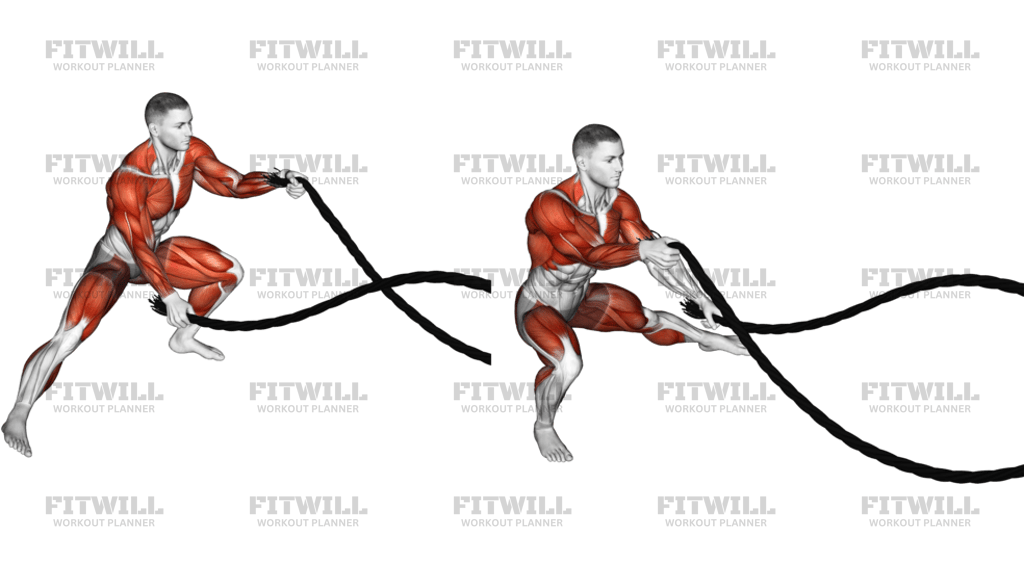
Battling Ropes Russian Twist
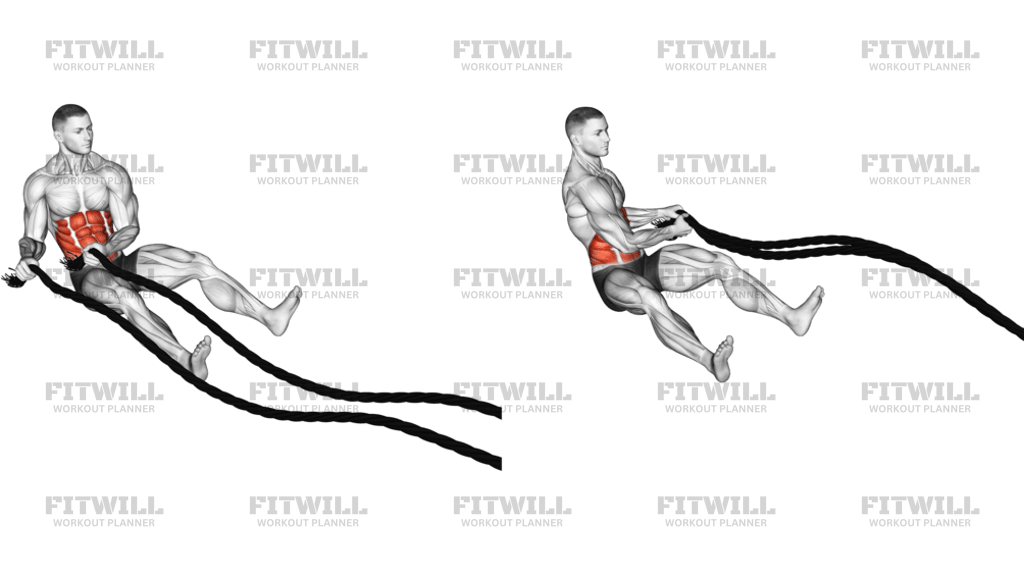
Battling Ropes Russian Twist is a seated core exercise that combines a reclined Russian twist position with a battling rope for added tension and rhythm. In the image, the lifter sits on the floor with the torso leaned back, the legs lifted, and the rope held in front of the body while the trunk rotates from side to side. The movement is built around controlled rotation, not speed, so the obliques have to drive the twist while the rest of the torso stays organized.
The main training focus is the obliques, with the rectus abdominis, deep core muscles, hip flexors, and spinal stabilizers helping keep the position solid. The rope adds resistance and feedback through the arms, but the goal is still to rotate the ribcage and shoulders over a braced pelvis rather than yank the rope with the arms. When the setup is right, the exercise teaches you how to hold a strong V-sit style posture while producing clean left-right trunk rotation.
The setup matters because the exercise is easy to turn into a hip-flexor or low-back compensation pattern. Sitting too tall removes the challenge; leaning too far back or losing abdominal tension shifts stress into the lower back. A better rep starts with the chest open, ribs down, and the rope held close enough that you can rotate without collapsing the shoulders forward. The feet may stay lightly elevated or hover off the floor, depending on how advanced the version is and how much control you can keep.
Use the twist to move the rope from one side of the body to the other in a smooth arc while keeping the pelvis relatively quiet. Each turn should feel deliberate, with the return under control instead of a snap back to center. Breathe out as you rotate, keep the neck long, and stop the set when the torso starts wobbling or the rope is being swung instead of guided.
This exercise fits well in core circuits, conditioning blocks, or accessory work when you want rotational control with moderate intensity. It is useful for athletes who need trunk stiffness under movement, but it still rewards conservative loading and precise timing. If the rope path becomes sloppy, shorten the range and slow the tempo before adding more resistance or more reps.
[ Workout Log & Planner ]
Put your next workout in Fitwill
Keep your plan and training log ready when you are.


Instructions
- Sit on the floor and lean the torso back into a V-sit position with your knees bent and feet lifted or lightly hovering.
- Hold the battling rope in front of your chest or lower ribs with both hands close together and your shoulders relaxed.
- Set your ribs down, brace your abdomen, and keep your pelvis steady before the first twist.
- Rotate your trunk to one side and guide the rope across your body in a controlled arc.
- Keep the movement driven by the ribcage and shoulders instead of swinging the arms or knees.
- Twist back through center and continue to the opposite side without letting the lower back arch.
- Exhale as you rotate and keep the breath steady as you change sides.
- Use a smooth tempo for the full set and keep the feet and torso under control.
- Stop the set if you have to yank the rope or if your low back starts taking over.
Tips & Tricks
- Keep the rope close to your torso so the twist comes from rotation, not long arm swings.
- If your feet are shaking, shorten the range and reduce the lean before adding more speed.
- Think about turning the ribcage over the pelvis on each rep instead of moving the hands first.
- A slight pause at each side helps keep the rope path clean and makes cheating obvious.
- Do not let the shoulders shrug up toward the ears when the rope gets heavier.
- If the lower back feels it more than the obliques, sit a little taller and brace harder before twisting.
- Heavier rope tension should make the twist harder to control, not force a bigger range of motion.
- Keep the neck long and the chin neutral so the head does not lead the rotation.
- Use controlled reps that stay smooth from the first twist to the last instead of trying to bounce through fatigue.
Frequently Asked Questions
What muscle does Battling Ropes Russian Twist target most?
The obliques are the main target, with the rectus abdominis and deep core muscles helping stabilize the reclined sitting position.
Can beginners perform this exercise?
Yes, but beginners should start with a small lean, bent knees, and very light rope tension until they can keep the pelvis quiet.
How should I hold the rope during the twist?
Hold the rope with both hands close together in front of the chest or lower ribs so the torso can rotate without the arms taking over.
What is the biggest mistake in this exercise?
The most common mistake is swinging the rope side to side while the torso stays mostly still, which turns the drill into an arm exercise.
Should my feet stay on the floor?
The image shows a lifted V-sit position, so the feet should hover or stay lightly off the floor if you can keep the low back controlled.
Why do I feel this in my hip flexors?
A little hip-flexor work is normal in the raised seated position, but if they dominate, you are likely leaning back too far or losing abdominal brace.
Is this more of a strength or conditioning exercise?
It can serve both roles, but it is usually best used as controlled core work or accessory conditioning rather than an all-out power movement.
How do I know the rope load is too heavy?
If you have to jerk the rope, lose the lean, or let the lower back arch just to finish the twist, the resistance is too high.