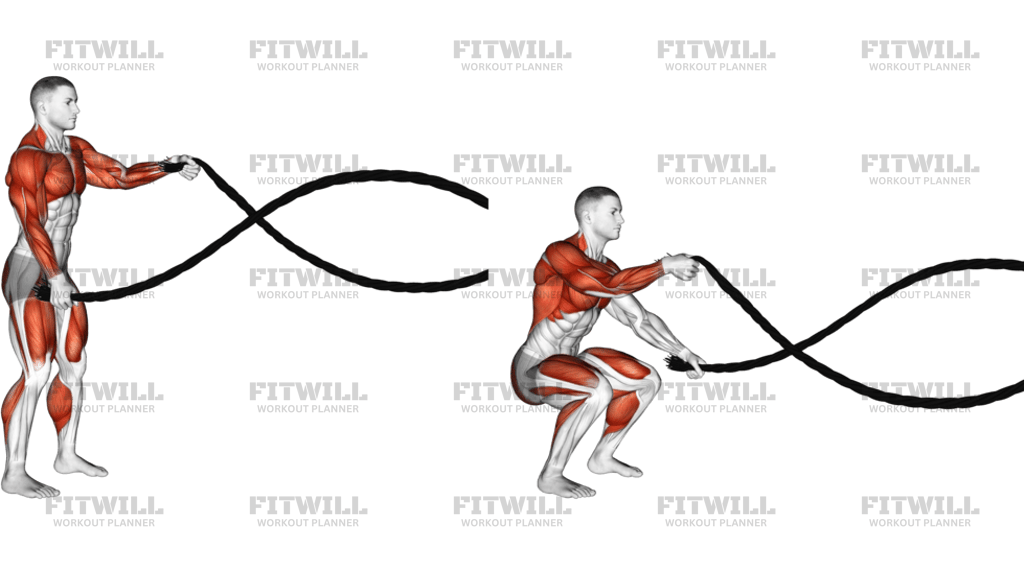
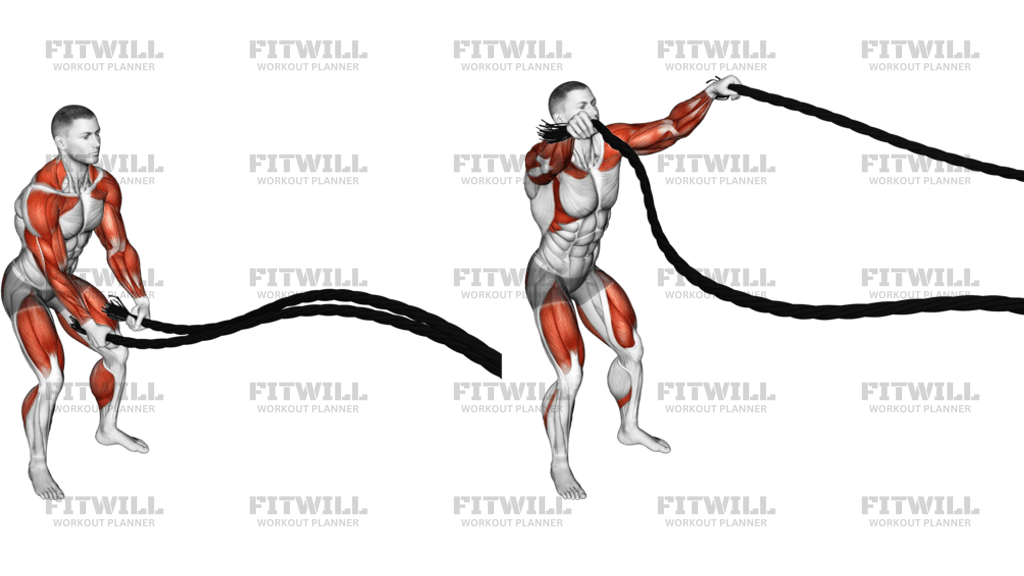
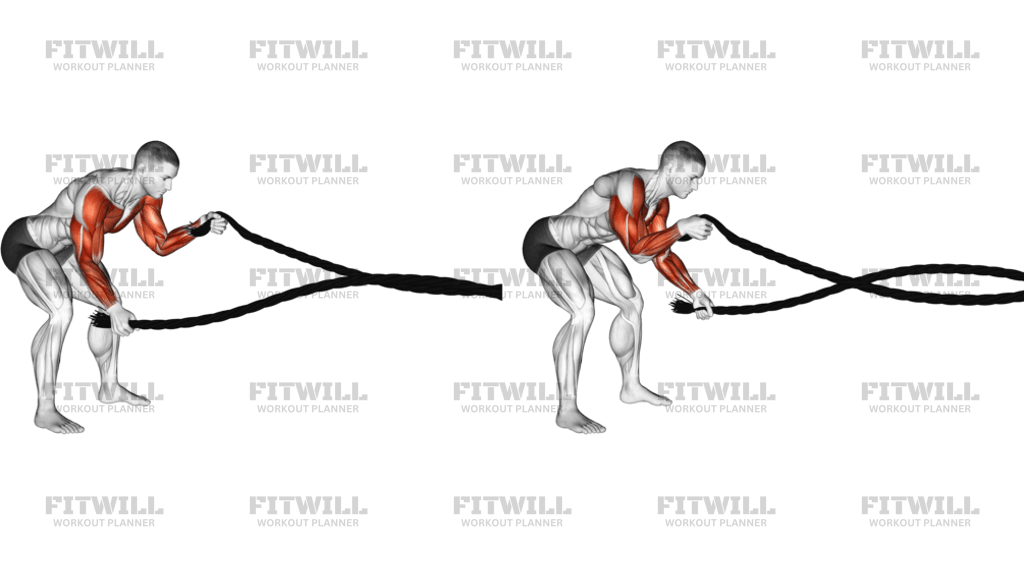
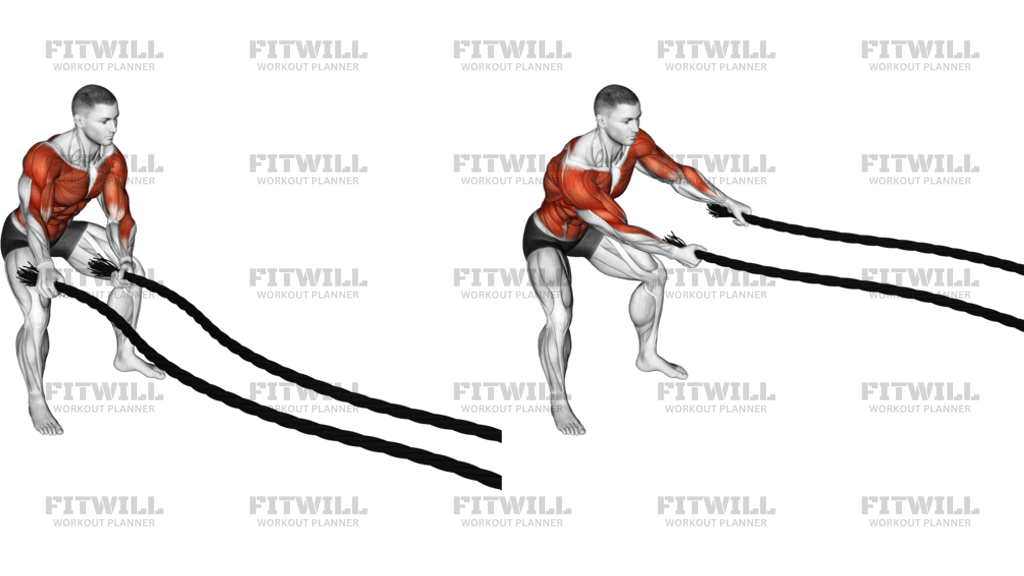
Battling Ropes Alternate Arms Side Lunge
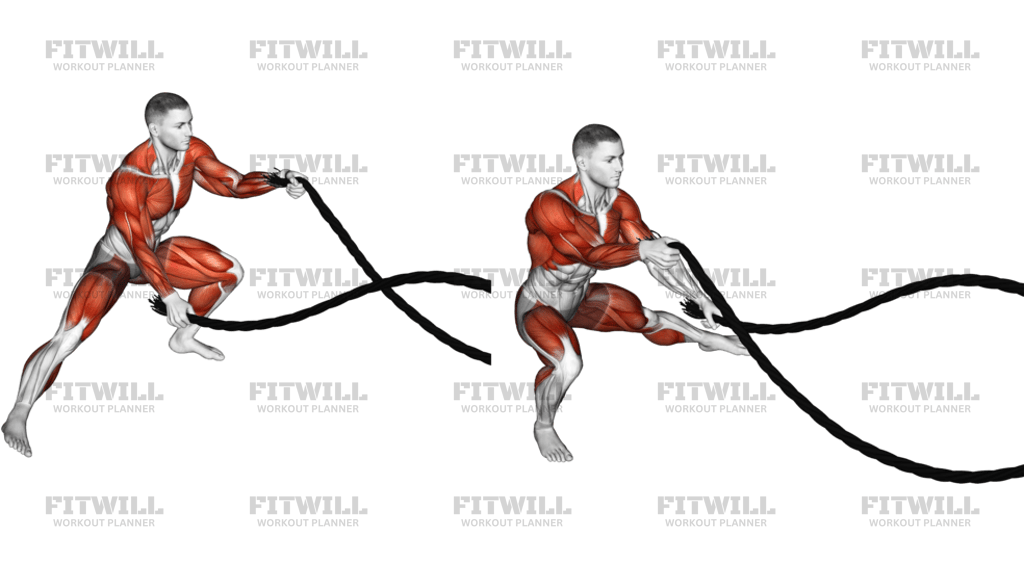
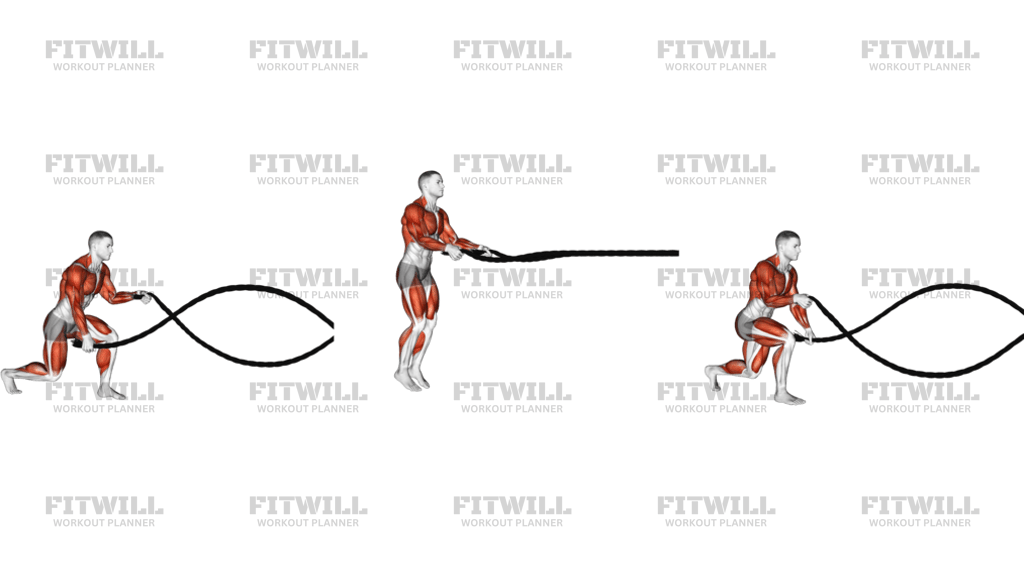
Battling Ropes Alternate Arms Side Lunge is a dynamic conditioning drill that combines alternating rope waves with a lateral lunge shift. It trains the shoulders, arms, upper back, grip, and trunk while the legs and hips work hard to control the side-to-side stance. The movement is useful when you want power, coordination, and lower-body involvement in the same exercise rather than just straight-ahead rope slams.
The setup matters because the rope anchor, handle length, and your distance from the anchor determine how much slack and tension you have before each wave. Stand in an athletic position with the knees soft, chest tall, and feet wide enough to step into either side lunge without losing balance. Holding one rope end in each hand, start with enough space to keep the rope moving smoothly as you shift laterally.
Each repetition should feel like a controlled transfer from one side to the other. As you step or sink into the side lunge, keep the opposite arm driving the rope so the waves stay alive while your hips lower. The torso should stay braced and slightly forward without folding at the waist. Finish the rep by pushing the floor away, returning to a centered stance, and alternating to the other side with the next wave sequence.
Because the drill is fast and rhythmic, quality breaks down quickly if the ropes are too heavy or the stance gets too narrow. Use a rope load that lets you keep the wave pattern crisp while the side lunge stays clean and shallow enough to control. The goal is not to collapse into the hip or swing the torso side to side; the goal is to coordinate the legs, hips, and arms under steady tension.
This exercise fits well in conditioning blocks, athletic warmups, or accessory work when you want to raise heart rate and challenge lateral control at the same time. It is especially useful for sports and general fitness programs where quick feet, hip stability, and upper-body endurance matter. Keep the movement pain-free, control the return to center, and stop the set when the rope rhythm or lunge position starts to fall apart.
[ Workout Log & Planner ]
Put your next workout in Fitwill
Keep your plan and training log ready when you are.


Instructions
- Stand facing the rope anchor with one rope end in each hand, feet about shoulder width, knees soft, and chest tall.
- Step back far enough that the ropes have tension but still leave room for smooth alternating waves.
- Brace your trunk, set your shoulders down and back, and keep a slight athletic hinge in your hips.
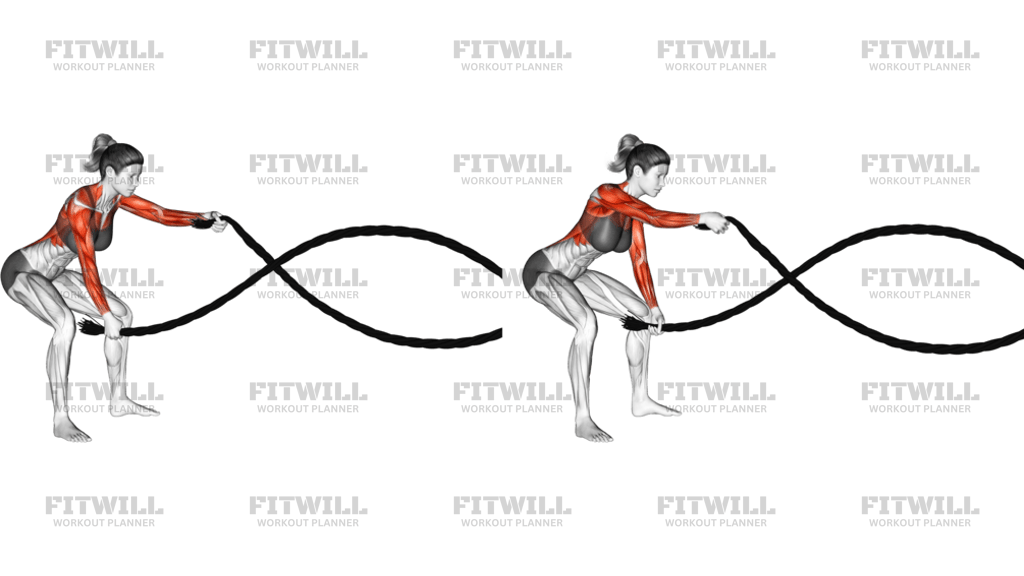
- Start alternating the arms so one rope rises as the other drops, creating a steady wave pattern.
- As you keep the waves moving, shift your body into a side lunge toward one side by bending that knee and sending the hips back.
- Keep the opposite leg straighter and the working foot planted flat enough to stay balanced through the lunge.
- Drive through the bent leg to return to the center, then shift into the other side lunge on the next wave sequence.
- Keep breathing in a steady rhythm, exhaling through the working phase and maintaining rope speed without jerking the torso.
- Finish the set by lowering the ropes under control and stepping back to a neutral stance.
Tips & Tricks
- Choose a rope thickness and anchor distance that let you maintain clean alternating waves while you lunge.
- Keep the lunge depth controlled; if your torso collapses or the back heel lifts aggressively, shorten the range.
- Let the arms work independently, but keep the shoulders quiet so the waves come from the elbows and hands rather than shrugging.
- Stay light on the floor and push back to center from the bent leg instead of swinging your body across.
- If the rope slap gets messy, slow the cadence before you add more lunge depth or speed.
- Use a slightly wider stance than you would for straight rope waves so the hips have room to shift laterally.
- Keep your gaze forward and your ribcage stacked over the pelvis so the side lunge does not turn into a forward fold.
- Stop the set when you can no longer keep both the rope rhythm and the knee alignment clean.
Frequently Asked Questions
What does Battling Ropes Alternate Arms Side Lunge train?
It blends upper-body conditioning with lateral lower-body work, so the shoulders, arms, grip, hips, and trunk all contribute.
How far should I stand from the rope anchor?
Stand far enough away that the ropes stay under tension while you still have room to step or sink into each side lunge without losing the wave.
Should the wave pattern stay fast or controlled?
Controlled first. A steady alternating wave with clean side lunges is better than chasing speed and letting the torso twist.
How deep should the side lunge be?
Go only as deep as you can while keeping the planted foot stable, the knee tracking cleanly, and the rope rhythm intact.
What are the most common mistakes with the rope handles?
People often shrug the shoulders, grip too hard, or let both handles move together. Keep the handles moving independently and the shoulders relaxed.
Can beginners do this movement?
Yes, if they use a lighter rope and a smaller lunge range. The key is learning the timing between the alternating waves and the side shift.
What should my legs and hips do during the lunge?
The working leg bends and the hips shift back into the side lunge, while the other leg stays more extended so you can return to center with control.
How can I make the exercise harder?
Increase rope speed, use a thicker rope, or make the side lunge slightly deeper as long as the wave pattern and knee alignment stay clean.