Feet Elevated Pike Push-Up
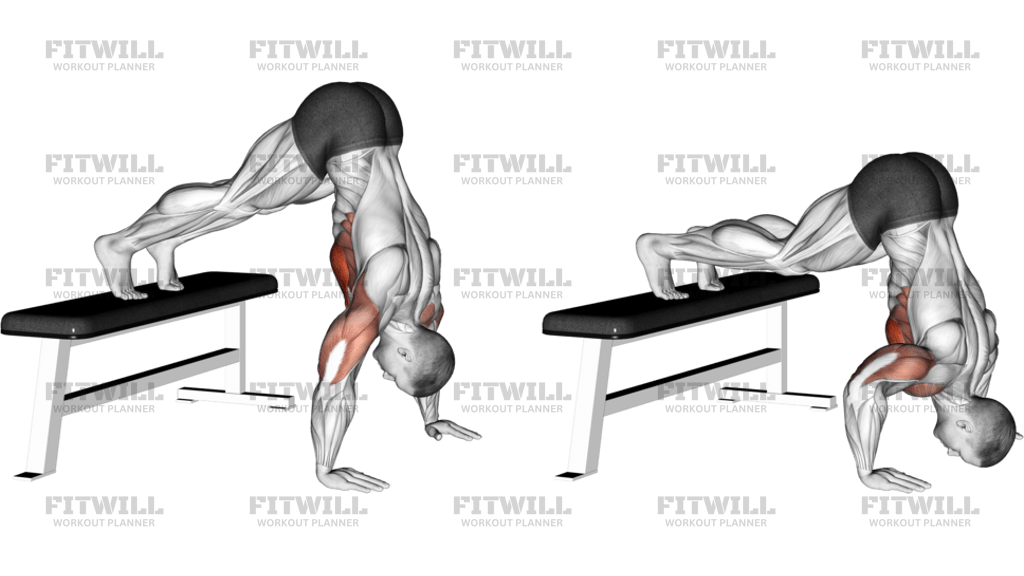
Feet Elevated Pike Push-Up is a bodyweight vertical pressing exercise performed with the hands on the floor and the feet supported on a bench. The elevated feet shift more of your body weight toward your shoulders and make the press harder than a standard pike push-up, so the movement is useful when you want a challenging shoulder-focused push without weights or a machine.
The exercise is built around an inverted V shape: hips high, legs straight, and the head moving down between the hands. That setup matters because the line of force changes as soon as the hips sag or the elbows flare. When the shoulders stay stacked over the hands and the torso stays braced, the front delts and triceps do most of the work while the upper chest and core help stabilize the position.
A clean rep starts with a controlled descent. Lower your head toward the floor in front of or slightly between the hands, then press the floor away until the elbows are straight again and the shoulders are active at the top. The goal is not to collapse into the bottom or bounce off the floor; it is to own the same path on every rep and keep pressure through the palms and shoulders the entire time.
This variation is commonly used for shoulder strength, pressing endurance, and progression toward harder inverted pressing work. It is also a good option when you want to train overhead pressing mechanics with minimal equipment. Because the feet are elevated, the leverage gets more demanding as the bench height increases, so foot placement and shoulder tolerance should guide how hard you make it.
Use a height and range of motion that let you keep your neck long, your ribs controlled, and your elbows tracking in a path you can repeat. If the head-to-floor position causes discomfort or the shoulders lose control, reduce the foot elevation or shorten the range. The best set is the one where each rep looks and feels the same from the first repetition to the last.
[ Workout Log & Planner ]
Put your next workout in Fitwill
Keep your plan and training log ready when you are.


Instructions
- Place your feet on a sturdy bench or box and walk your hands forward until your body forms a high pike shape with straight legs and hips stacked over your shoulders.
- Set your hands on the floor slightly wider than shoulder width, spread your fingers, and press firmly through the whole palm for stability.
- Brace your midsection and keep your ribs tucked so your lower back does not overextend as you lower.
- Bend your elbows and let your head travel down toward the floor just in front of or between your hands.
- Keep your forearms angled under control and avoid turning the rep into a wide push-up.
- Stop when your head is close to the floor or your shoulder position starts to break down, whichever comes first.
- Press the floor away and drive your shoulders back to the top until your elbows are straight but not locked hard.
- Exhale as you press up, inhale as you lower, and keep the same tempo for every rep.
- Reset the pike position before the next repetition if your hips drift or your feet slide on the bench.
Tips & Tricks
- Think of this as an overhead press with your body, not as a chest push-up.
- A higher foot position makes the press more vertical and usually more difficult on the shoulders.
- Keep your head moving forward and down, not straight between your hands like a vertical dive.
- If your elbows flare straight out, the rep gets sloppy and the shoulder joint takes more stress.
- Use a small bend in the knees only if it helps you keep the hips high and the spine controlled.
- Let the top position finish with active shoulders, not a relaxed hang between reps.
- If your neck feels jammed, shorten the range and keep the chin slightly tucked.
- Slow the lowering phase so you do not drop into the bottom position.
- Stop the set when you can no longer keep the pike shape or press with both shoulders evenly.
Frequently Asked Questions
What does Feet Elevated Pike Push-Up train most?
It mainly trains the shoulders and triceps, with the upper chest and core helping to stabilize the body.
Why are the feet elevated on a bench?
Elevating the feet shifts more body weight toward the hands and makes the press angle more challenging than a floor pike push-up.
Where should my head go during the rep?
Lower the head toward the floor just in front of or between the hands, then press back up along the same path.
How wide should my hands be?
A hand position slightly wider than shoulder width usually gives enough space to lower the head without collapsing the elbows outward.
Is this more like a push-up or a handstand push-up?
It is a bridge between the two. The elevated pike position teaches overhead pressing mechanics before you move to a more vertical inverted press.
Can beginners use this exercise?
Yes, but beginners may need a lower foot elevation or a shorter range of motion to keep the shoulders in control.
What is a common mistake with the hips?
Letting the hips drop turns the movement into a weak push-up pattern and reduces the vertical pressing demand.
How do I make the exercise harder?
Increase the bench height, slow the lowering phase, or add reps while keeping the same strict pike shape.