Sit-Up With Chair Assisted
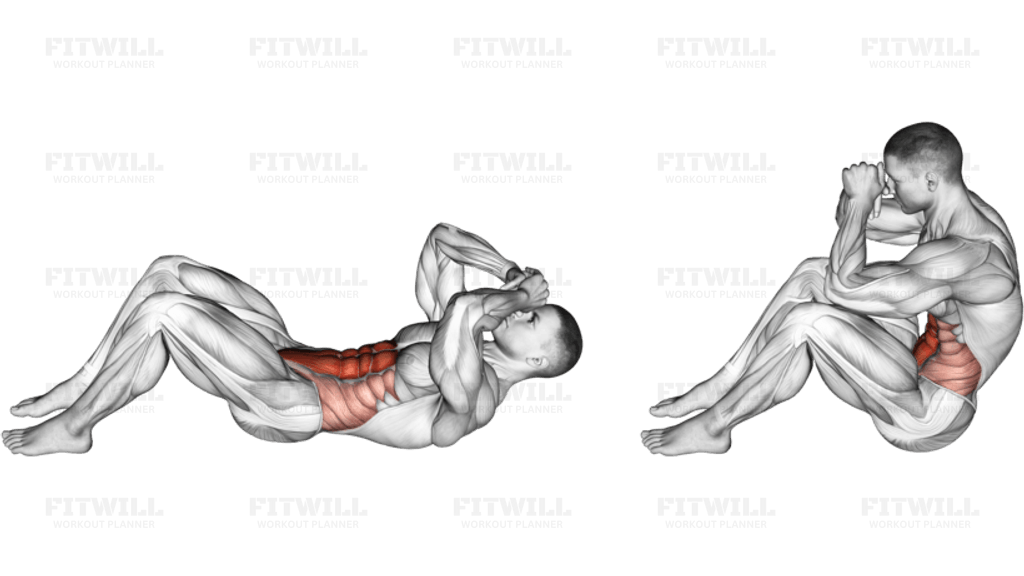
Sit-Up With Chair Assisted is a bodyweight floor sit-up performed with the feet anchored under a sturdy chair. The chair gives you a fixed point to brace against so you can train trunk flexion with less sliding and less chance of losing position at the bottom of the rep. That makes the movement useful when you want a true sit-up pattern, not just a short crunch.
The exercise mainly targets the rectus abdominis, with the obliques and hip flexors helping stabilize the torso and finish the ascent. In anatomy terms, the main work comes from the Rectus abdominis, with support from the External obliques, Iliopsoas, and Transversus abdominis. The chair setup matters because the feet need to stay anchored without forcing the knees or hips into an awkward position.
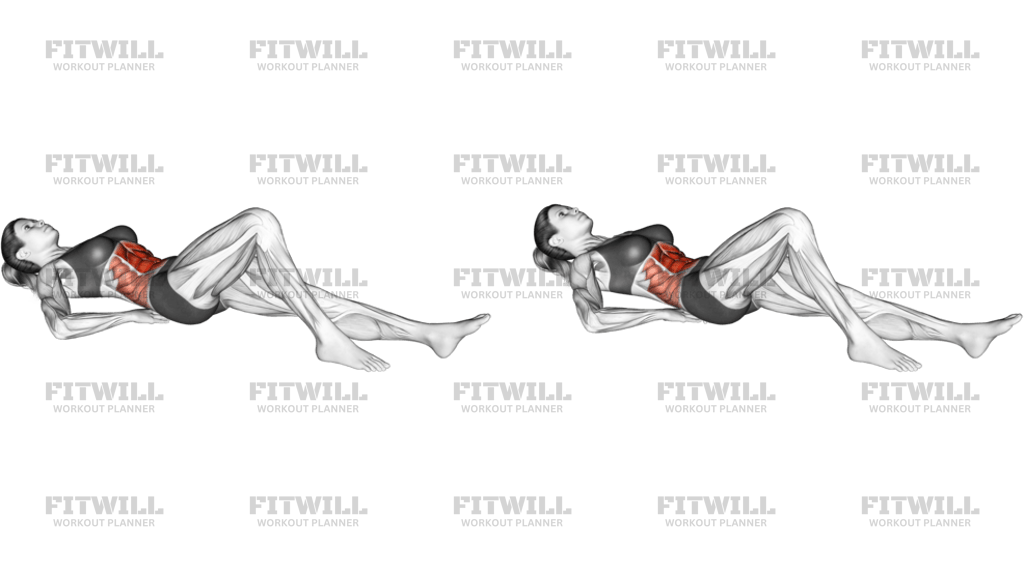
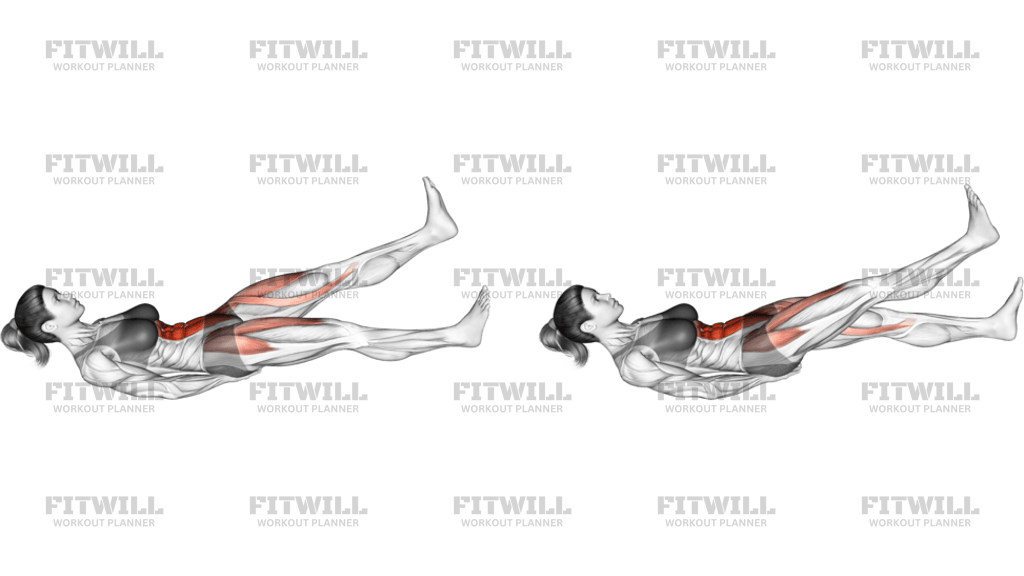
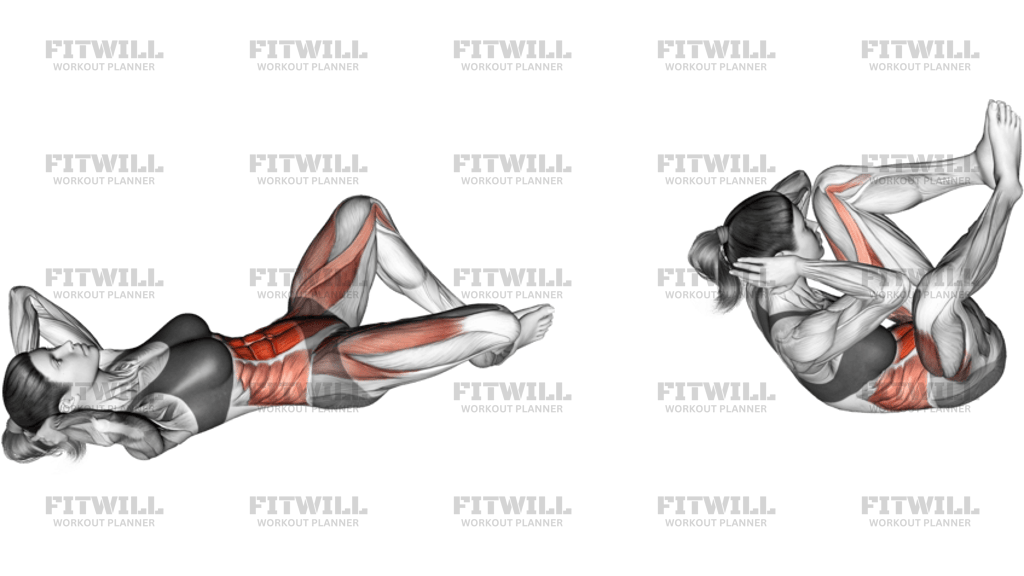
Start on the floor with your back down, knees bent, and the lower part of your feet or toes secured under the front legs of the chair. Cross your arms over your chest or keep your fingertips lightly at your temples. From there, brace your midsection and curl your shoulders and rib cage up toward your thighs, then lower yourself with control until your shoulder blades return to the floor.
Use this variation for home core work, beginner sit-up practice, or conditioning circuits where you want a clear anchor for the feet. Keep the chair heavy and stable enough that it does not slide, and keep the rep smooth so the abs do the work instead of momentum. If the neck, lower back, or hip flexors take over, shorten the range and tighten the setup before continuing.
Fitwill
Log Workouts, Track Progress & Build Strength.
Achieve more with Fitwill: explore over 9600 exercises with images and videos, access built-in and custom workouts, perfect for both gym and home sessions, and see real results.
Start your journey. Download today!




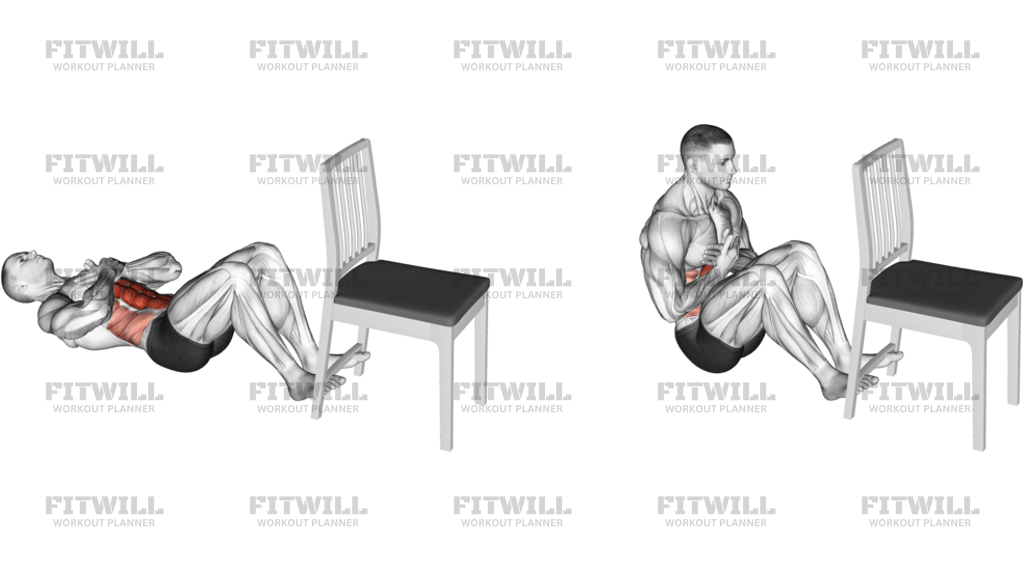
Instructions
- Place a sturdy chair in front of you and sit on the floor facing away from it, then slide your toes or lower feet under the front legs so the chair can anchor them firmly.
- Lie back with your knees bent, heels on the floor, and your back flat on the ground; keep your arms crossed over your chest or fingertips lightly at your temples.
- Set the chair so it does not wobble or slide, and make sure your feet are secured without jamming the ankles into the chair legs.
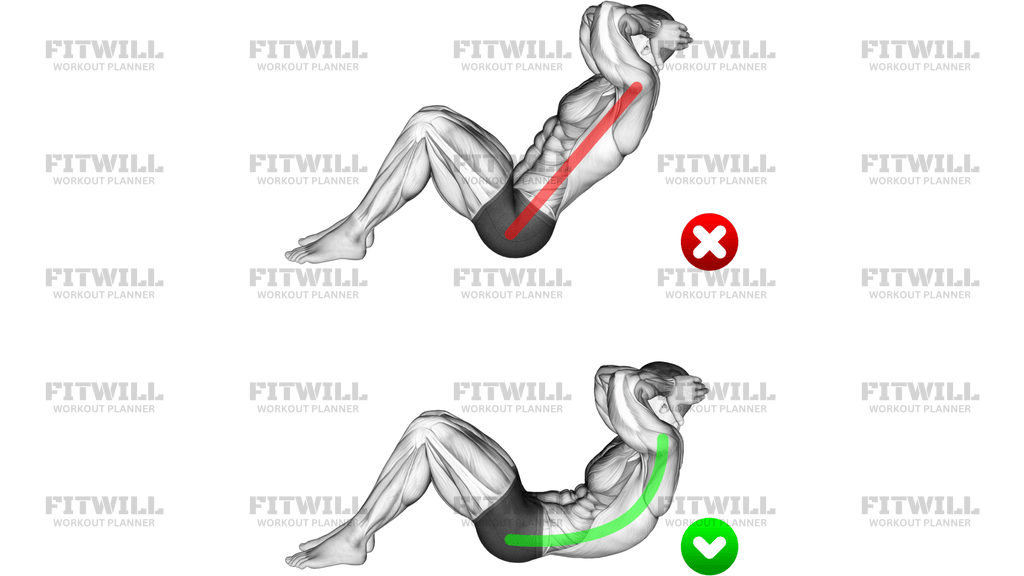
- Brace your abs before you start and keep your chin slightly tucked so your neck stays long.
- Exhale and curl your head, shoulders, and upper back off the floor, lifting your rib cage toward your thighs instead of jerking with your hips.
- Continue the sit-up until you reach a tall seated position while keeping the feet anchored and the chair stable.
- Pause briefly at the top, then inhale and lower yourself one vertebra at a time until your shoulder blades touch the floor again.
- Reset your brace before the next rep, and stop the set if the chair shifts, your lower back arches, or your neck starts to pull.
Tips & Tricks
- Use a heavy chair with a wide base; a light chair can skid as soon as you drive upward.
- Keep the feet anchored low under the chair legs so the knees stay bent and the ankles do not get forced into a bad angle.
- Crossing the arms over the chest usually keeps the neck quieter than pulling behind the head.
- Think about bringing the rib cage toward the pelvis instead of trying to throw the torso upward fast.
- If the hip flexors take over, move the feet a little farther from the chair and keep the lower back glued down longer on the descent.
- Lower with control until the shoulder blades, not the whole back, return to the floor.
- Use an exhale through the hardest part of the ascent so the abs stay braced through the middle of the rep.
- Stop the set as soon as the chair starts moving or your reps become a swing instead of a curl.
Frequently Asked Questions
What muscles does Sit-Up With Chair Assisted work most?
It primarily trains the rectus abdominis, with the obliques and hip flexors helping during the lift.
Where should my feet go under the chair?
Slide the toes or lower part of the feet under the front legs of a sturdy chair so they stay anchored without forcing the ankles.
Should I keep my hands behind my head?
Crossing the arms over the chest or keeping light fingertips at the temples is usually safer because it reduces neck pulling.
How high should I come up on each rep?
Come all the way to a tall seated position if you can do it without yanking with the hips or losing the anchor on the chair.
Is this a good beginner sit-up variation?
Yes. The chair gives the feet a stable anchor, which can make the sit-up easier to learn as long as the setup stays secure.
What if the chair slides during the set?
Use a heavier chair or place it against a wall, because a moving anchor turns the rep into a compensation exercise.
Why do my hip flexors feel this more than my abs?
That usually means the feet are set too close or the rep is being driven too much from the hips instead of the rib cage curling up.
How can I make this harder without changing equipment?
Slow the lowering phase, pause at the top, or keep the arms crossed tighter so the abs have to control more of the motion.