Standing Upper Body Rotation
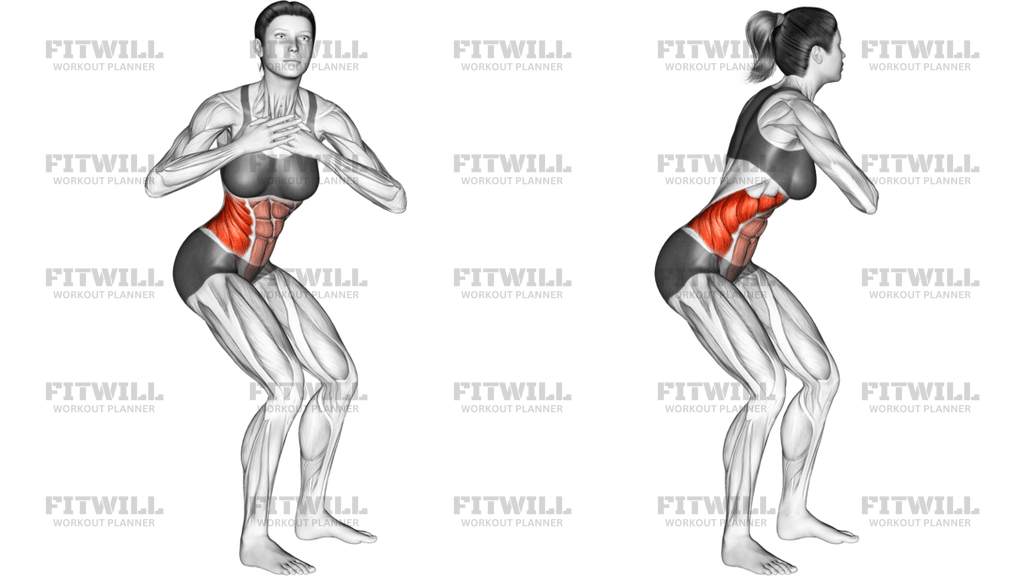
Standing Upper Body Rotation is a bodyweight trunk-control exercise that trains you to rotate the ribcage over a mostly fixed pelvis while keeping the feet planted and the knees softly bent. The visible target in the movement is the waist, but the real value comes from teaching the torso to twist without losing posture, balance, or breathing rhythm.
This drill emphasizes the obliques, with the abs, deep core, and lower back working together to keep the spine organized as you turn. In anatomy terms, the external obliques do most of the rotation work, while the rectus abdominis, erector spinae, and transversus abdominis help stabilize the trunk. Because the exercise is performed standing, it also exposes any tendency to sway, lean, or let the hips drift instead of rotating cleanly through the midsection.
The setup matters more here than in many people realize. A short athletic stance with a small knee bend gives you a stable base, and bringing the hands across the chest keeps the shoulders from taking over the motion. From there, each repetition should feel like the ribcage turns as one unit while the pelvis stays mostly forward. If the hips spin aggressively, the range may look bigger, but the work shifts away from the waist and into momentum.
Use a controlled, moderate rotation rather than forcing a max twist. The goal is smooth left-to-right or side-to-side torso movement with consistent tension through the midsection and no jerking at the end range. Breathing should stay calm enough that you can brace before the turn, rotate, and return without losing the stacked position of ribs over hips. That makes the exercise useful for warm-ups, core circuits, rehab-style control work, and low-load accessory training.
Standing Upper Body Rotation is especially helpful when you want a simple standing option that challenges rotation without lying on the floor or loading the spine with external weight. It is appropriate for beginners as long as the movement stays small and deliberate. It becomes less useful when the torso collapses, the knees lock, or the shoulders whip the body around faster than the core can control.
[ Workout Log & Planner ]
Put your next workout in Fitwill
Keep your plan and training log ready when you are.


Instructions
- Stand tall with your feet about shoulder-width apart and keep a soft bend in both knees.
- Bring your hands to your chest or lightly in front of your shoulders so the arms stay relaxed.
- Stack your ribs over your hips and brace your midsection before you start the first turn.
- Rotate your upper body to one side while keeping both feet planted on the floor.
- Let the shoulders and ribcage turn together instead of reaching with one arm or shrugging the neck.
- Pause briefly at the end of the rotation without bouncing or forcing a bigger range.
- Reverse the motion slowly and bring the torso back through the center under control.
- Repeat to the other side with the same range, tempo, and posture.
- Keep breathing steadily and reset your stance if the knees lock or the hips start to sway.
Tips & Tricks
- Think of turning your sternum, not swinging your arms; the chest should lead the rotation.
- Keep both heels grounded so the twist comes from the trunk instead of a pivot through the feet.
- A smaller rotation with perfect control is better than a big twist that pulls the low back out of position.
- If your hips drift, reduce the range and keep the pelvis facing mostly forward.
- Maintain a soft knee bend so the pelvis can stay stable and the torso can rotate cleanly.
- Keep the chin neutral and avoid following the rotation with your head too aggressively.
- Use slow turns on the way back to center, because the return phase is where the obliques have to control the motion.
- If you feel the movement in the lower back more than the waist, shorten the range and slow the tempo.
Frequently Asked Questions
What muscle does Standing Upper Body Rotation target most?
The obliques are the main target, especially the external obliques that drive trunk rotation.
Can beginners perform this exercise?
Yes. Beginners should keep the stance narrow enough to stay balanced and rotate only as far as they can without losing control.
Should my feet stay planted during the rotation?
Yes. The feet should stay flat and quiet so the torso does the work instead of the hips and ankles.
What is the most common mistake with this exercise?
People usually twist by swinging the hips or leaning backward instead of rotating the ribcage over a stable pelvis.
Should I hold my hands in a specific position?
Keeping the hands crossed at the chest or lightly in front of the shoulders works well because it reduces arm momentum.
Why are the knees slightly bent in the image?
The soft knee bend helps you stay balanced and keeps the pelvis from locking so the torso can rotate more cleanly.
Is this more of a strength exercise or a mobility drill?
It can serve both purposes, but in this bodyweight version it is mainly a controlled rotation and core-stability drill.
What should I do if I feel it in my lower back?
Reduce the range of motion, keep the ribs stacked over the hips, and slow the turn so the movement stays in the waist.