L-Sit On Floor
L-Sit On Floor is a bodyweight core hold built from a seated floor support position with the hands planted beside the hips and the legs extended straight in front. The exercise looks simple, but the demand is high: your torso has to stay tall, your shoulders have to stay pressed down, and your hip flexors and abs have to work together to keep the legs lifted without collapsing through the spine.
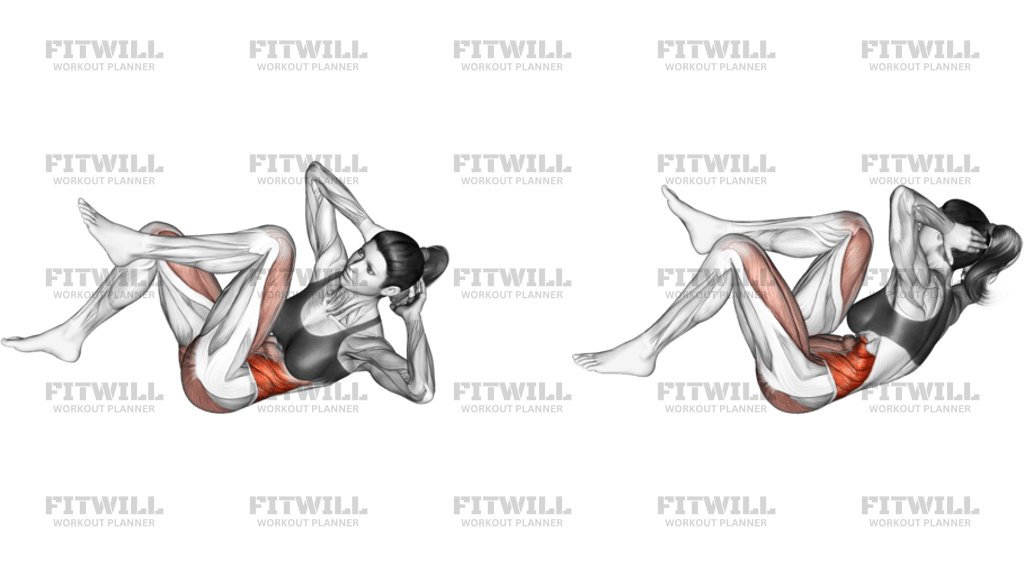
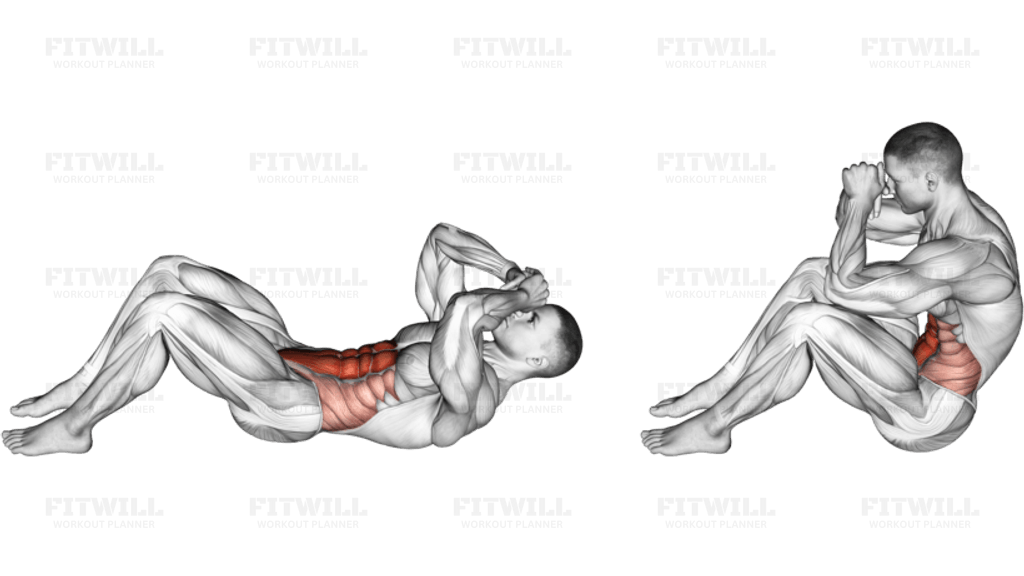
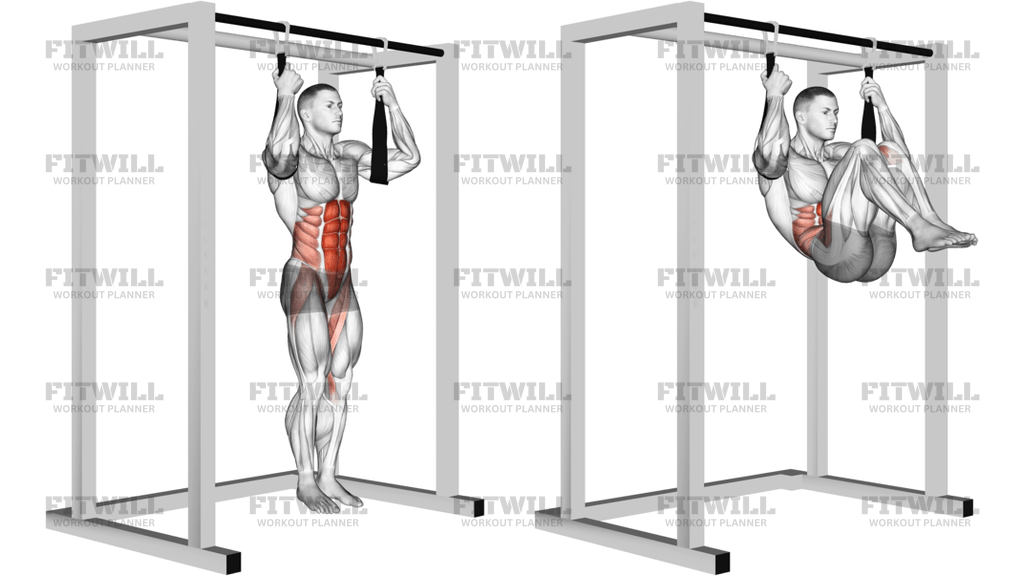
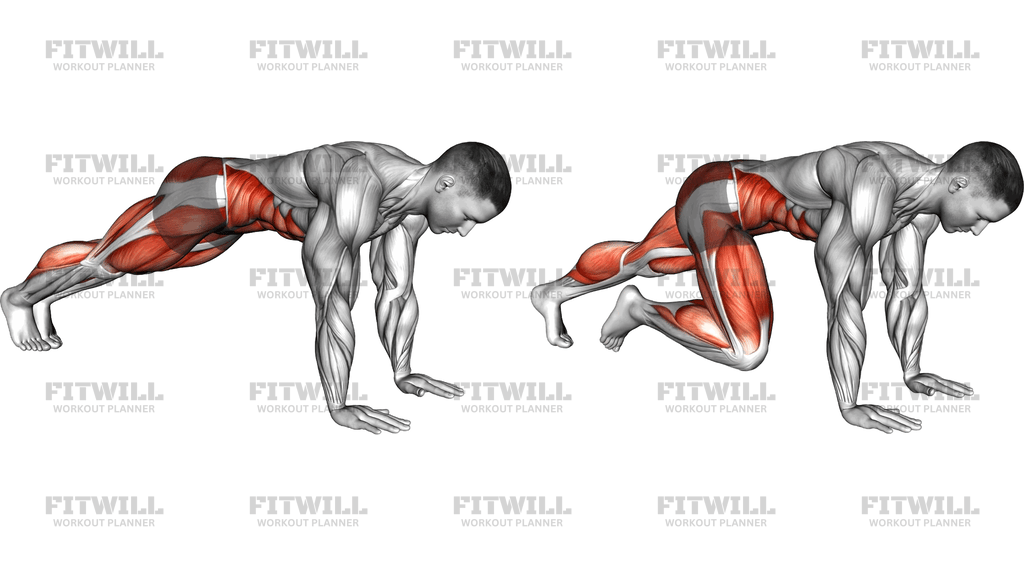
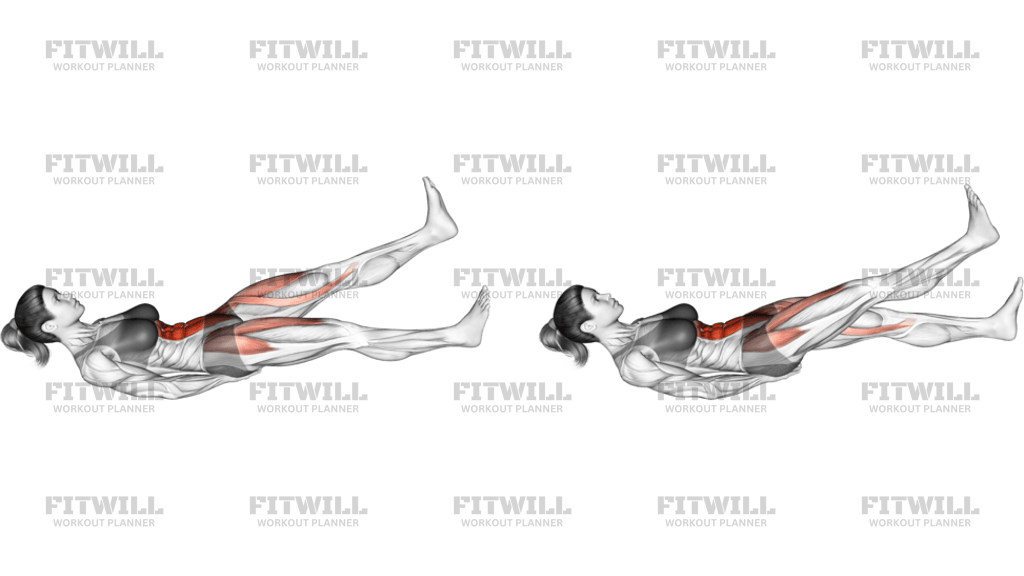
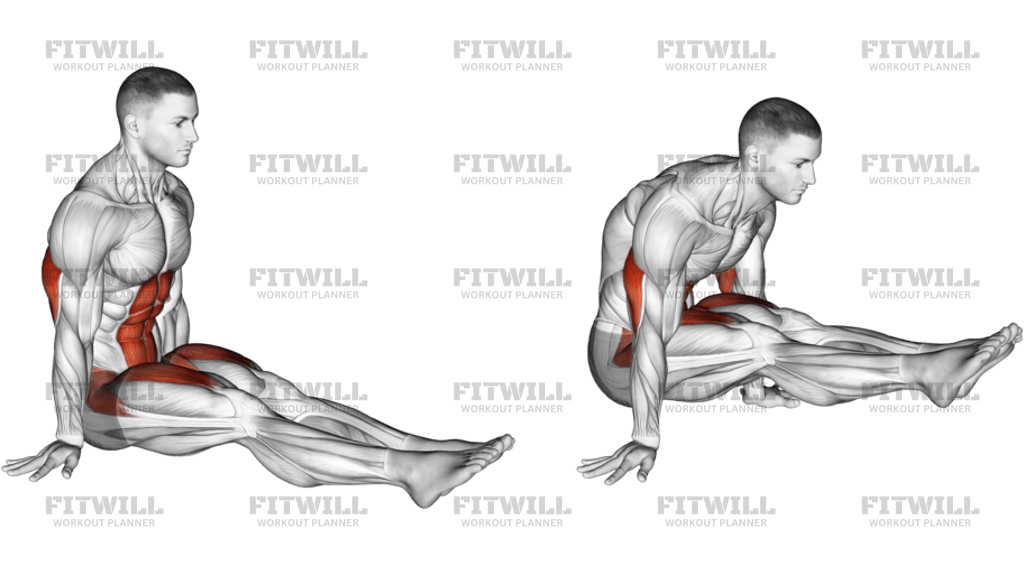
The image shows the key shape clearly. You begin with your palms on the floor slightly behind or beside the hips, elbows locked, chest lifted, and legs straight out in front. From there, you actively push the floor away, depress the shoulders, and raise the heels and feet so the legs hover cleanly. The goal is not to swing into position, but to create a controlled support hold where the trunk stays rigid and the legs stay quiet.
This is a strong choice for building compression strength, straight-leg core control, and shoulder support capacity. It is common in calisthenics, gymnastics, and core-focused strength work because it exposes weak links quickly: if the hip flexors fatigue, the legs drop; if the abs lose tension, the pelvis tips; if the shoulders lose support, the whole position softens. For that reason, setup matters more here than in many other floor exercises.
A good L-sit is short, crisp, and deliberate. Keep the neck long, the rib cage down, and the hands rooted into the floor while you breathe behind a braced midsection. If a full leg lift is too demanding, bend the knees or hold one leg at a time while keeping the same support pattern. Progress comes from longer holds, cleaner leg extension, and less shoulder strain, not from kicking the legs up or arching through the lower back.
Use this movement when you want a strict core finisher, a compression drill, or a skill-building accessory that carries over to v-sits, leg raises, and other advanced bodyweight positions. It is also useful as a checkpoint for wrist comfort, shoulder support, and trunk control because every part of the body has to contribute without hiding behind momentum.
Fitwill
Log Workouts, Track Progress & Build Strength.
Achieve more with Fitwill: explore over 9600 exercises with images and videos, access built-in and custom workouts, perfect for both gym and home sessions, and see real results.
Start your journey. Download today!




Instructions
- Sit on the floor with your hands flat beside or slightly behind your hips, fingers pointing forward or slightly out, and your legs extended in front of you.
- Lock your elbows, spread the fingers, and press your palms down so your shoulders stay active instead of sinking.
- Set your chest tall, pull your ribs down, and keep the pelvis from tipping forward before you lift.
- Exhale, then drive through the hands to lighten the heels and raise both straight legs off the floor.
- Keep the knees locked, toes pointed, and thighs squeezed together as the legs hover in front of you.
- Hold the top position without rocking or kicking; keep the torso upright and the shoulders depressed.
- Breathe in small controlled breaths while maintaining the brace and keeping the neck relaxed.
- Lower the heels back to the floor with control, then reset the support position before the next hold or repetition.
Tips & Tricks
- Place your hands close enough to your hips that you can press hard without shrugging the shoulders upward.
- If your wrists feel jammed, turn the hands out slightly and spread the load through the whole palm instead of dumping it into the heel of the hand.
- A small lean forward can help the feet float, but do not let the chest fold or the lower back arch to fake the hold.
- Keep the quads active and the knees fully straight; bent knees turn the movement into a much easier tuck variation.
- Point the toes and squeeze the legs together so the hold feels like one rigid shape rather than two separate legs.
- Use short holds of 3-10 seconds if your form breaks quickly; quality matters more than duration here.
- If the legs will not clear the floor, keep one heel lightly down and work on lifting the other leg first.
- Stop the set when your shoulders start to sink or your hips start drifting forward and you lose the clean L shape.
Frequently Asked Questions
What muscle does L-Sit On Floor target most?
The abs are the main target, especially the rectus abdominis, with strong help from the hip flexors and obliques.
Can beginners perform this exercise?
Yes, but many beginners need a tuck hold or one-leg-at-a-time version first. The floor L-sit is demanding on both core compression and shoulder support.
Where should my hands be in the floor L-sit?
Place your hands beside or slightly behind your hips, with the palms flat and the elbows locked so you can push the floor away.
Why do my shoulders fatigue before my abs?
In this position, the shoulders have to support bodyweight while the legs are lifted. If the shoulders sink, the hold collapses even if the abs still have some work left.
Should my legs stay straight the whole time?
Yes for the full L-sit. If straight legs are too hard, bend the knees and build up to a full extension instead of kicking the legs up.
What is a common mistake in the floor L-sit?
Letting the lower back arch, shrugging the shoulders, or using a kick to get the legs off the floor are the most common breakdowns.
How long should I hold each rep?
Hold only as long as you can keep the legs straight, the ribs down, and the shoulders active. Short, clean holds are better than long sloppy ones.
What can I use if my wrists do not tolerate the floor well?
Use push-up handles or parallettes for a more neutral wrist angle, or start with a tucked seated support hold.