Split Sprinter High Lunge
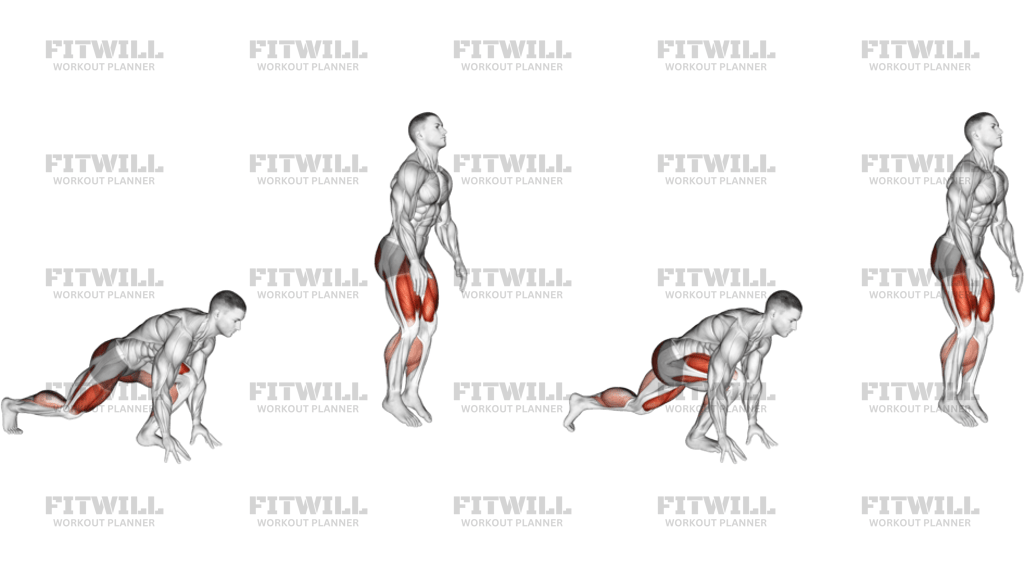
Split Sprinter High Lunge is a bodyweight lunge pattern that starts in a low sprinter stance and rises into a tall split position. It is useful when you want a single-leg drill that blends hip strength, glute engagement, balance, and trunk control without external load. The movement asks you to organize the front foot, back leg, pelvis, and ribcage at the same time, which makes it a practical choice for warmups, movement prep, and controlled lower-body training.
The low start changes the emphasis compared with a simple standing lunge. With your hands on the floor and the torso pitched forward, the front hip and glute have to help you stand out of the bottom while the back leg stays active through the toe. That combination gives the exercise a strong glute and hamstring feel, while the core and lower back work to keep the torso from collapsing or twisting as you rise.
A clean rep begins with a stable split stance: front foot planted flat, back toes grounded, and the hands under the shoulders or lightly beside the front foot. From there, brace the midsection, keep the hips square, and press the floor away to lift into a tall lunge. The goal is not to lunge forward aggressively, but to drive up through the front heel and back toes so the torso finishes stacked over the hips instead of drifting into the low back.
Because the exercise moves from a low support position to a tall position, it rewards control more than speed. A shorter stance makes the front knee and hip easier to manage, while a longer stance increases the stretch on the front hip and the demand on the glute. If the back knee is close to the floor, keep it light and avoid crashing into it; if balance is the limiter, use a wall, rack, or bench for a fingertip assist until the pattern feels smooth.
Split Sprinter High Lunge works well in circuits, mobility-focused strength work, and unilateral leg training where you want clean repetitions without heavy loading. It can also be a useful regression or teaching drill before loaded split squats, lunges, or step variations. Stay within a pain-free range, keep the pelvis level, and finish each rep with a controlled reset so every repetition looks and feels the same.
[ Workout Log & Planner ]
Put your next workout in Fitwill
Keep your plan and training log ready when you are.


Instructions
- Start in a split stance with your front foot flat, back toes planted, and both hands on the floor under your shoulders or just inside the front foot.
- Set the front knee over the middle toes, keep the back leg long, and square your hips toward the floor instead of opening them to the side.
- Brace your midsection and keep your chest long so your ribcage stays stacked over your pelvis in the low sprinter position.
- Inhale, then press through the front heel and the back toes to lift your hips and chest together.
- Drive up into a tall split lunge until the front leg is straight but not locked and the back heel stays lifted.
- Squeeze the front glute at the top without leaning backward or overarching your lower back.
- Lower under control by bending both knees and hinging the hips back until your hands return to the floor.
- Reset your foot pressure and body position before the next rep, or switch sides if you are training one side at a time.
Tips & Tricks
- Keep the front heel heavy as you rise; if you roll onto the toes, shorten the stance slightly.
- Think about pushing the floor away with the front leg instead of lunging forward with the torso.
- Square the belt line to the floor; if one hip opens up, reduce the depth and slow the transition.
- Use only light fingertip support if balance is shaky, because too much hand pressure turns the drill into a crawl.
- Keep the front knee tracking toward the second or third toe so it does not cave inward on the ascent.
- Stop at the tall position with the ribs stacked, not with the low back arched to fake extra range.
- If the back knee brushes the floor, let it hover or use a pad so the rep stays smooth instead of bouncy.
- Move slowly enough that you can feel the front glute finish the standing phase of each rep.
- A shorter split stance usually makes the movement cleaner; a longer stance increases the hip stretch and balance demand.
Frequently Asked Questions
What does Split Sprinter High Lunge train most?
The front-side glute is the main target, with the hamstrings, core, and lower back helping you stay organized through the rise.
Can beginners perform Split Sprinter High Lunge?
Yes. Beginners usually do best with a shorter stance and light fingertip support on the floor or a nearby bench until the balance pattern feels stable.
How is Split Sprinter High Lunge different from a regular high lunge?
It starts from a lower sprinter-style setup with your hands on the floor, so you have to stand up from the bottom instead of simply stepping into a split stance.
Should my back knee touch the floor in Split Sprinter High Lunge?
It can hover just above the floor or lightly brush down, but avoid crashing into it. A controlled hover keeps tension on the legs and makes the rep smoother.
Where should I feel Split Sprinter High Lunge?
You should feel the front glute and thigh doing most of the work, with a stretch through the back hip flexor as you move from the low position to the tall one.
Why do my hips twist when I stand up?
That usually means the stance is too long, the base is too narrow, or you are pushing harder with one side. Shorten the stance and keep both hip points facing the floor.
Can I load Split Sprinter High Lunge with weights?
Once the bodyweight version is smooth, you can hold light dumbbells at your sides or keep it unweighted for warmups and mobility-focused work.
What is the most common mistake in Split Sprinter High Lunge?
Leaning back at the top and arching the lower back. Finish tall with the ribs stacked over the pelvis instead of trying to lean farther back.