Oblique V-Up On Floor
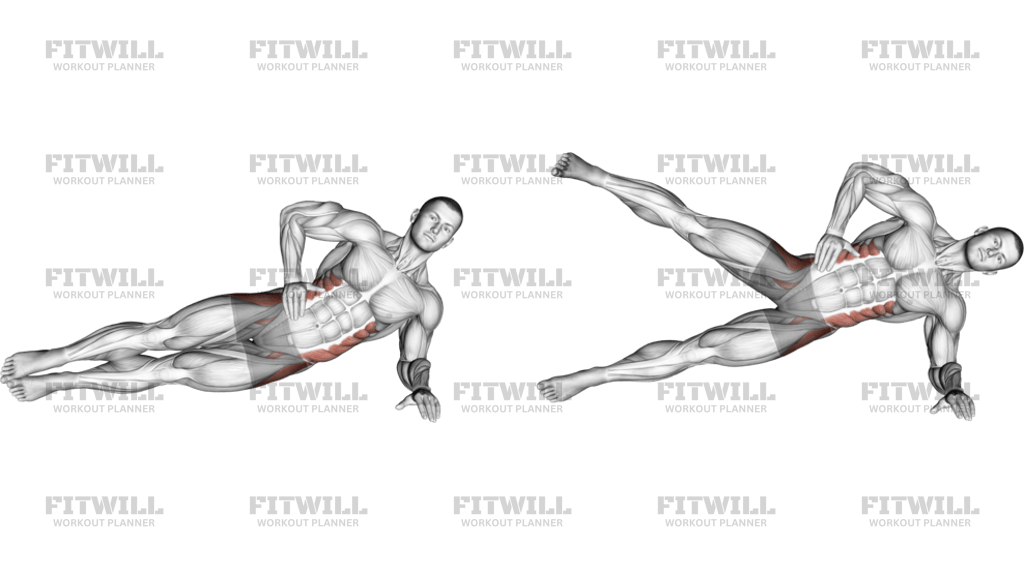
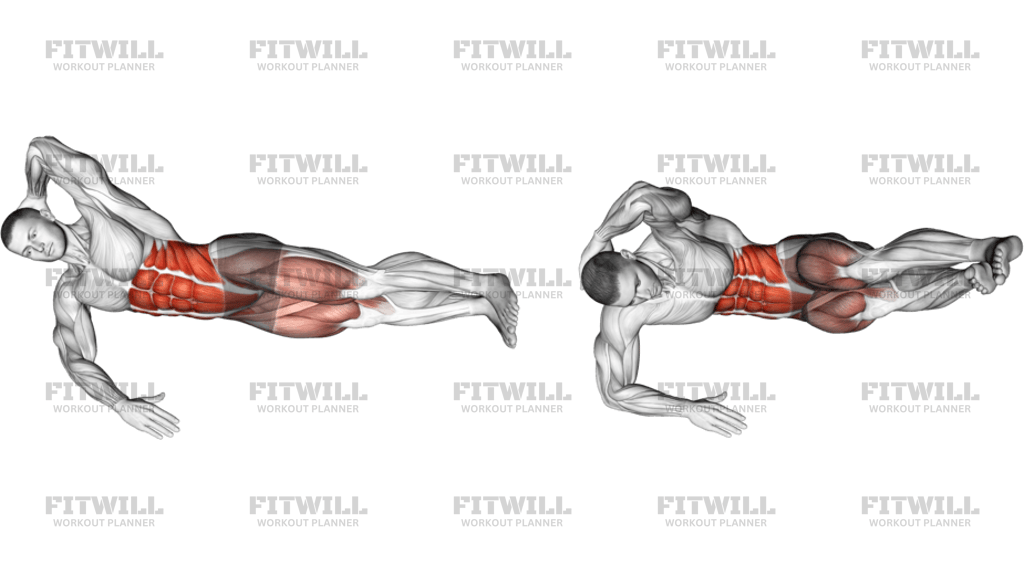
Oblique V-Up On Floor is a bodyweight side-core exercise performed from the floor with one forearm supporting you and the opposite hand placed lightly behind your head. The body stays long at the start, then you shorten through the side waist as the torso and legs move toward each other. It is a simple-looking movement, but the quality of each rep depends on keeping the ribs, pelvis, and shoulder stacked instead of twisting or swinging.
The main training effect comes from the obliques and the rest of the trunk working to flex and stabilize the body through a lateral line. The lift also asks the hip flexors and the glutes to help control the leg position, while the shoulder on the floor has to stay packed and steady. In practice, this makes the exercise useful for building side-body strength, better trunk control, and cleaner midline tension for athletic work, circuits, and accessory core training.
The setup matters because the exercise starts from a supported side-lying or side-plank-like position. Place the forearm directly under the shoulder, keep the neck long, and stack the legs so the torso can move without dumping into the lower shoulder. If the body rolls backward or the hips sag, the obliques lose tension and the rep turns into a loose leg lift instead of a controlled side crunch.
Each repetition should feel like a deliberate shortening from the side of the waist. Lift the torso and legs together, or bring the elbow and legs toward each other through the same arc shown in the image, then pause briefly before lowering with control. The return should be slow enough that you can keep the rib cage down and the pelvis organized. Exhale during the effort phase, reset fully at the bottom, and switch sides so both sides get equal work.
Use this movement when you want a bodyweight core drill that is more demanding than a basic side plank but still easy to load with clean mechanics through tempo, range, and volume. It works well in warm-ups, core finishers, and general conditioning sessions. The safest version is the one you can keep strict from the first rep to the last, with no neck pull, no shoulder shrugging, and no momentum to fake the range.
[ Workout Log & Planner ]
Put your next workout in Fitwill
Keep your plan and training log ready when you are.


Instructions
- Lie on your right side on the floor with your legs straight and stacked, and place your right forearm under your shoulder.
- Set your left hand lightly behind your head, keep your neck long, and stack your ribs over your pelvis before you start.
- Press the right forearm into the floor so the shoulder stays packed and you do not sink into the joint.
- Keep both legs long and lifted just enough to stay active, with the feet together or close together.
- Exhale and lift your torso and legs toward each other in a side V-up motion, bringing the left elbow and left legs toward the same side.
- Pause for a brief squeeze at the top without collapsing the shoulder or rolling onto your back.
- Lower under control until the torso and legs are long again, keeping the ribs from flaring as you return.
- Complete all reps on one side, then switch sides and repeat with the same control.
Tips & Tricks
- Keep the supporting elbow directly under the shoulder so the load stays on the side of the trunk, not the joint.
- Think about shortening the left waist as you lift; do not yank the head toward the knee.
- If you roll backward, turn the chest slightly more forward and keep the hips stacked before each rep.
- Use a smaller leg lift if your hip flexors take over and the obliques stop working.
- Keep the top hand light behind the head so the neck is not doing the crunching.
- Move both the torso and the legs; if only one end moves, the rep turns into a partial side raise.
- Lower slowly enough that you can keep the rib cage down and the side of the waist under tension.
- Stop the set if the shoulder starts to shrug or if the lower hip drops into the floor.
Frequently Asked Questions
What muscles work most in an Oblique V-Up On Floor?
The obliques do most of the work, with the hip flexors, rectus abdominis, glutes, and shoulder stabilizers helping you hold the side position.
Do I have to touch my elbow to my knee or feet?
No. Bring the torso and legs toward each other as far as you can without twisting the body or pulling on your neck.
Should my legs stay straight during the rep?
Yes, mostly straight is the goal. A slight knee bend is fine if tight hamstrings keep you from holding the side line.
Is this a beginner-friendly core exercise?
Yes, if you keep the range small and the movement slow. Beginners can also start with a side crunch or a shorter leg lift.
Why does my lower shoulder feel uncomfortable?
The shoulder should stay stacked over the elbow and packed into the floor. If it feels jammed, reduce the range and avoid sinking into the joint.
What is the biggest mistake people make with this exercise?
Rolling onto the back and using momentum instead of keeping the body side-on is the most common problem.
Should I do both sides?
Yes. Train each side separately so the left and right obliques get the same work and the same range.
How can I make this exercise harder without adding weight?
Slow the lowering phase, pause longer at the top, or extend the legs a little farther away while keeping the side position strict.