Kneeling T Spine Mobility
Kneeling T Spine Mobility is a half-kneeling thoracic rotation drill that uses a dowel, pole, or similar support to open the upper back without turning it into a low-back twist. The exercise is about creating cleaner thoracic rotation and a bit of controlled extension while the pelvis stays organized and the ribs stay stacked over the hips. It is commonly used to warm up pressing sessions, overhead work, rows, crawling patterns, or any program that needs better upper-back movement.
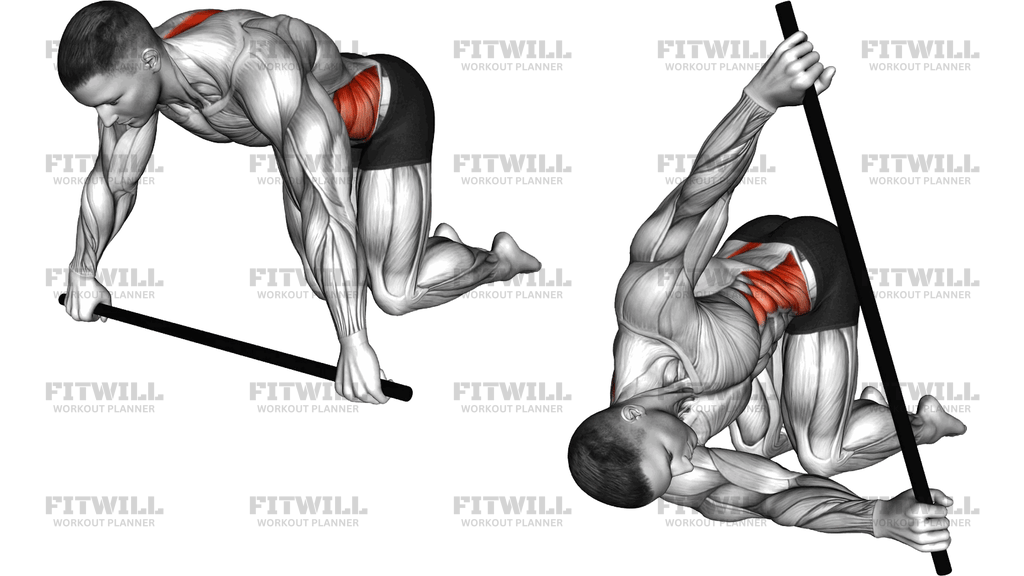
The image shows a split-kneeling setup with one knee down, the other foot planted, and the hands separated on a long bar so the torso can rotate and lengthen through the chest, side body, and upper back. That setup matters because it gives you leverage to reach farther without yanking on the shoulders or collapsing into the lumbar spine. The goal is not to force a huge twist; it is to make the thoracic spine do its share while the lower body stays quiet.
Done well, this mobility drill should feel like a controlled opening through the upper back and ribs, with the front shoulder, lats, and obliques helping guide the position. The back knee and glute help anchor the pelvis, the front foot keeps the stance stable, and the bar gives you feedback on how much rotation you are really creating. If the movement turns into a shrug, a hinge dump, or a sideways lean, the stretch usually shifts away from the thoracic spine and into places that do not need the extra stress.
Use a slow tempo and stay in a pain-free range. Exhale as you rotate and open, then inhale as you return to the starting position with control. Light, precise repetitions are usually more useful than chasing a bigger range on every rep. This makes the drill easy to slot into warm-ups, mobility circuits, recovery days, or as a reset between heavier upper-body sets.
Beginners can use this movement comfortably if they keep the stance narrow enough to feel stable and the bar grip wide enough to avoid strain. People with cranky shoulders, tight lats, or a stiff mid-back usually benefit from reducing the reach first and earning more range over time. The best version of Kneeling T Spine Mobility looks smooth, calm, and repeatable, with the upper back turning as one controlled unit instead of the lower spine doing all the work.
[ Workout Log & Planner ]
Put your next workout in Fitwill
Keep your plan and training log ready when you are.


Instructions
- Set a half-kneeling stance with one knee on the floor, the opposite foot flat in front, and your weight centered between the two support points.
- Hold a dowel or long bar with one hand higher than the other so the bar runs diagonally across your body.
- Keep the front foot planted, the back glute lightly engaged, and your ribs stacked over your pelvis before you move.
- Lean slightly through the hips and let the bar guide your torso into the starting angle shown in the image.
- Rotate through your mid-back as you open the chest and reach the top hand upward and away from the floor.
- Keep the hips quiet and avoid letting the lower back crank the movement open.
- Exhale as you turn into the stretch and pause briefly at the end of the comfortable range.
- Return to the starting position slowly, then repeat for the planned reps before switching sides.
Tips & Tricks
- Keep the front heel rooted so the torso rotates from the upper back instead of drifting forward.
- If your low back starts to pinch, shorten the range and stay taller through the ribs.
- A wider hand spacing on the bar usually makes the rotation smoother and easier on the shoulders.
- Let the chest turn with the reach; do not try to twist only the arm holding the bar.
- Keep the back glute lightly on so the pelvis does not slide open with the rotation.
- Move slowly enough that you can feel where the motion stops in the thoracic spine.
- Use a pad under the kneeling knee if the floor pressure distracts you from the range of motion.
- Treat this like a mobility drill, not a max-effort stretch, and stop before the shoulders or neck tense up.
Frequently Asked Questions
What does Kneeling T Spine Mobility work most?
It mainly targets thoracic rotation and upper-back mobility, with the lats, obliques, shoulders, and glutes helping stabilize the position.
Why is it done in a half-kneeling position?
The split stance helps lock the pelvis in place so the thoracic spine can rotate without the lower back taking over.
Do I need a dowel or long bar for this drill?
A dowel, pole, broomstick, or similar long handle works well because it gives you leverage and a clear reference for how much you are rotating.
Should I feel this in my lower back?
No. A little stretch through the ribs, lats, and upper back is normal, but the lower back should stay calm and mostly quiet.
Is Kneeling T Spine Mobility a stretch or a strength exercise?
It is primarily a mobility drill, but the position also teaches active control through the range instead of a passive hang.
Can beginners use this exercise?
Yes. Beginners usually do best with a shorter reach, a taller torso, and slow breathing until they can keep the pelvis steady.
What is the most common form mistake?
The most common mistake is forcing the twist by arching the low back or shrugging the shoulders instead of rotating through the thoracic spine.
How many reps should I do?
Most people use a few slow reps or breaths per side, focusing on quality and symmetry rather than high volume.