Bodyweight Drop Jump Squat
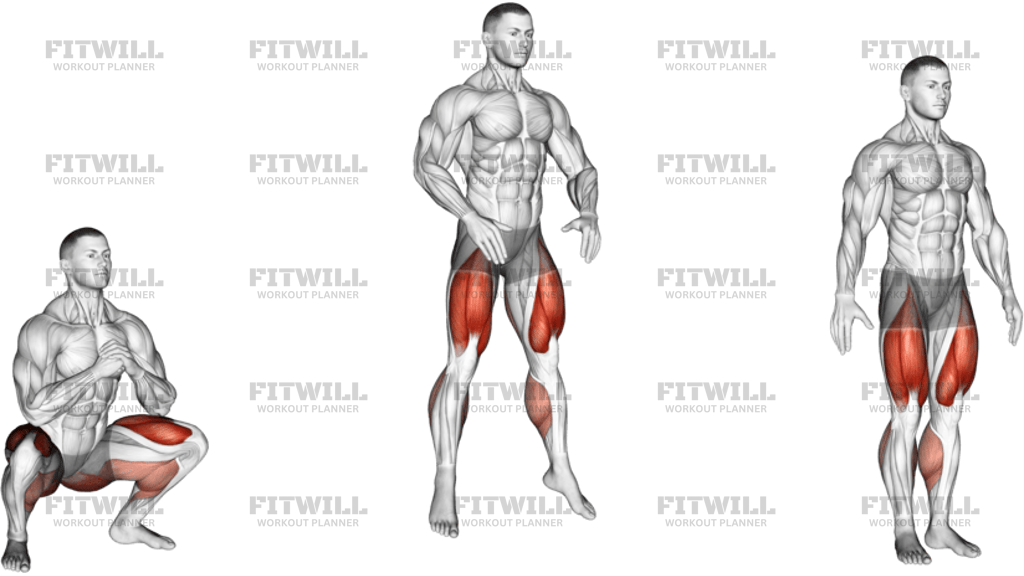
Bodyweight Drop Jump Squat is a bodyweight plyometric squat built around a fast drop into a loaded athletic stance and an explosive drive back to standing or a small jump. It is useful when you want to train lower-body power, landing control, and coordination without adding external load. The exercise also gives you a clear look at how well your hips, knees, and ankles work together under speed.
The main emphasis is on the glutes, with the quads doing a large share of the work as you absorb force and then stand or jump back up. The hamstrings, core, and lower back help keep the torso from folding forward while you change direction quickly. That makes the movement more than just a leg burner; it is a full-body bracing and deceleration drill.
Good results depend on how you land and rebound. Start from a stable, shoulder-width stance, then sink into the squat with the hips back, chest tall, and knees tracking over the toes. The drop should feel quick but controlled, not sloppy or collapsing. If the torso leans too far forward or the heels pop up, the jump becomes less powerful and the landing harder to control.
The rep should finish with an aggressive upward drive through the floor and a soft, quiet landing. Keep the knees slightly bent when you return to the floor so the joints can absorb force instead of snapping straight. Inhaling on the drop and exhaling on the drive can help you stay organized, but the bigger priority is keeping pressure through the midfoot and maintaining balance through the whole sequence.
Bodyweight Drop Jump Squat fits well in a warm-up, power block, or athletic conditioning session where speed and clean mechanics matter more than fatigue. It is not the best choice when you are already exhausted, because tired landings get noisy and unstable. Used well, it teaches you to produce force quickly while staying in control of your hips, knees, and trunk.
[ Workout Log & Planner ]
Put your next workout in Fitwill
Keep your plan and training log ready when you are.


Instructions
- Stand tall with your feet about shoulder-width apart, toes slightly turned out, and your weight balanced through the midfoot and heels.
- Set your chest up, soften your knees, and brace your torso so your ribs do not flare as you start the drop.
- Lower quickly into a deep squat with your hips back and down, keeping your knees tracking in line with your toes.
- Let the legs absorb the drop without letting your heels lift or your lower back round.
- As soon as you reach the bottom, drive forcefully through the floor and extend your hips, knees, and ankles to stand or jump upward.
- Reach full extension at the top only if you can keep the landing controlled; do not turn the rep into a sloppy bounce.
- Land softly on the balls of your feet and let the heels settle, keeping the knees slightly bent to absorb force.
- Reset your stance and breathing before the next rep so each jump starts from a stable position.
- Stop the set if your landings get loud, your knees cave in, or you lose the ability to stick the bottom position.
Tips & Tricks
- Think about landing quietly; a loud landing usually means you are dropping too fast or not absorbing through the hips.
- Keep the knees pressed out in line with the toes so the glutes can help control the descent and takeoff.
- If your heels pop up during the drop, shorten the squat depth until you can keep the whole foot grounded.
- Use a fast but clean drop, not a free fall, so you can reverse direction without collapsing in the bottom.
- Keep the chest proud and the eyes forward to stop the torso from folding over the thighs.
- Only jump as high as you can land well; the quality of the landing matters more than the height of the rep.
- If your lower back feels like it is doing the work, reduce depth and focus on sitting between the hips instead of hinging hard.
- Pause for a breath between reps when needed so each repetition starts from a stable brace instead of a rushed rebound.
- A moderate rep count works better than chasing fatigue, because power and landing mechanics drop quickly once the legs are tired.
Frequently Asked Questions
What muscles does Bodyweight Drop Jump Squat work most?
It mainly targets the glutes and quads, with the hamstrings, calves, and core helping you absorb the drop and drive back up.
Is Bodyweight Drop Jump Squat good for beginners?
Yes, but only if you keep the drop shallow at first and focus on quiet landings. Beginners should master the squat-to-stand pattern before trying to jump aggressively.
Should my heels stay on the floor during Bodyweight Drop Jump Squat?
They should stay down through the drop and takeoff as much as possible. If they lift early, your stance may be too narrow or your squat depth too deep for your mobility.
What is the most common mistake in Bodyweight Drop Jump Squat?
Landing too hard and letting the knees cave inward is the big one. Keep the knees tracking over the toes and absorb the landing through the hips.
How many reps should I do for Bodyweight Drop Jump Squat?
Use low to moderate reps, usually in small sets, because this is a power movement. Once the landing gets slow or noisy, the set is over.
Do I need to jump as high as possible?
No. The goal is a fast, crisp rep with a controlled landing, not just maximum height. A smaller jump with better mechanics is usually the better choice.
Where should I place Bodyweight Drop Jump Squat in a workout?
Put it early in the session, after warm-up, when your legs are fresh and your landings are still sharp. It is not ideal as a last-set burnout.
What can I use instead of Bodyweight Drop Jump Squat?
A regular bodyweight squat or squat jump is a simpler substitute if you want less impact. If you need more power work later, you can progress to loaded jump variations only after landing mechanics are solid.