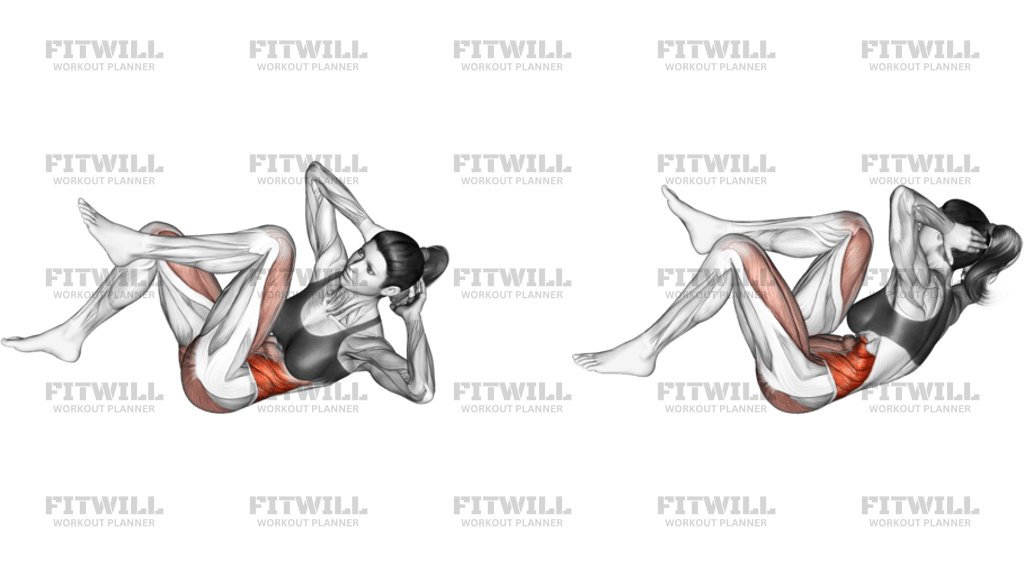
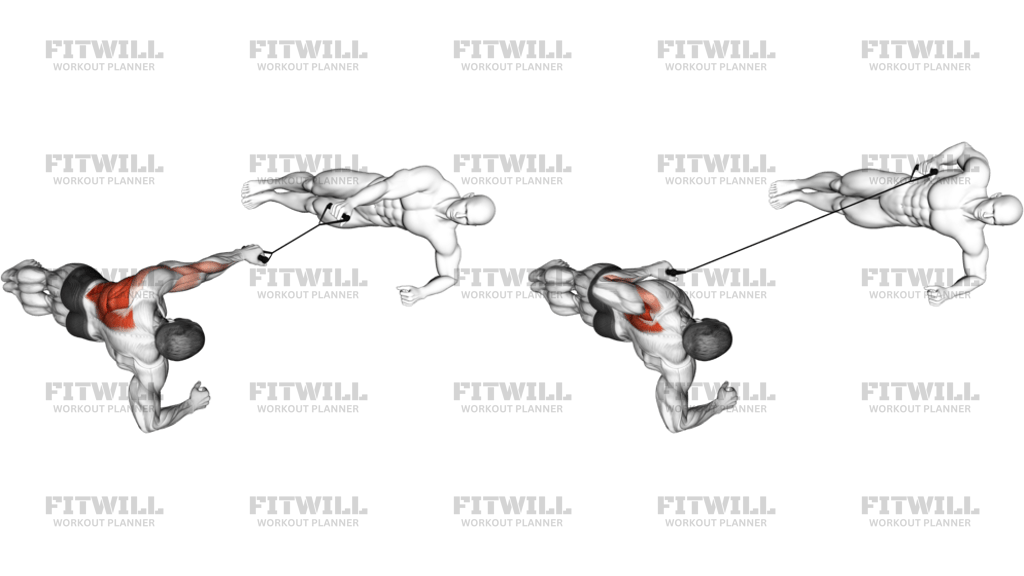
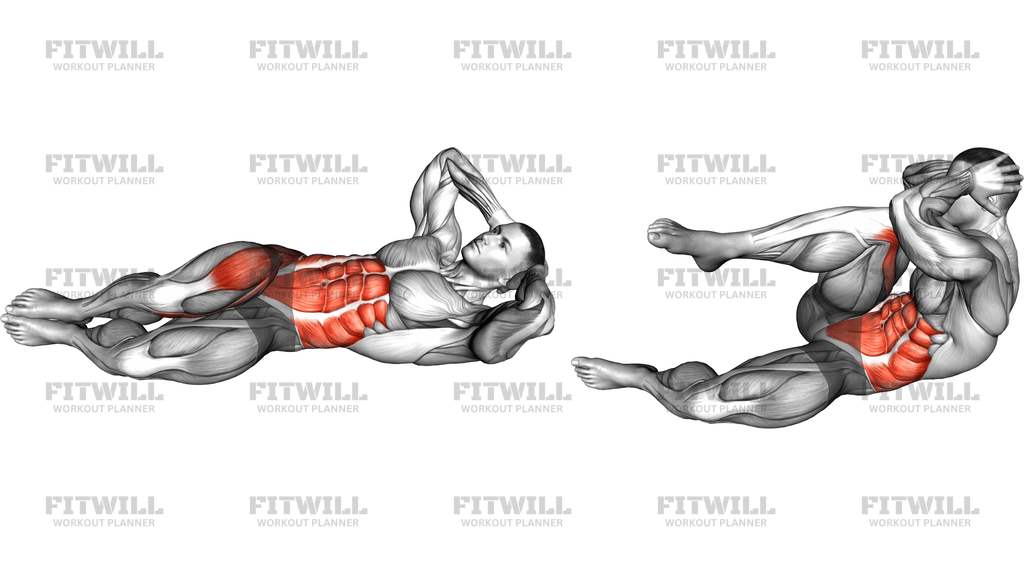
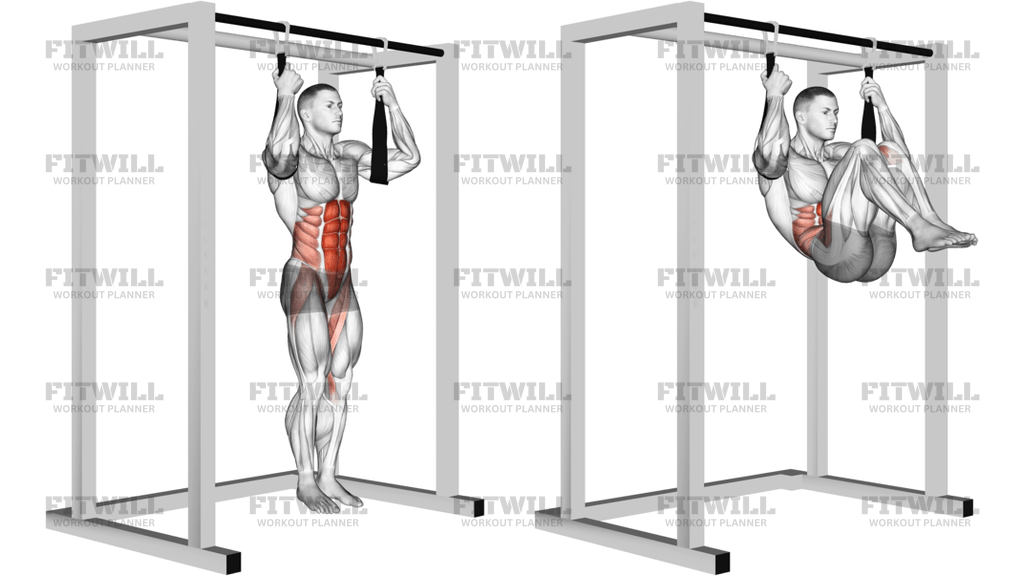
Twisting Crunch Straight Arms
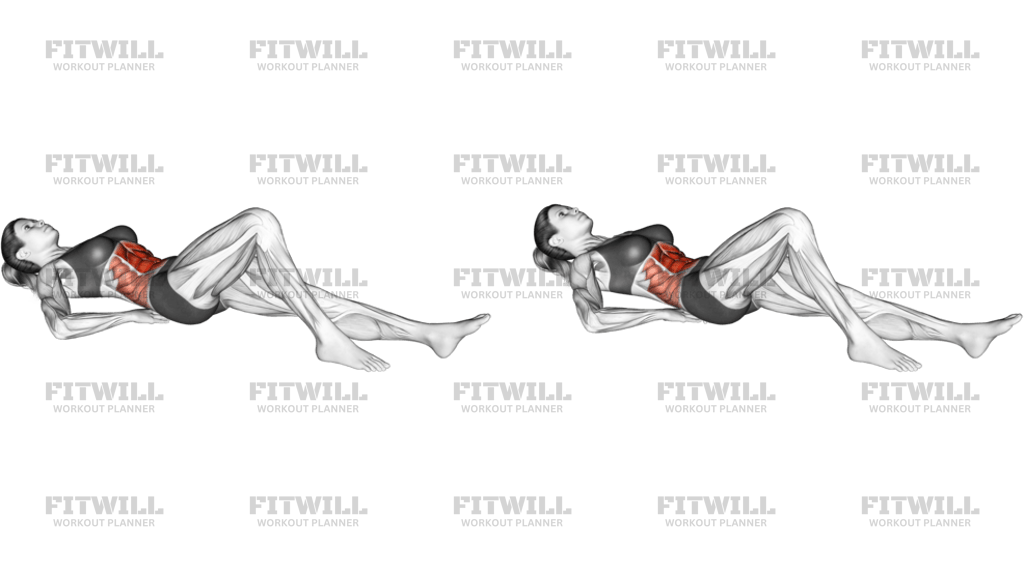
Twisting Crunch Straight Arms is a bodyweight floor exercise that combines a short crunch with trunk rotation. The legs stay bent and grounded while the ribs lift toward the pelvis, then the torso turns so one shoulder comes slightly across the body. The straight arms stay active in front of the chest, which helps keep the upper body long instead of collapsing into a loose sit-up.
This movement places its main demand on the obliques, with the rectus abdominis and deeper core muscles helping to curl the spine and control the twist. Because the arms remain extended, the exercise also asks the shoulders and upper back to stay organized while the trunk does the work. That makes it useful when you want a core drill that trains both flexion and rotation without external load.
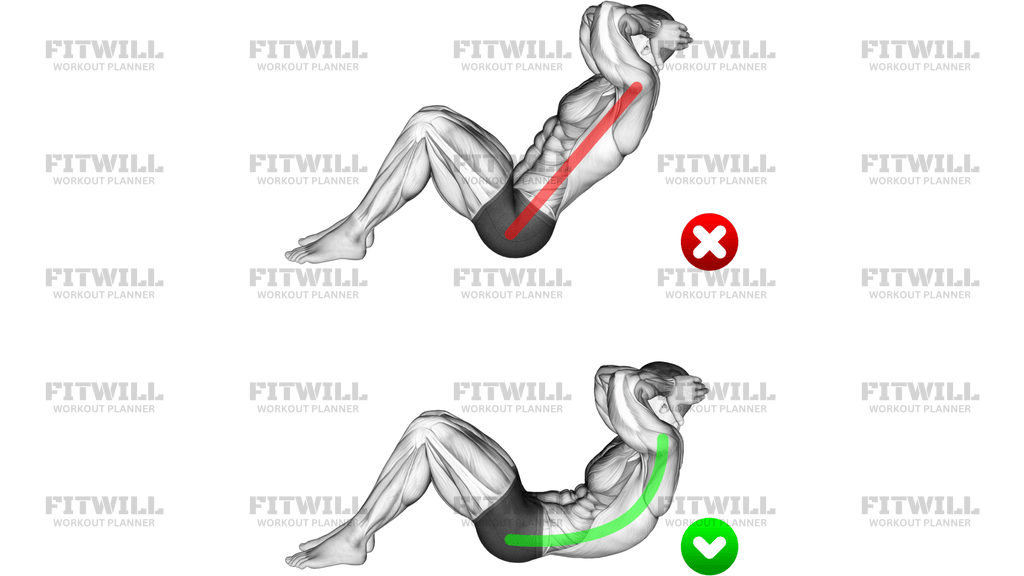
The setup matters more than people think. A good rep starts from a controlled hollow-ish floor position with the lower back lightly braced, the chin slightly tucked, and the feet planted or held steady. From there, the chest lifts only as far as you can keep tension in the abs and obliques. The twist should come from the rib cage, not from swinging the elbows or yanking the head forward.
Because this is a short-range abdominal movement, quality is better than height. The goal is to keep the movement smooth: curl, rotate, pause, and lower under control. If you rush, the hip flexors and neck usually take over and the twist becomes messy. Used well, the exercise is a clean accessory drill for core training, warm-ups, circuits, or finishers where you want controlled trunk work without equipment.
It also scales easily. Beginners can keep the rotation small and focus on bracing and breathing, while more advanced trainees can slow the lowering phase, hold the top position longer, or increase the number of controlled repetitions. The exercise is safest when the lower back stays comfortable and the neck remains relaxed throughout the set.
[ Workout Log & Planner ]
Put your next workout in Fitwill
Keep your plan and training log ready when you are.


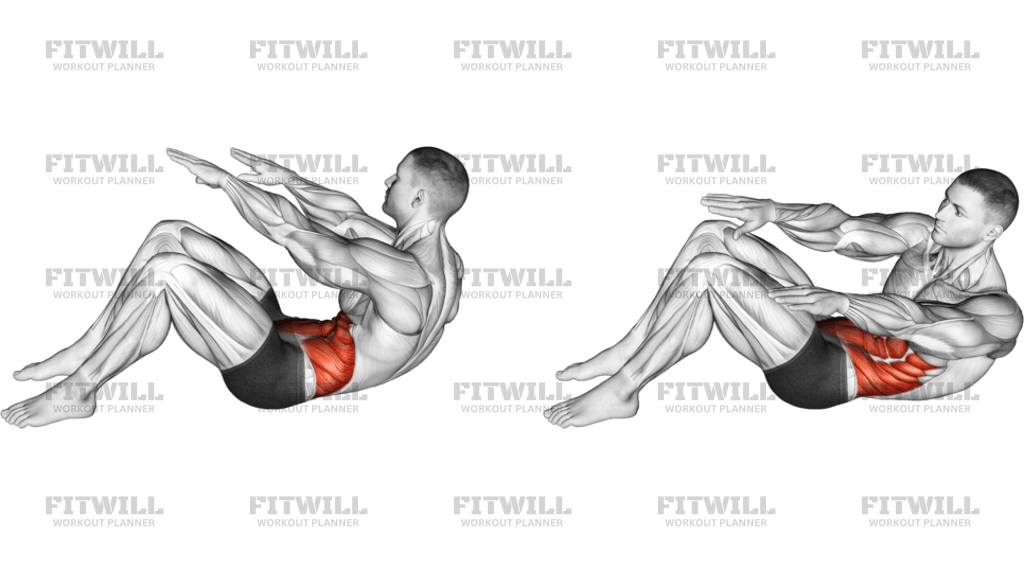
Instructions
- Lie on your back on the floor with your knees bent and feet planted about hip-width apart.
- Reach both arms straight forward so your hands stay in front of your chest instead of behind your head.
- Press your lower back lightly into the floor and tuck your chin so the neck stays long.
- Brace your abs, then curl your head, shoulders, and upper ribs off the floor in one smooth motion.
- As you rise, rotate your torso so one shoulder turns slightly toward the opposite knee.
- Keep the arms long and let the rib cage drive the twist instead of pulling with the elbows.
- Pause briefly at the top when the obliques are tight and the lower back still feels supported.
- Lower your shoulders and upper back to the floor under control while keeping tension in the core.
- Reset your brace before the next rep and alternate sides if the program calls for both directions.
- Repeat for the planned number of repetitions without using momentum or jerking the neck.
Tips & Tricks
- Keep the arms straight and active; if the elbows bend a lot, the twist usually turns into an arm swing.
- Think about lifting the ribs toward the pelvis first, then adding the rotation on top of the crunch.
- Let the shoulder blade on the working side move across the floor, but do not wrench the head toward the knee.
- If your hips pop up, shorten the range so the movement stays in the abs instead of becoming a full sit-up.
- Keep the feet planted or lightly anchored so the lower body does not slide when you twist.
- Exhale as you curl up and rotate; the breath should help the ribs close, not make the neck work harder.
- Stop the rep before your lower back arches off the floor on the way down.
- Use a smaller twist on tired sets so the obliques keep controlling the motion instead of the hip flexors.
- Move slowly through the lowering phase because that is where the abs have to resist the roll-back.
- If the neck feels crowded, keep the chin slightly tucked and look at a fixed point above your knees.
Frequently Asked Questions
What does Twisting Crunch Straight Arms work most?
It mainly targets the obliques, with the rectus abdominis and deeper core muscles helping control the curl and twist.
Should my arms stay straight the whole time?
Yes. Keeping the arms long makes the torso do the work and helps prevent the movement from turning into a shoulder-driven swing.
Do I need to lift very high for a good rep?
No. A small, controlled lift is enough as long as your abs stay tight and your lower back remains supported on the way down.
What is the biggest mistake to avoid on the floor?
Pulling on the neck or jerking the torso with momentum is the most common mistake. The twist should come from the rib cage, not the head.
Can beginners do this exercise safely?
Yes, beginners can start with a small range of motion and focus on bracing, breathing, and smooth rotation before increasing the challenge.
How should my feet be positioned?
Keep your feet planted about hip-width apart so the lower body stays steady while the torso curls and twists.
What variation makes it harder?
Slowing the lowering phase, adding a brief hold at the top, or increasing the number of strict reps will make the exercise more demanding.
Where does this fit in a workout?
It works well as a core accessory, a circuit exercise, or a finisher after bigger compound lifts.