Vertical Leg Raise On Parallel Bars Version 2
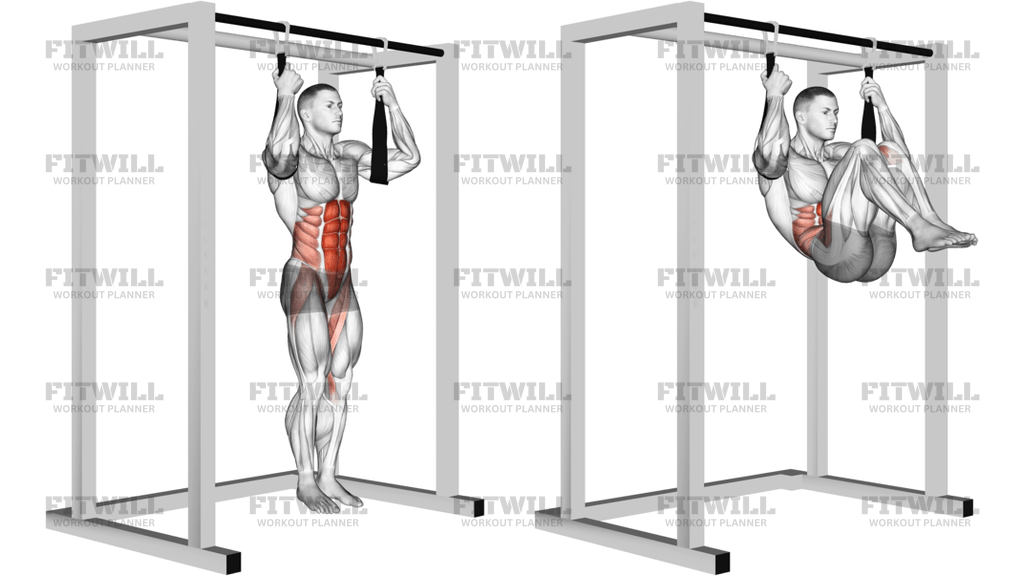
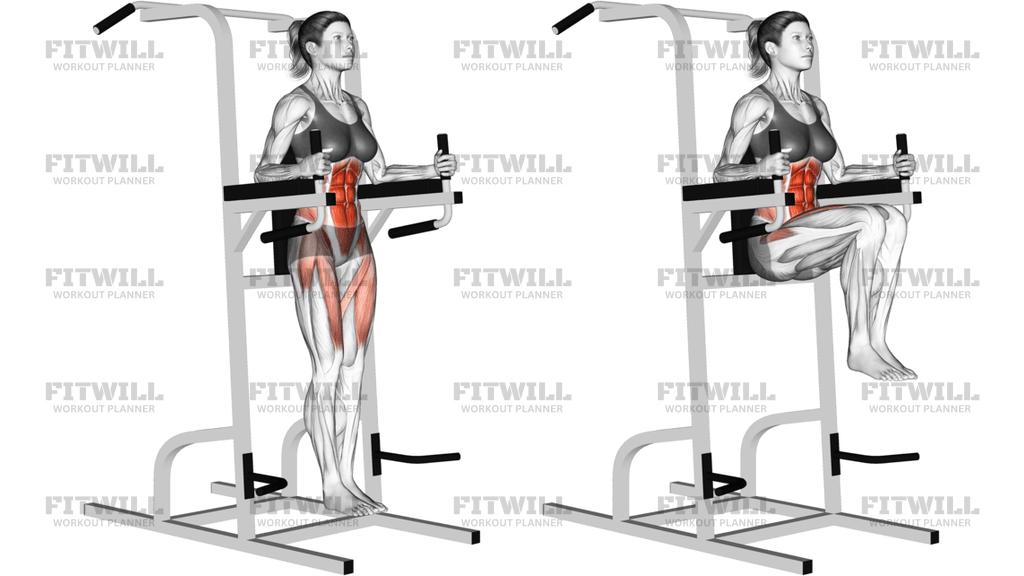
Vertical Leg Raise on Parallel Bars Version 2 is a bodyweight core exercise performed on a captain's-chair style station with your forearms supported on the pads and your torso held tall. The movement asks you to lift the knees toward the chest, or raise the legs in a controlled way if you are strong enough, while keeping the shoulders packed and the trunk from swinging. It is a strict abdominal drill, but the hip flexors and deep trunk muscles work hard to keep the pelvis steady.
The main challenge is not just lifting the legs, but preventing the low back from arching as the thighs come up. When the ribs flare or the pelvis tips forward, the abs lose tension and the hip flexors take over. A good rep starts with a small brace and a slight posterior pelvic tilt so the abdomen initiates the lift instead of momentum or a hard pull from the hips.
Because the station supports your upper body, the exercise is useful for training the abs through a clear leg-raise pattern without demanding a hanging grip. That makes it a practical option for core finishers, calisthenics sessions, and athletes who need controlled trunk flexion plus pelvis control. It is also easy to scale by bending the knees more, shortening the range, or slowing the lowering phase.
Technique matters more than how high the knees travel. A clean repetition looks quiet through the shoulders and smooth through the torso, with no kicking, no rocking, and no shrugging into the pads. If the body starts to swing, the set has become too fast or too long for the current level of control.
Use this version when you want direct ab work that stays honest under fatigue. The best sets are the ones where each rep starts from a reset position, the trunk stays braced, and the lowering phase is controlled all the way back to the hang. That keeps the work on the rectus abdominis and obliques instead of turning the movement into a momentum drill.
[ Workout Log & Planner ]
Put your next workout in Fitwill
Keep your plan and training log ready when you are.


Instructions
- Step into the parallel-bar station and place your forearms on the pads, gripping the side handles with your shoulders down and your chest tall.
- Let your legs hang straight beneath your hips with your feet together, keeping your torso upright and your lower back lightly set against the support.
- Brace your abs and tuck your pelvis slightly before the first raise so the trunk is ready to resist swing.
- Exhale as you draw your knees upward toward your chest, or raise straight legs only as far as you can without losing control.
- Lift until your thighs are near parallel or as high as you can keep the pelvis from rocking back and forth.
- Pause briefly at the top without shrugging, kicking, or leaning into the handles.
- Lower your legs slowly until they return to the hanging start position with the torso still quiet.
- Reset between reps if needed and repeat for the planned number of controlled repetitions.
Tips & Tricks
- Keep your elbows planted on the pads; if you are pushing hard through the handles, you are likely turning the set into a shoulder brace instead of an ab raise.
- A small posterior pelvic tilt before each rep helps the rectus abdominis start the movement instead of letting the hip flexors yank the legs upward.
- If your shoulders creep toward your ears, the set is getting too heavy, too fast, or too long.
- Do not let the low back arch away from the pad on the way down; that is usually the first sign that the abs have stopped controlling the descent.
- Bent-knee raises are easier to keep strict than straight-leg raises, so use the knee-up version first if you are learning the pattern.
- Use a smooth lift and a slower lowering phase rather than bouncing the knees off the top.
- Exhale through the hard part of the raise so the ribs stay down and the torso does not flare open.
- Stop the set when you have to swing to complete another rep, even if your hips still feel capable of moving.
Frequently Asked Questions
What muscles does Vertical Leg Raise on Parallel Bars Version 2 train most?
The rectus abdominis is the main target, with the obliques and hip flexors helping to lift and stabilize the legs.
Is this the same as a hanging leg raise?
The leg-raise pattern is similar, but your forearms rest on the pads here, so the movement is more stable and places less demand on grip.
Should I keep my knees bent or straight?
Bent knees are the easier and stricter version for most people. Straight legs increase the lever and make it much harder to keep the pelvis from rocking.
How high should I raise my legs?
Lift only as high as you can without shrugging, swinging, or arching the low back off the support.
Why do I feel this mostly in my hip flexors?
That usually happens when the rep is rushed or the pelvis tips forward. Slow the lowering phase and start each rep with a small abdominal brace.
Can beginners do this exercise?
Yes. Begin with bent knees, shorter sets, and a controlled tempo so you can keep the torso from swinging.
What is the most common mistake?
The biggest issue is using momentum, which shows up as leg kicking, torso rocking, or shrugging into the pads.
How can I make this exercise harder?
Straighten the legs more, slow the lowering phase, or add a brief pause at the top while keeping the torso completely still.